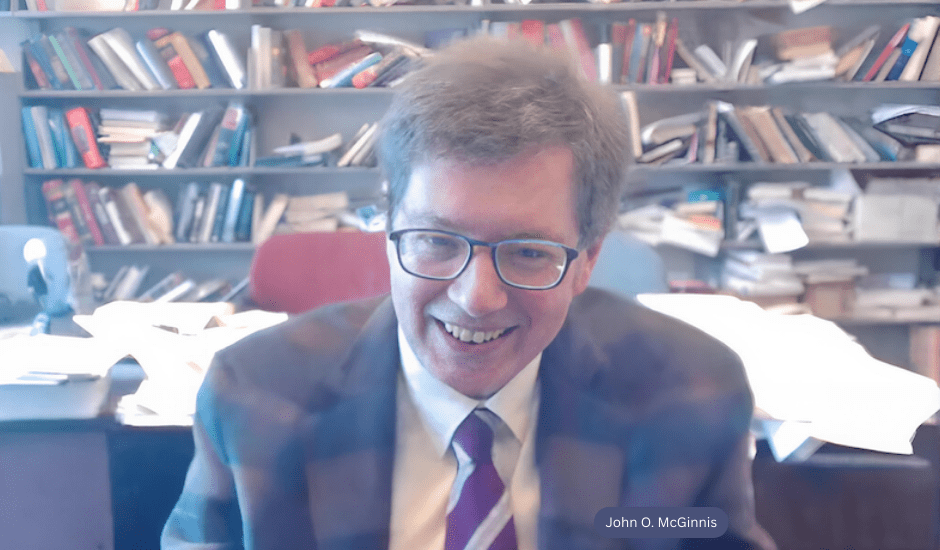
John O. McGinnis, the George C. Dix Professor in Constitutional Law at Northwestern Pritzker School of Law, recently published a book titled Why Democracy Needs the Rich. In it, he challenges the prevalent belief that ultra-wealthy individuals undermine democracy in the United States. Instead, McGinnis argues that they play a crucial role in strengthening democratic systems.
Read More
McGinnis asserts that wealth serves as a catalyst for democracy rather than a rival, stating, "the reserve of independence that checks conformity, the counterweight that steadies the scale against rival elites, the reservoir that funds excellence, and the restless engine that helps renew liberal democracy, generation after generation." He highlights philanthropy as an essential aspect of this process.
During a recent recorded discussion, McGinnis explained that the wealthy provide a necessary counterweight to groups with more influence, such as the media, academia, entertainers, and bureaucrats. These groups often lean significantly to the left, and he emphasizes the importance of pluralism in democracy. “The real question is, Do we have a pluralism of views and perspectives?” he noted.
In his book, he draws historical parallels to the concept of the "clerisy," an influential intellectual elite identified by figures like Samuel Taylor Coleridge. McGinnis clarifies that the clerisy's influence does not originate solely from the wealthy and argues that their independence leads to diverse perspectives.
Regarding contemporary philanthropy, McGinnis acknowledges that major foundations provide significant resources to institutions like Harvard University. However, he believes that even without such philanthropic support, these institutions would maintain their core functions.
He also points to initiatives funded by conservative philanthropy, including the Federalist Society and the promotion of classical liberal thought in academic settings. McGinnis argues against stringent reforms of the nonprofit sector, positing that limiting the influence of the wealthy could yield negative consequences for democracy. He questions whether restricting wealth, such as through limiting tax deductions for philanthropy, would ultimately benefit democratic governance.
"If you start clamping down on the wealthy, you’re not going to get a better world," he asserts, emphasizing the risks and the value of having wealthy patrons who are willing to explore innovative ideas without governmental interference.
In the second part of the conversation, McGinnis plans to discuss various topics, including America's dual nature as a commercial and philanthropic republic, the interplay between civil society and the nonprofit sector, the influence of wealth on artificial intelligence, and the need for sensible regulations.