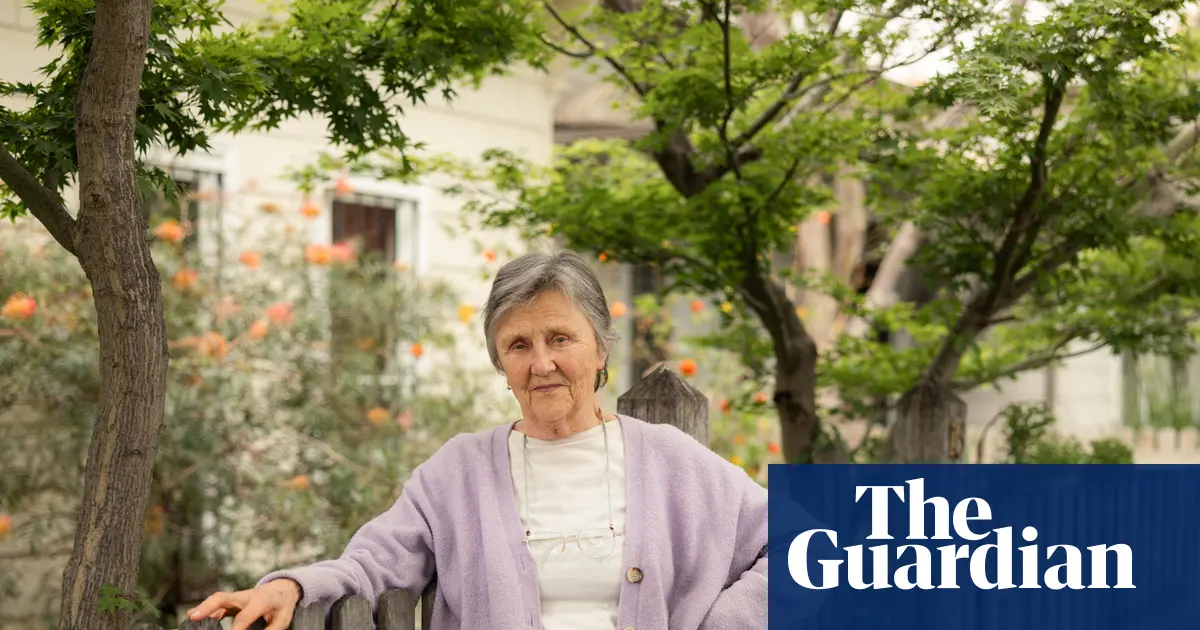
Helen Garner, the 82-year-old Australian author, won the Baillie Gifford prize for nonfiction during a ceremony in London on Tuesday night, while she celebrated 16,000 kilometers away in Melbourne. Garner was streaming the event live when she heard the announcement, but the feed froze just before the winner was revealed. Confused and panicked, she received congratulations moments later, confirming her win for the £50,000 (A$100,000) prize for her book, *How to End a Story*, an 800-page collection of diaries kept from 1978 to 1998.
Read More
In a conversation shortly after her win, Garner expressed her astonishment, stating, "I’m a stunned mullet" and admitted that she felt overwhelmed and didn’t remember her thank-you speech. Garner's recent recognition marks a career high; after years of being overlooked internationally, she is now gaining acclaim, likened to “Australia’s Joan Didion.” Her debut novel, *Monkey Grip*, is gaining new attention thanks to its appearance in popular culture, such as Carrie Bradshaw's use of it in the series *And Just Like That*, and endorsement from Dua Lipa for Garner's *This House of Grief*.
When *Monkey Grip* was first published in 1977, it faced harsh criticism for its autobiographical elements. Critics accused her of merely publishing her journal as fiction. Garner contested this notion, asserting that journaling is a valid and serious form of writing. Now, decades later, she finds her actual diaries receiving awards for nonfiction, expressing joy that her work has been categorized within such a significant genre.
*How to End a Story* comprises three volumes, reflecting pivotal periods in Garner's life, including her experiences following her daughter's birth, the dissolution of marriages, and complicated relationships. Throughout her diaries, Garner's introspection reveals a deep sensitivity and humor, showcasing her ability to find beauty and humor in ordinary moments.
Opinions on Garner's portrayal of emotion are prominent in her writing. She discusses the stigma around anger in women, suggesting societal pressures lead some to extreme actions. Garner perceives diary writing both as an intellectual exercise and a disciplined practice that informs her literary endeavors.
In her 80s, Garner remains a vital presence in Australian literature. Her diaries, which she initially considered too trivial to publish, underwent careful editing to exclude mundane details while retaining authenticity. Garner continues writing daily entries, albeit with the reflection that her life and its subjects, including her grandchildren, have evolved.
While she acknowledges experiencing cognitive decline, she maintains a positive view on observing the changes that come with age. Garner remains determined to write until her last moments, stating, "I can’t imagine finding life boring. The world around me is so interesting. There is always something to write about, so I’ll keep going."