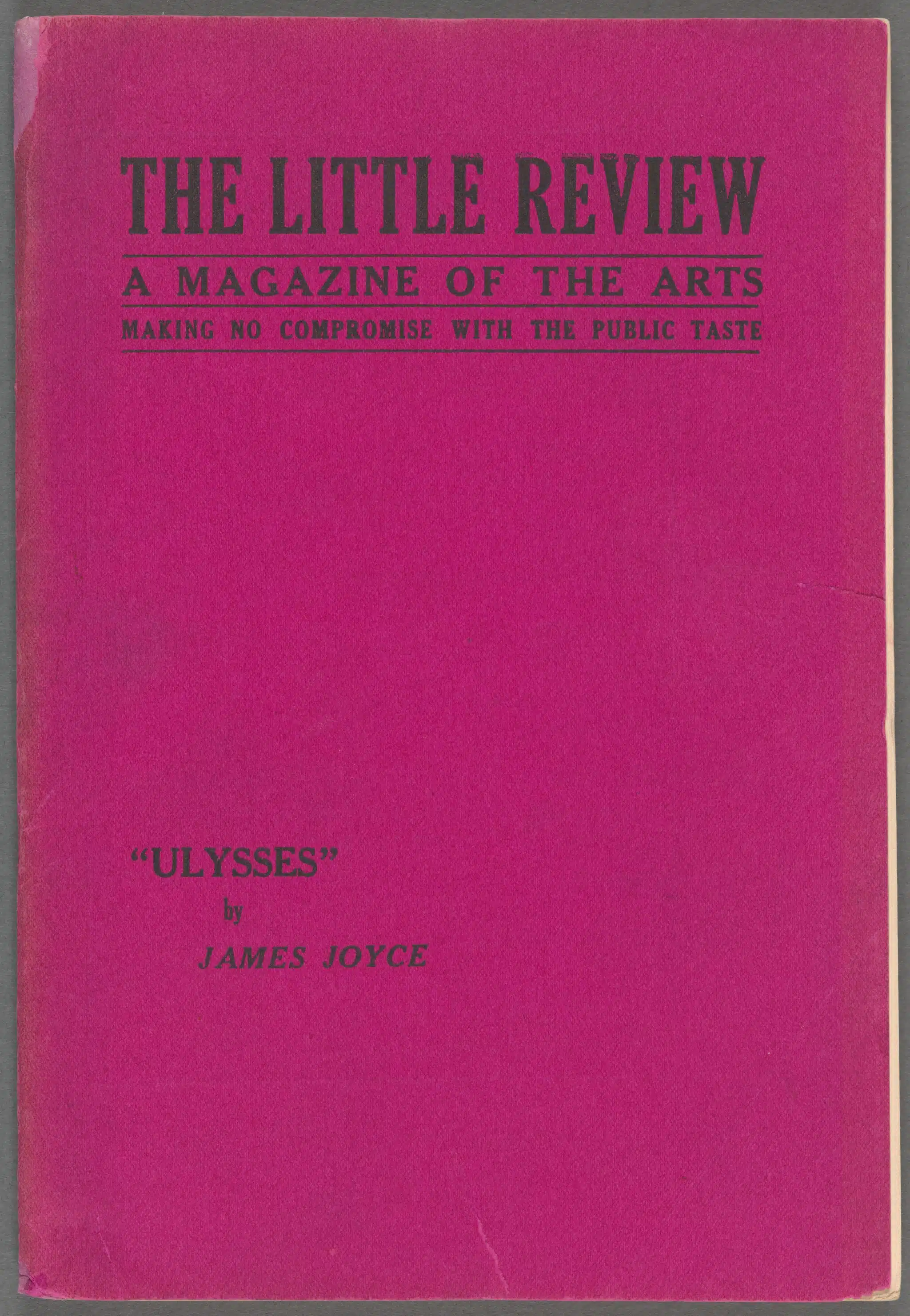
In 1914, Margaret C. Anderson founded the experimental magazine Little Review in Chicago's Fine Arts Building. Aiming to create a publication featuring “the best conversations the world had to offer,” Anderson relied on her charm to secure funding, including $100 from architect Frank Lloyd Wright, equivalent to around $3,000 today. When unable to pay rent, she and her team lived in tents along Lake Michigan, where poets would pin their work to the canvas.
Read More
In 1916, Anderson partnered with Jane Heap, a Kansas-born artist whose style contrasted with Anderson’s feminine flair. Heap, who dressed in men’s clothing and sported short hair, contributed a darker wit that balanced Anderson’s vivacity. Together, they published works from notable writers including Sherwood Anderson, T.S. Eliot, and Gertrude Stein, ultimately moving to New York City where their influence expanded. Their endeavors, however, led to legal trouble when they were convicted of obscenity for serializing James Joyce’s Ulysses.
Despite their significant contributions to modern art and literature, a comprehensive biography of Anderson and Heap was lacking until now. Holly A. Baggett, professor emeritus of history at Missouri State University, has released “Making No Compromise: Margaret Anderson, Jane Heap and the Little Review” after over twenty-five years of research.
Baggett suggests that the scarcity of biographical work may stem from the duo’s post-Joyce trial experiences in Paris, where they became devotees of Armenian mystic George Ivanovich Gurdjieff. She states, “There were these two feminists out there, avant-garde, and the next thing you know they’re following this crazy mystic.” In her quest for understanding, Baggett attended Gurdjieff study groups and engaged with Heap’s former students but still found Gurdjieff’s writings challenging.
She concludes that Anderson and Heap were always seekers, drawn to art as a means to explore life’s bigger questions. The early 20th century saw many modern writers, including contributors to the Little Review like W.B. Yeats, seeking answers through esoteric spiritual paths, influenced by the latest scientific theories.
Baggett’s initial discovery of Anderson as a “lesbian anarchist” in the late 1990s ignited her research. Citing the added mystery surrounding Heap, who lacked extensive documentation compared to Anderson, Baggett sought out Heap’s letters stored in an unexpected location in Hollywood.
The contrasting personalities of Heap and Anderson made their partnership intriguing: Anderson was extroverted and expressive, while Heap was more withdrawn, often leading to tension that eventually ended their relationship. Despite their differences, Baggett believes the Little Review’s influence on modernism was profound, likening its impact to that of the Velvet Underground, whose music inspired countless artists.
Baggett faced personal challenges while completing her book, including battling cancer and advocating for LGBTQ rights at her conservative university. Nevertheless, she remained committed to finishing the biography. She expresses a deep affection for Anderson and Heap, though she acknowledges uncertainty about how they would perceive her work.
“Making No Compromise: Margaret Anderson, Jane Heap and the Little Review” is published by Northern Illinois University Press and spans 312 pages. The author, Mary Wisniewski, is a Chicago writer and has written extensively on similar subjects.