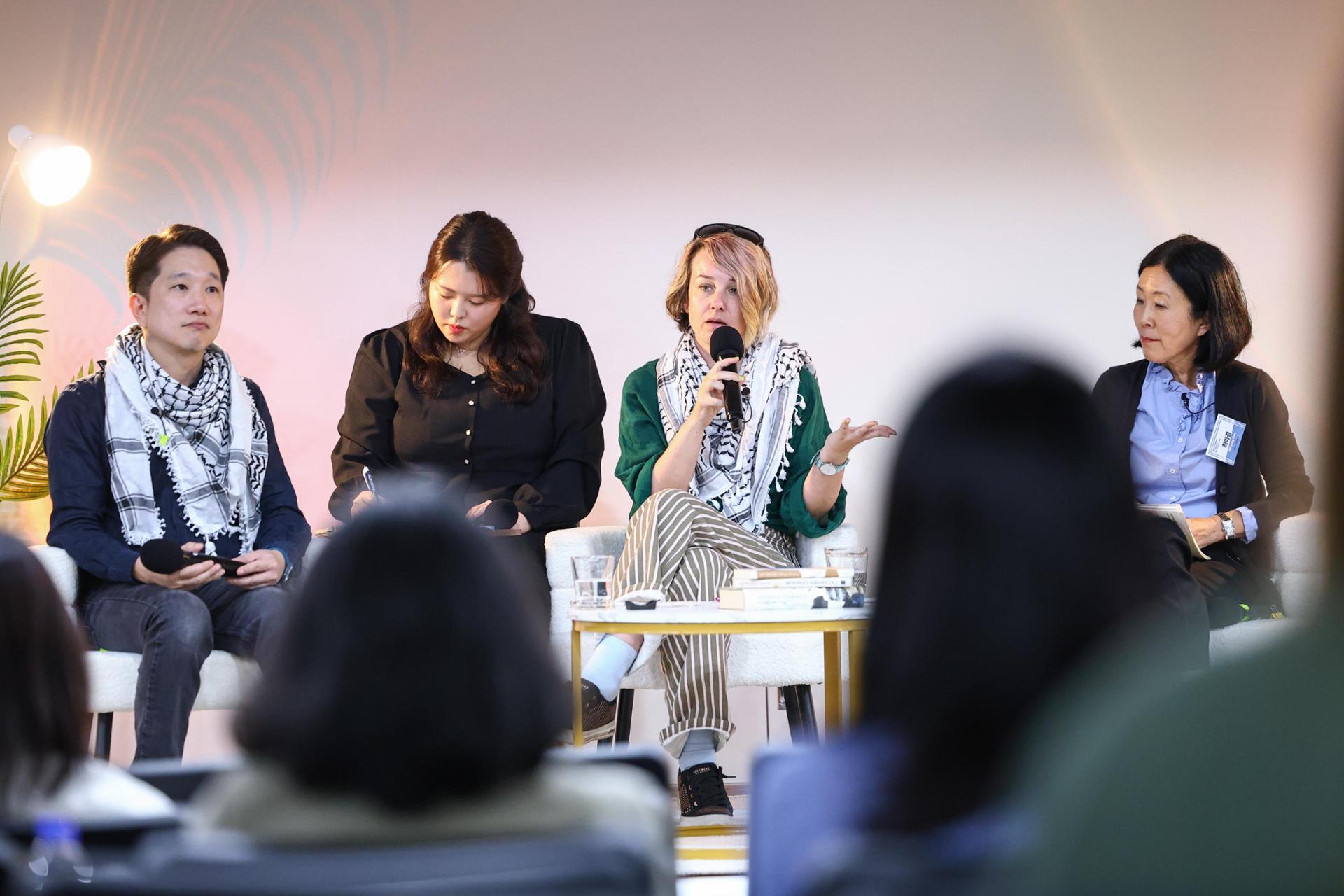
During the international colloquium "Translation: Texts in Transit" at the Museum of World Writing Systems in Incheon, translators called for increased autonomy and sustained funding to support the growing international recognition of Korean literature. Deborah Smith, Anton Hur, and Choi Mi-kyung emphasized that the success of Korean literature cannot rely solely on individual passion.
Read More
Smith, known for her translation of Han Kang's 2016 Man Booker International Prize-winning novel "The Vegetarian," noted the dramatic increase in the availability of Korean literature in British bookstores since she began learning the language. She observed, "I see Korean literature and translation everywhere now." Hur reiterated that this visibility is the result of years of collaborative effort among translators, not just the achievements of individual authors or awards, highlighting that Han's Nobel Prize occurred during Korean literature's ascending trajectory.
Despite the growing interest, Hur stressed the importance of continued translation support, declaring, "Publishing a book overseas is always a miracle." He advocated for sample translation funding that allows translators to approach foreign publishers directly while calling for institutional support that empowers translators, not just publishers. He cautioned against the assumption that the global popularity of K-pop would lead to similar demand for Korean literature.
Choi, who moderated the session, criticized the Literature Translation Institute of Korea (LTI) for policies that have prioritized publisher-led support, which she argued diminishes translators' agency. Since shifting its focus in 2014, the LTI has restricted opportunities for translators to choose their projects independently. Choi recounted her experiences translating the works of Hwang Sok-young while he was imprisoned, advocating for more freedom for translators to select challenging projects that could connect writers with international audiences.
Smith mentioned that much of the 20th-century Korean literature, including important poetry and nonfiction, remains inaccessible in English. She asserted that structural changes are necessary in the industry to foster greater translation efforts. Translators collectively expressed that passion alone cannot sustain them through exhaustion and burnout, urging publishers and institutions not to take their dedication for granted.
The issue of artificial intelligence in translation was also discussed, with the speakers firmly rejecting it as a substitute for human translators. Smith argued that translation relies on ethical commitments and lived experiences that AI cannot replicate, while Hur mentioned his avoidance of AI-generated content due to inaccuracies. They agreed that human creativity must be preserved through reader choices, with Choi asserting that literary translation demands personal engagement that machines cannot provide.
In a previous session, novelist Hwang Sok-yong also emphasized the distinction between human creativity and AI imitation, stating, "For now, I don’t think people who create need to worry about losing their jobs."