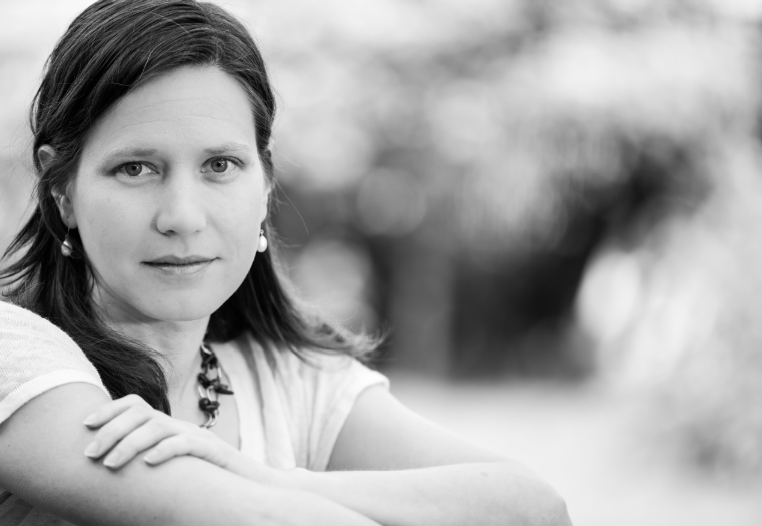
Mary Szybist, who garnered attention for her book *Incarnadine*, reflects on the intersection of poetry and religion in a recent interview. Released in 2013, her collection explores the Annunciation—the moment when the angel Gabriel informs Mary she will bear God's son. The work challenges the relationships between poetry, prayer, and the divine, deeply influenced by her Catholic upbringing.
Read More
*Incarnadine* was described by National Book Award judges as “a religious book for nonbelievers.” The collection opens with a quote from Simone Weil, emphasizing the importance of contemplation over affirmation in matters of faith. After receiving the award, Szybist remarked on the distinctive capabilities of poetry, noting, “There’s plenty that poetry cannot do, but the miracle, of course, is how much it can do.”
In her poetry, Szybist aims to express experiences that are often indescribable. She likens poetry to prayer, sharing that after experiencing a period where she could not pray, she returned to poetry to articulate her thoughts and feelings. This reflects her view that both mediums serve as avenues for reaching beyond the self toward an external consciousness.
Szybist draws inspiration from apostrophe in poetry, suggesting that it embodies the act of addressing something unattainable—Inevitably, that communication cannot be fully received. Her poems reflect on Mary’s experience during the Annunciation through a lens of exploration and complexity, seeking to transform icons into subjects of contemplation rather than strict symbols.
Throughout her writing, Szybist connects with historical art traditions, especially the numerous depictions of religious themes in medieval art. Her time in Italy led her to consider how artistic limitations could cultivate creativity. She found a compelling challenge in writing about the Annunciation, as the distance between the divine and the human underscores the transformative nature of their encounter.
In her acceptance speech, Szybist referenced Wallace Stevens, highlighting the ability of poetry and art to provide access to different perceptions and imaginative experiences. She believes that while art cannot replace the solace of religion, both art and poetry can evoke feelings of connectedness to something larger than oneself.
Reflecting on her recent experiences, including the loss of her mother, Szybist contemplates the kind of poetry that can accompany individuals through grief. She emphasizes the potential for poetry to both invigorate and console, citing poets such as George Herbert as sources of inspiration.
Finally, Szybist addresses her last name's pronunciation and its connection to her identity. She shares that her name might mean 'glassmaker' in Polish, which resonates with her fascination with stained glass as a metaphor for poetry and language. Szybist recalls the intricate ways light alters perspectives in stained glass windows, paralleling her exploration of deeper themes in her work.