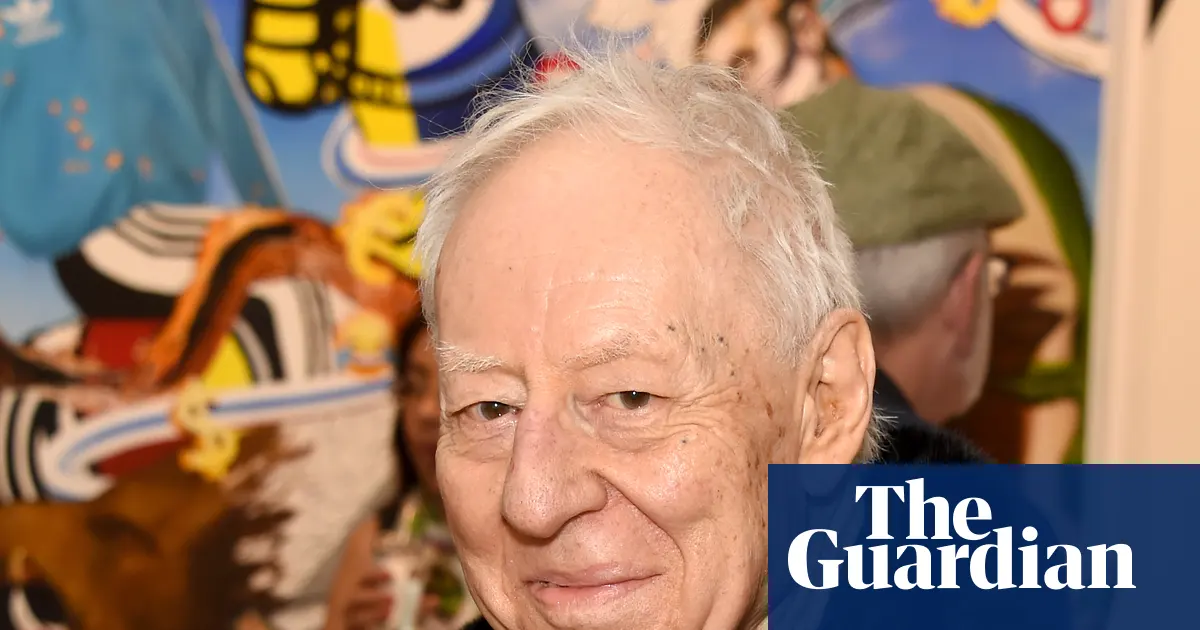
Edward Lucie-Smith, the prolific poet, art critic, and historian, passed away at the age of 93. He authored nearly 100 full-length books, including significant works like The Male Nude: A Modern View (1985), Impressionist Women (1989), and Art and Civilization (1992). Lucie-Smith maintained a critical yet open-minded approach towards contemporary art, expressing enthusiasm for new developments in the field. In a 2017 interview, he articulated the role of an art critic by stating that they should identify what is good in art and clearly explain why.
Read More
His clarity of thought also extended to his poetry. He co-founded a contemporary poetry workshop known as “the Group,” initiated by Philip Hobsbaum in Cambridge as an extension of F.R. Leavis's seminars. After Hobsbaum relocated to London, Lucie-Smith emerged as a leading figure in the Group, which gathered on Thursday evenings at his Chelsea home.
Prominent poets such as Peter Redgrove, Peter Porter, and Adrian Mitchell regularly attended. Lucie-Smith captured the essence of their discussions in his introduction to A Group Anthology (1963), asserting that poetry is open to rational examination. Born in Kingston, Jamaica, to Dudley and Mary Lucie-Smith, he grew up in a comfortable environment and attended King's School in Canterbury before studying history at Merton College, Oxford. He began publishing poetry in Oxford Poetry and art criticism in Isis.
Lucie-Smith's first full poetry collection, A Tropical Childhood and Other Poems (1961), featured The Lesson, a poem reflecting on his father's death and its impact on his school life. Following national service in the RAF, he worked for Notley’s Advertising Agency, where he connected with fellow poets and artists.
In 1970, he edited the anthology British Poetry Since 1945 for Penguin, showcasing a diverse array of poets, including underrepresented voices. While he continued to write poetry, his principal focus shifted to art criticism, contributing to notable publications like Art News and Review and BBC radio, where he hosted Conversations With Artists (1980-82).
His expertise spanned broad topics, from comprehensive art dictionaries to personal interests as a gay man and photographer, exemplified in his work Flesh and Stone (2001). His photographs are part of the collection at the National Portrait Gallery in London, where he is also featured in a portrait painted by Beryl Cook, a friend with whom he collaborated on a children’s story about a mischievous dog.