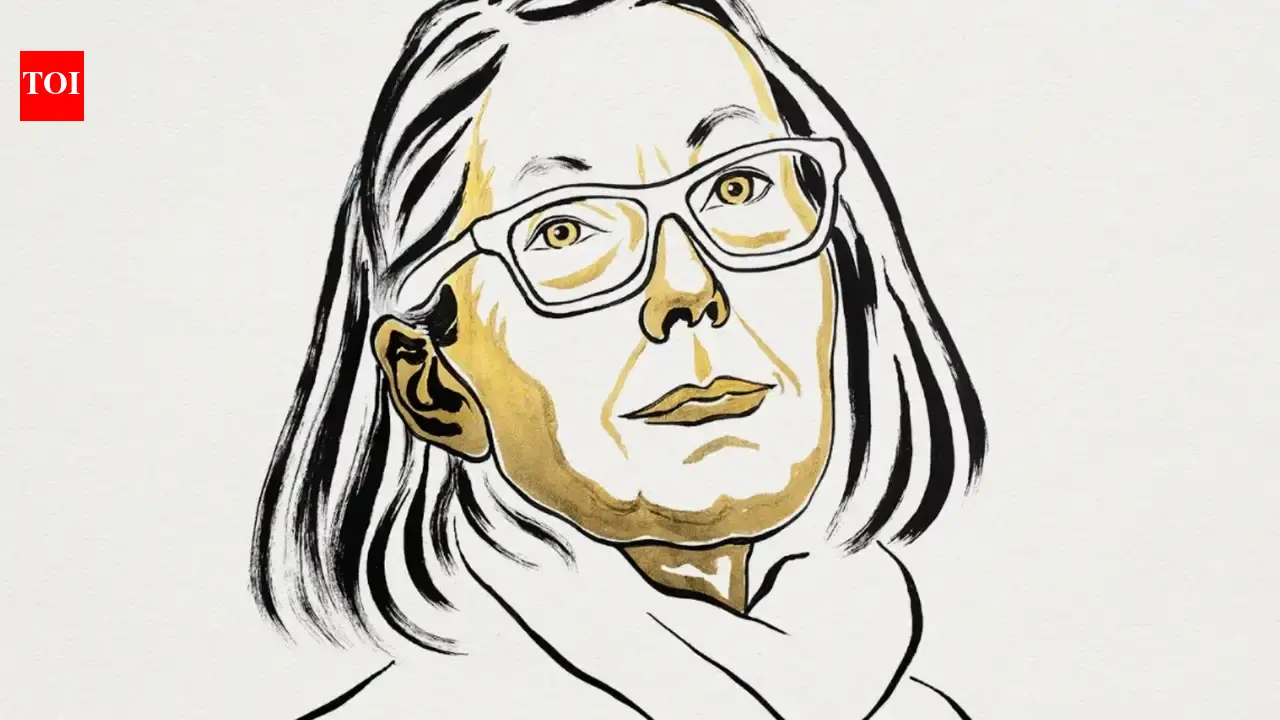
The 2026 Nobel Prize in Literature has been awarded to Canadian author Anne Carson, acknowledging her contributions to contemporary literature through her unique integration of classical scholarship with modern poetry. The Swedish Academy commended Carson for her “bold and inventive oeuvre that, in playful dialogue with the classical tradition, has created new forms for contemporary literature.”
Read More
Born in Toronto in 1950, Carson is recognized as one of the most influential literary voices of her generation. She has spent decades exploring the intersection of poetry, translation, classical literature, and academic scholarship. Her work frequently engages ancient Greek and Latin texts, reinterpreting and reshaping them for contemporary audiences. Influenced by writers such as Sappho, Homer, Euripides, Sophocles, and Aeschylus, Carson fuses various literary forms, including poetry, prose, criticism, and essay.
Carson’s methodical yet experimental approach allows her to traverse different literary realms, as evidenced by her diverse publications, which include Autobiography of Red, The Beauty of the Husband: A Fictional Essay in 29 Tangos, Red Doc>, Float, and Wrong Norma. She has also translated key classical works, such as Euripides' Electra and selected fragments of Sappho.
Her educational background began at St. Michael's College, University of Toronto, where she navigated an unconventional academic path, leaving and returning to the university before eventually completing her studies. Carson holds a Bachelor of Arts (BA, 1974), a Master of Arts (MA, 1975), and a PhD in Classics (1981) from the same institution. She also spent a year at the University of St Andrews in Scotland, focusing on Greek metrics and criticism.
Carson’s literary career is complemented by her academic tenure, where she has taught at institutions like McGill University, the University of Michigan, New York University, and Princeton University. Her award collection includes the Guggenheim and MacArthur fellowships, Griffin Poetry Prize, T. S. Eliot Prize, and the Princess of Asturias Award. She was named a Member of the Order of Canada in 2005 for her significant contributions to Canadian literature.
Celebrating the Nobel win, the University of Toronto highlighted Carson’s achievement as a proud moment for its alumni community. Carson's groundbreaking work signifies not just an individual accolade, but a celebration of the synthesis of ancient and modern influences in literature. Her career illustrates that classical literature can thrive anew in the contemporary landscape, bridging the gap between past and present.