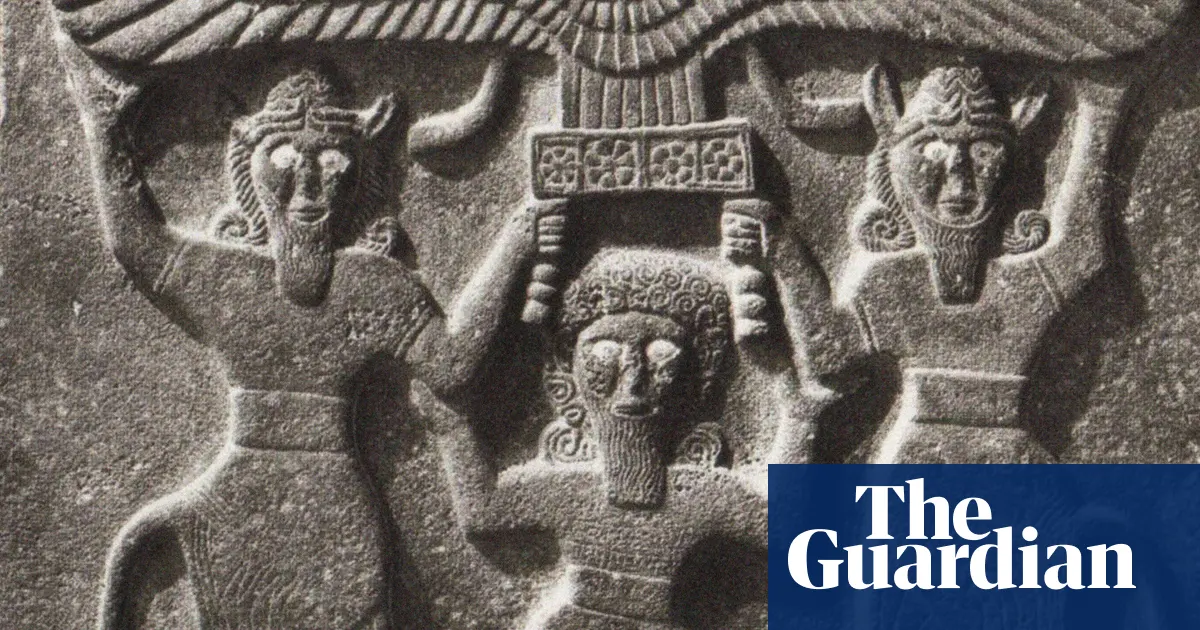
Simon Armitage, Britain's Poet Laureate, has been translating the ancient epic of Gilgamesh, a work that dates back over 4,000 years to Mesopotamia. As Laureate, he receives a salary of £5,750 per year along with a barrel of sherry and is expected to commemorate public and royal events through poetry, which he has done following the death of Queen Elizabeth II and for the coronation of King Charles and Queen Camilla in 2023.
Read More
In this translation, Armitage addresses themes of royalty and moral corruption. The epic starts with Gilgamesh, the demigod king of Uruk, who abuses his power through acts like the “right of the first night,” which permits him to bed newly married brides before their husbands. To counterbalance Gilgamesh’s arrogance, the gods create Enkidu, a wild man who confronts him. Their rivalry transforms into a bond as they face numerous challenges, including confrontations with the monster Humbaba and the Bull of Heaven, sent by Ishtar after Gilgamesh rejects her love.
Armitage highlights the poem's modern relevance, including its candid portrayal of sex work, ecological themes—given that Enkidu’s death is a consequence of cutting down trees guarded by Humbaba—and its exploration of same-sex love. The struggles of Gilgamesh and Enkidu against Humbaba parallel current resource conflicts, with historical echoes found in the Gulf wars.
Historically, the Epic of Gilgamesh has a fragmented legacy, with its earliest Sumerian sources dating back to 2000 BC. It was long lost until fragments were unearthed in the 19th century. George Smith, a British Museum employee, famously deciphered a tablet describing a great flood, drawing parallels between this ancient story and the flood narrative in the Book of Genesis, stirring intrigue in Victorian England.
Armitage's translation respects the poem's original rhythmic and repeated structures, although he tends to smooth over its fragmented nature. He does include prose passages from restored sources and explanatory footnotes. Notably, his version retains the poem's incantatory quality, effectively reflecting the arduous journey to meet Humbaba.
One of the striking elements of Armitage's work is his avoidance of rhyme, echoing the original text’s style. Instead, he employs a cohesive four-beat line that intertwines modern and archaic language with alliterative elements reminiscent of his prior translation of Sir Gawain and the Green Knight. The evocative descriptions invoke sensory experiences, as seen in the depiction of the forest teeming with life.
Finally, Armitage embraces the diverse registers of Gilgamesh’s language, addressing its explicit and often violent content. His translation melds scholarly rigor with poetic creativity, likely securing its place among the prominent English renditions of this timeless narrative, even as fragments continue to surface from archaeological discoveries.