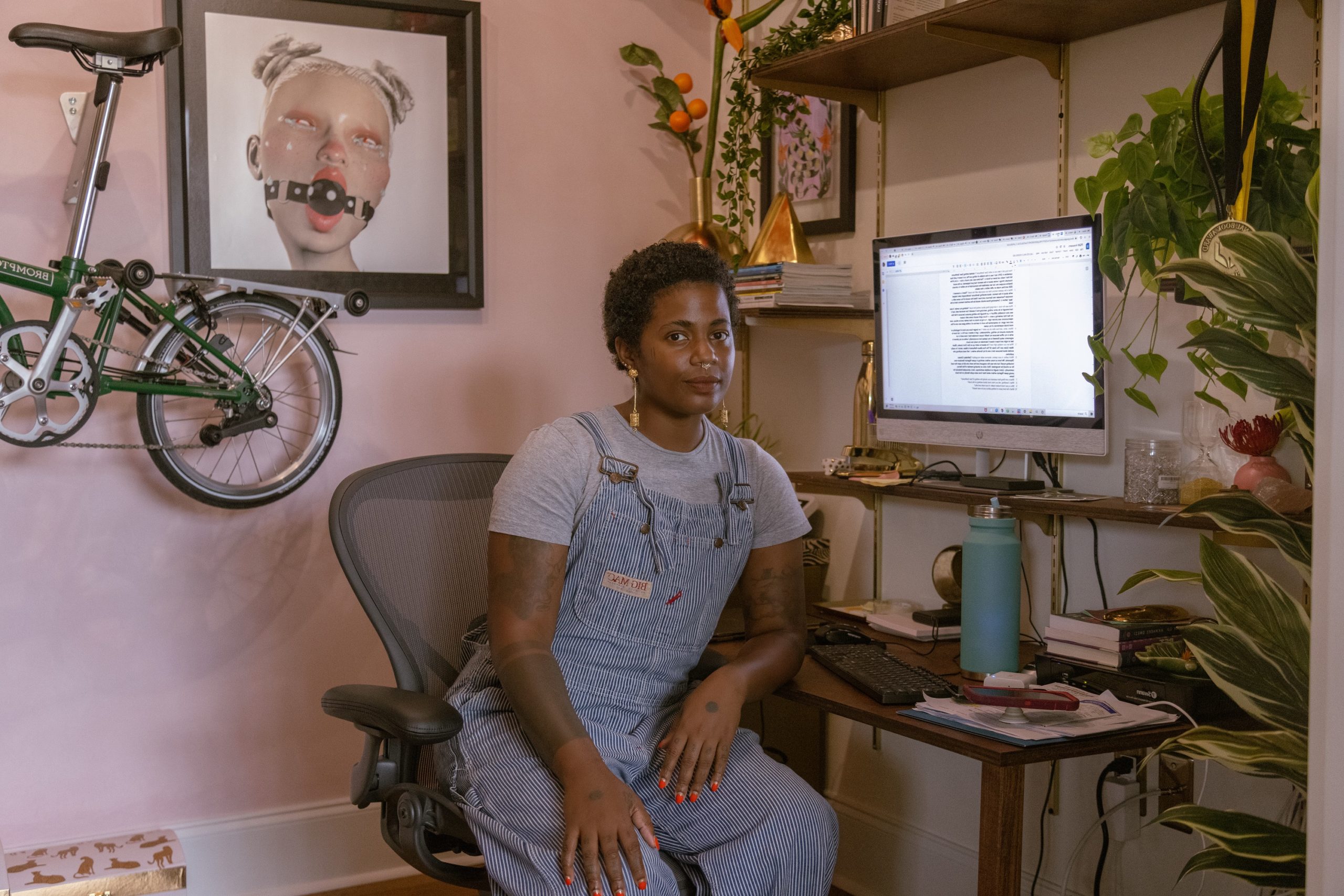
Akwaeke Emezi, bestselling author of Freshwater, Pet, and The Death of Vivek Oji, has released their latest work, Dear Senthuran: A Black Spirit Memoir. This memoir explores themes of body, gender, spirit, and survival, reflecting on the complexities of personal and interpersonal relationships.
Read More
In a recent interview, Emezi shared insights into their writing practices and preferences. They prefer to write at home, often in pajamas and close to snacks, as they find cafes too distracting.
While writing, Emezi typically stays hydrated with water and snacks, although they immerse themselves deeply in the world they are creating. They mentioned that they used to journal frequently, but now focus on writing their memoir as a form of journaling that can be shared as a book.
Emezi cited a quote from Toni Morrison as a favorite: "I stood at the border, stood at the edge and claimed it as central. Claimed it as central, and let the rest of the world move over to where I was." They also noted that they do not read while writing, as their books demand full attention; they prefer to read purely for pleasure between projects.
Typically, Emezi completes at least three drafts of a manuscript before it enters copyediting. They highlighted Tamara P. Carter as their favorite screenwriter, emphasizing that books and movies provide different experiences and that adaptations involve a collaborative creative process.
For Emezi, writing is a spiritual practice due to the power of stories. They expressed a desire to dine with contemporary writers such as Katherine Agyemaa Agard and Eloghosa Osunde, appreciating the potential for meaningful conversations.
When asked for advice for aspiring writers, Emezi emphasized the importance of discipline, recommending that writers persist even when the process isn't enjoyable. They shared an unconventional technique of not outlining their work, preferring to dive into the writing process to maintain interest.
Regarding the impact of storytelling, Emezi believes that while it is important, true change comes from community organizing. They provocatively suggested that rather than saving the current world, efforts should focus on imagining and creating something new.