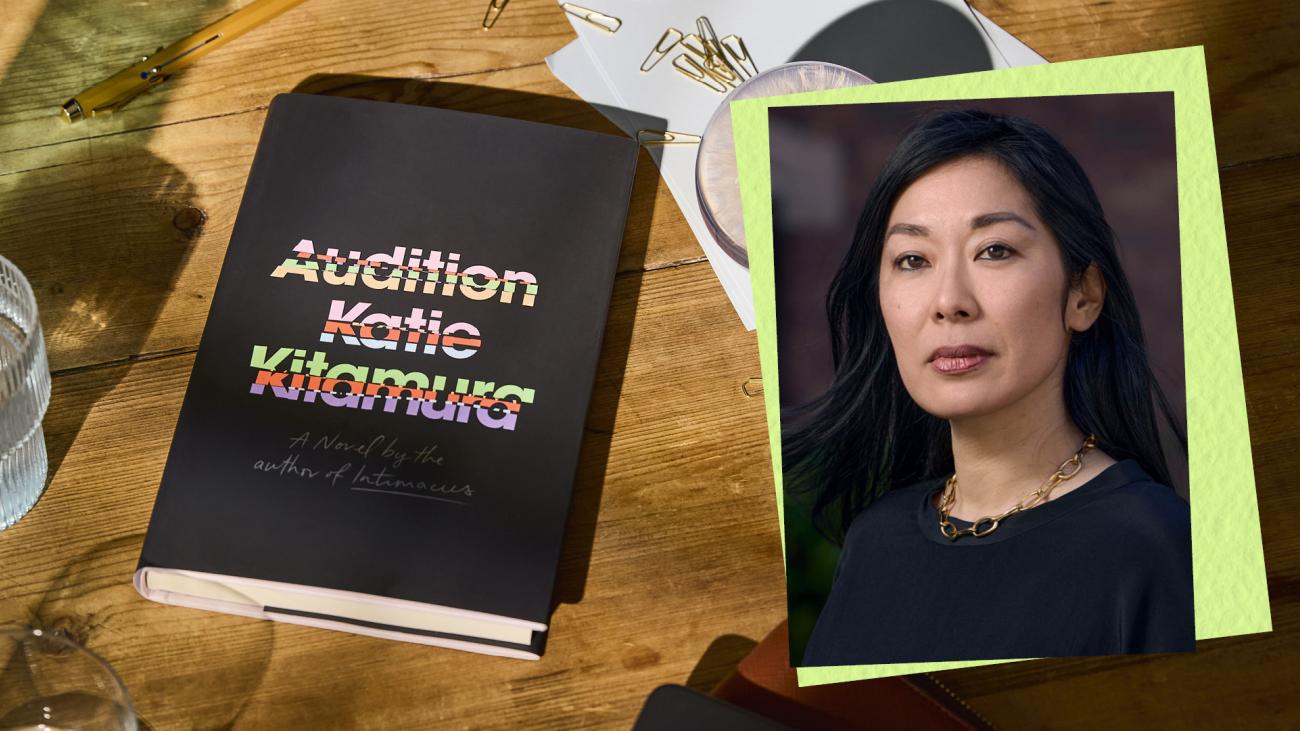
In a recent interview, Katie Kitamura shared insights about her Booker-longlisted novel, *Audition*. The book explores the complex journey children embark on as they grow distant from their parents, illustrating how universal experiences of love and motherhood can feel contradictory. Kitamura aims to embed this contradiction into the novel’s structure, requiring readers to hold two opposing versions of events simultaneously. She pointed out that society is increasingly struggling with cognitive dissonance while addressing the need to embrace contradictions in our thoughts.
Read More
Kitamura reflected on her literary influences, recalling her teenage obsession with the works of John Steinbeck and Theodore Dreiser. She noted that while Dreiser may not be fashionable today in the U.S., he illustrated the novel's power as a form of social critique. The immersive nature of such books allowed her to vanish into their worlds for days.
She emphasized that the books she admires do not inspire feelings of comparison but rather evoke awe at the possibilities of the novel form. Kitamura frequently revisits *The Portrait of a Lady* and *The Good Soldier*, finding each reading of *The Portrait of a Lady* to present new understandings, while the intricate structure of *The Good Soldier* becomes clearer with familiarity.
When asked about how books shape her perspective, she expressed that nearly every book alters her worldview, highlighting her openness as a reader. Javier Marías' *Your Face Tomorrow* significantly transformed her perception of what a novel could achieve, with its unique manipulation of time across three volumes.
Currently, she is reading *The Witch* by Marie NDiaye, which, despite being more direct than NDiaye's later works, remains captivating.
Among Booker-nominated works, Kitamura recommends Elizabeth Taylor’s *Mrs Palfrey at the Claremont* for its brutal yet compassionate and humorous narrative.
Describing her writing process, Kitamura mentioned she often writes early in the morning from a makeshift desk positioned near her baby’s crib, allowing her to create without distractions.
In her vision for a dream book club, she would gather influential figures like publishers Barbara Epler, Jill Schoolman, and Sylvia Whitman, along with her favorite translators, to meet at Shakespeare and Company. She expressed that she would let the group decide on the reading material for their discussions.