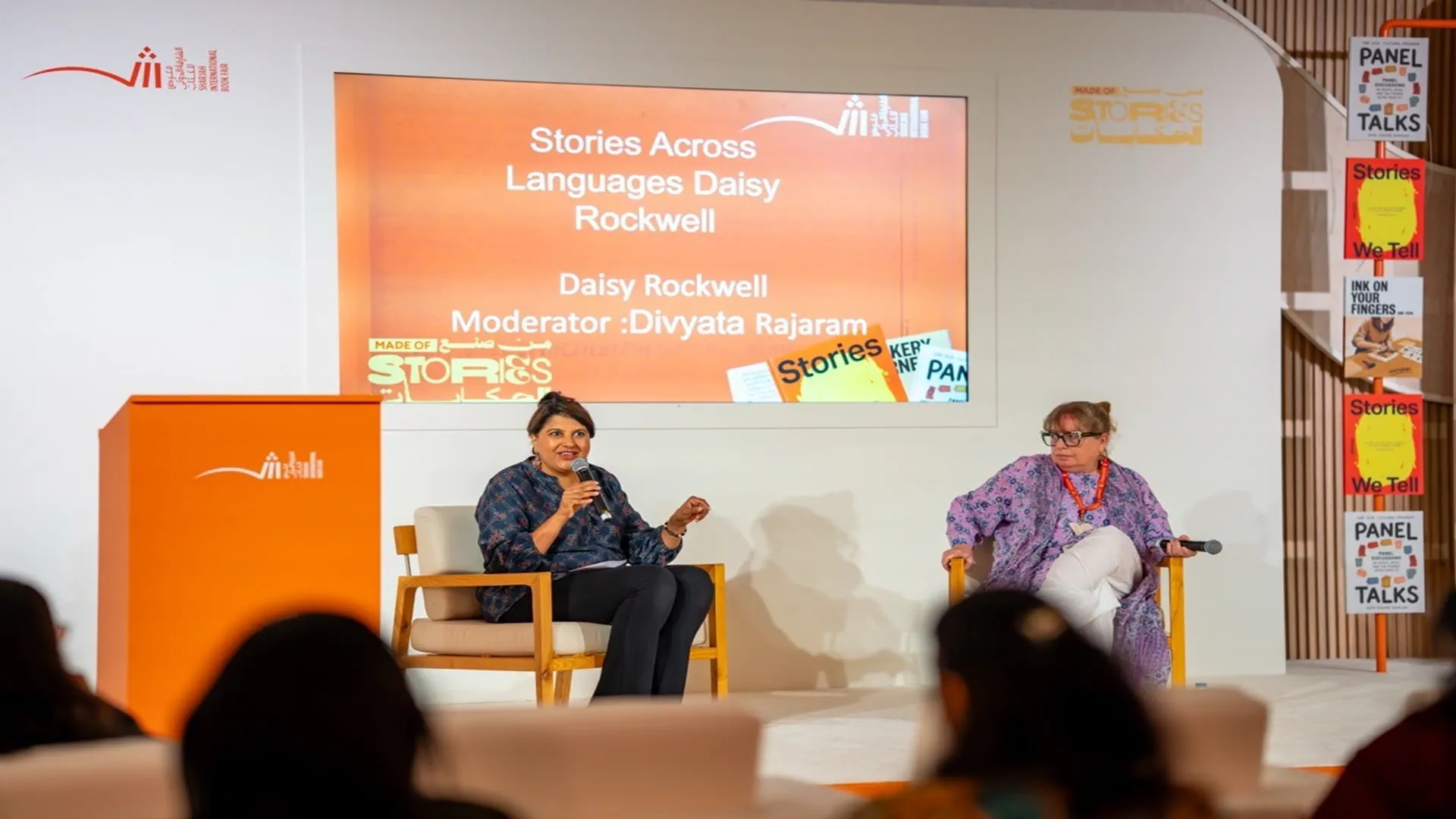
During a session titled “Across Languages: Daisy Rockwell on the Art of Literary Translation,” American writer and translator Daisy Rockwell spoke about her passion for language and the complexities involved in translating literature into English.
Read More
Rockwell emphasized that translation involves creating a new work, as translators must navigate the unique vocabulary and nuances of the target language while maintaining the original meaning.
Her interest in translation began with her early studies of Latin, ancient Greek, German, and French, culminating in her pursuit of Hindi at university. Rockwell expressed her love for grammar and the interplay of language components, which shapes her everyday interactions. She noted her daughter's frustration when she analyzes song lyrics rather than simply enjoying the music.
This curiosity informs her selection of books for translation. She commented, “I have to be intrigued by the way that the author is using language,” noting that a true love for a book is essential for the extensive reading required during the translation process.
Rockwell advised aspiring writers and artists to prioritize their creative pursuits despite busy schedules. “One thing you need is time to do anything creative, and if it's not given to you, you have to take it,” she remarked. She acknowledged that not every day brings inspiration but stressed that consistent practice leads to improvement.
She also discussed her work translating Geetanjali Shree's Hindi novel Ret Samadhi, which was released in English as Tomb of Sand, winner of the 2022 International Booker Prize. Rockwell explained the title's challenges, as the term samadhi has various meanings—memorial, final resting place, and heightened meditation—which are not easily conveyed in English. Although Shree preferred to keep “samadhi” in the title, Rockwell selected Tomb of Sand and provided multiple definitions of the term at the start of the English edition to help readers grasp its significance.
Rockwell highlighted the limitations of artificial intelligence in literary translation, using her experience with Ret Samadhi to underscore the nuanced judgment required in conveying culturally rich meanings. “That’s an example of something that AI is not going to do for you,” she analyzed, reiterating her choice to reflect the diverse meanings of samadhi through definitions within the book.
The session took place at the 45th Sharjah International Book Fair, organized by the Sharjah Book Authority, held at Expo Centre Sharjah from November 4 to 15, 2026. The event features 3,212 publishers from 126 countries, showcasing over 1.7 million titles.