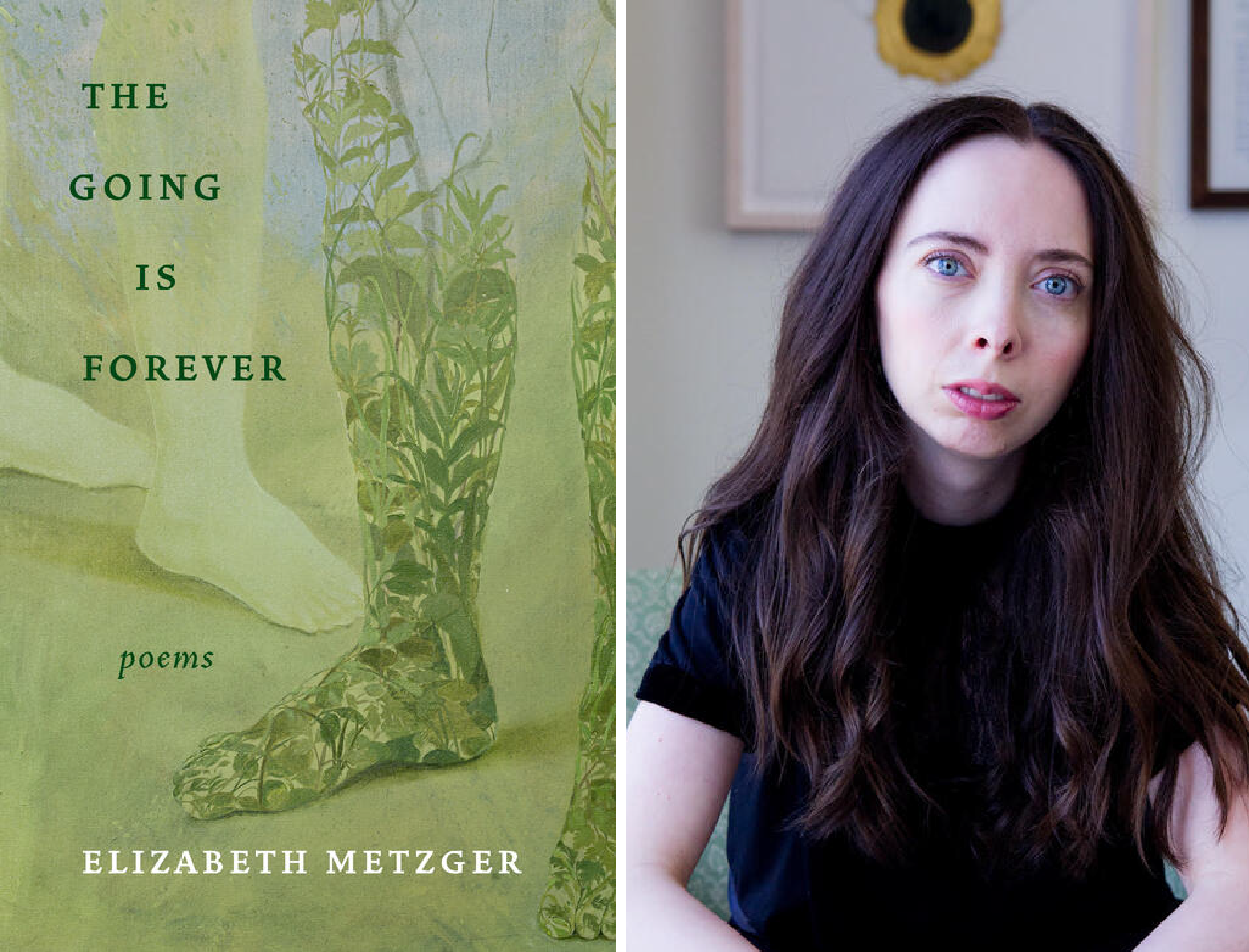
Elizabeth Metzger, author of the forthcoming poetry collection *The Going Is Forever*, set to be published on September 15, 2026, by Milkweed Editions, has previously released collections such as *Lying In* and *The Spirit Papers*, the latter winning the Juniper Prize for Poetry. Additionally, Metzger has published two chapbooks, *Bed*, which won the Sunken Garden Prize, and *The Nutshell Studies of Unexplained Death*. Her poetry has appeared in notable publications including *The New Yorker*, *The Paris Review*, *The New York Review*, *TLS*, and *Poetry*. She has received support from The Corporation of Yaddo and currently teaches at Columbia University and the 92nd Street Y, while serving as a poetry editor at *The Los Angeles Review of Books*.
Read More
In her poem “Don’t Make Me,” the speaker navigates a yearlong misunderstanding with her son about life and death, leading to the poignant question: "So, the going is forever?" Metzger reflects on how the title *The Going is Forever* encapsulates her collection, emphasizing that it conveys a sense of eternal love amidst grief. She explains that while loss alters love, it does not extinguish it, and the title reflects an affirmation of ongoing life rather than a conclusion.
The opening poem, “With Each Bird Flying, Time is Passing,” introduces readers to themes of domesticity and love as it progresses through the complexities of relationships and loss. Metzger notes that this poem serves as an entry point into the collection, capturing the notion that endings are intertwined with new beginnings.
In discussing her collection's structure, Metzger describes the challenges of crafting a cohesive narrative while dealing with significant personal losses. The collection is divided into three parts, focusing on the masculine figures she has lost—father, son, husband—interconnected due to their impacts on one another and the family dynamic. She chose to group her “father” poems together in the middle of the collection to signify a thematic interlude, revealing the deep complexities of familial relationships.
Metzger contemplates the wisdom embedded within poems, suggesting that they often reveal deeper truths than what can be articulated in everyday conversation. She expresses how white space in poetry represents emotional tension, guiding the reader through both silence and meaning.
Metzger also reflects on the autobiographical elements of her work and how her experiences of motherhood have influenced her perspective. She discusses the transformative nature of motherhood and how it has allowed her to explore deeper parts of herself within her poetry. Through her writing, Metzger aims to connect with readers and encourage them to embrace the multifaceted nature of their own lives.
As she concludes, Metzger expresses gratitude for the attention her work receives and urges readers to view life as an evolving narrative filled with surprises, rather than a series of good and bad experiences. She hopes her poems resonate with readers, allowing them to feel seen and to foster a love for their own diverse life stories.
Tiffany Troy, who conducted the interview, is an accomplished author and editor, actively engaged in the literary community.