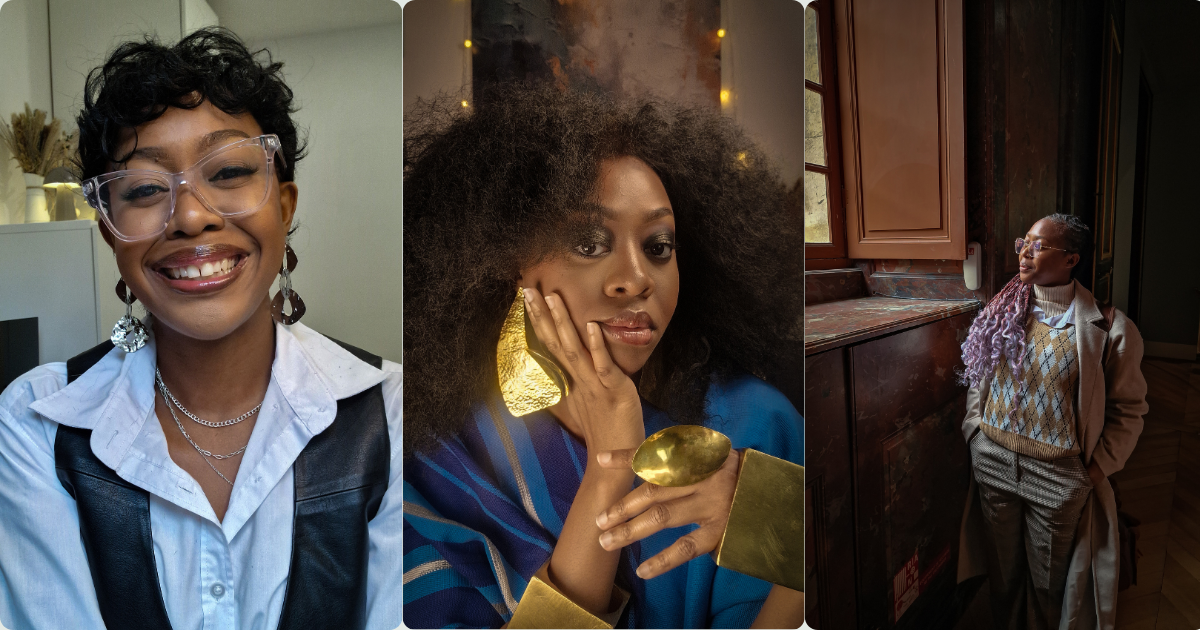
Huwa Okoyomoh is a unique voice in the Nigerian arts scene, balancing her role as a PhD student in Civil Engineering with her passion for spoken word poetry. Since discovering the art form in a crowded University of Benin auditorium in 2016, Huwa has built a significant online presence, with Instagram reels garnering over 100,000 views. Her poetry explores themes such as domestic violence, in-law politics, and the joys of friendship, offering insights into everyday Nigerian life.
Read More
Huwa distinguishes her practice by adapting her poetry for different platforms: she writes for the page, performs on stage, and creates engaging social media content. This versatility allows her to illuminate the human condition, particularly regarding women's experiences, while avoiding typical narratives centered on pain.
In discussing her beginnings, Huwa recalls her initial reluctance to embrace literature, having primarily viewed it as a leisurely pursuit. A shift occurred in her second year of university when she began reading fiction, spurred on by friends. A pivotal moment came during a play at her university where a spoken word performance deeply resonated with her, awakening her passion for the craft.
Huwa describes poetry as "an anchor that keeps me grounded," reflecting both personal experiences and collective human journeys. She emphasizes that writing and performing poetry are intertwined but distinct experiences, akin to watching a play versus reading a book.
The demands of producing content—such as memorizing poems, conceptualizing visuals, and managing analytics—often go unnoticed, yet Huwa finds fulfillment in the creative process. Her engaging social media presence began to flourish in late 2020, where she utilized short forms of poetry to captivate audiences, affirming her as a modern introducer to spoken word.
One of her notable works, "diss-respectfully," highlights in-law dynamics and resonates with many, showcasing her ability to connect with a broad audience. Huwa aims to expand the narrative surrounding women's experiences beyond pain, exploring themes of nostalgia and friendship.
Despite the growth of Nigeria’s poetry scene, Huwa asserts that the arts require increased support and infrastructure. She highlights the imbalance between STEM fields and the arts, urging for a cultural shift that appreciates creativity as essential to societal health. The digital space has provided new opportunities for artists, yet the sector still lacks systemic support.
Huwa cherishes the sense of community she has found within the poetry world, crediting events organized by groups like Say It Out for helping her develop confidence and hone her craft. She acknowledges existing hierarchies within literary spaces but has focused on defining her own path, often facing the challenge of being compared to other art forms.
Financial sustainability remains an issue for poets in Nigeria, but Huwa views her engineering background as freeing, allowing her to create without the constraints of commercial pressures. The emergence of digital platforms has also opened new avenues for storytelling, benefitting marginalized voices in the literary community.
In sharing insights into her influences, Huwa recommends notable poets like Philip Asaya and Wana Udobang for anyone interested in exploring the Nigerian spoken word scene. Looking ahead, she aims to continue her journey through poetry while advocating for a more supportive environment for the arts in Nigeria.
In a rapid-fire segment, Huwa shared personal favorites: Sophia Thakur as her favorite poet, "A Broken People’s Playlist" by Chimeka Garricks as a highly anticipated read, and her choice of amala over pounded yam. Through her work, Huwa Okoyomoh embodies a bridge between science and art, continually reshaping the narrative around both fields.