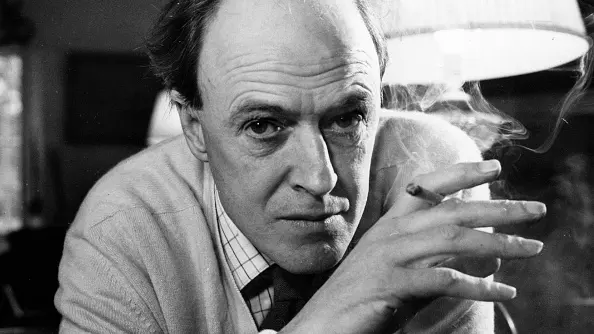
Roald Dahl, famed for beloved children's books such as Matilda, James and the Giant Peach, and The BFG, has had his legacy scrutinized following his death in 1990. Despite being a cherished storyteller, he openly admitted to anti-Semitism shortly before his passing at age 74. Reports of his misogyny and racism have also surfaced, leading many to reassess his body of work.
Read More
In recent years, the Roald Dahl Story Company, now owned by Netflix, faced backlash for working with Puffin Books to revise editions of Dahl's works. This effort aimed to remove language regarding race, gender, weight, and mental health that might be deemed offensive today. The company stated that the changes were made to ensure that Dahl's stories remain enjoyable for contemporary audiences. Critics within the publishing world, however, have labeled these revisions as censorship.
Concerns about Dahl's personal views intensified in 2018 when The Guardian reported that the British Royal Mint declined to create a commemorative coin marking the 100th anniversary of his birth because of his association with anti-Semitism. Amanda Bowman, vice president of the Board of Deputies of British Jews, supported the Mint’s decision, saying, "Many of his utterances were unambiguously anti-Semitic. He may have been a great children’s writer but he was also a racist and this should be remembered."
In a public remorse, the Dahl family and the Roald Dahl Story Company acknowledged the pain caused by his prejudiced statements, labeling them incomprehensible and contrasting starkly with the values inherent in Dahl’s stories. They expressed a hope that Dahl's legacy would serve as a reminder of the impact of words.
The dialogue surrounding Dahl's prejudices comes amid a broader trend of scrutinizing the personal beliefs of notable authors, similar to the response seen with J.K. Rowling in light of her controversial remarks. In March 2021, Dr. Seuss Enterprises announced they would cease publication of six books due to racist imagery, a decision some deemed reflective of “cancel culture.” Abraham Foxman, the former national director of the Anti-Defamation League, highlighted this complexity in his 1990 letter, asserting that talent does not exempt individuals from being bigots.
Dahl's early life included a diverse background; after attending a boarding school, he worked in Africa and later served as a fighter pilot during World War II. His family life was marked by personal tragedies, including the serious injury of his son Theo and the death of his daughter Olivia. His marriage to actress Patricia Neal ended in divorce in 1983.
Throughout his life, Dahl made several openly anti-Semitic remarks, including one in an August 1983 review in the Literary Review and another in a New Statesman interview that same year. His statements reflected a belief in harmful stereotypes about Jewish people and financial control in the media.
Dahl's nuanced legacy is further complicated by the content of his books. While his children's stories are not overtly anti-Semitic, some of their early drafts included problematic racist and misogynistic portrayals, prompting editorial revisions. Longtime editor Stephen Roxburgh generally worked to eliminate harmful content from his narratives.
Following the Dahl family’s apology, the Campaign Against Antisemitism commented that while the acknowledgment of his prejudices is welcome, it is overdue and should have been made earlier. The family's later comments highlighted the difficulty of reconciling their love for Dahl with his unacceptable views, and emphasized the need for his works to serve as educational opportunities about intolerance.