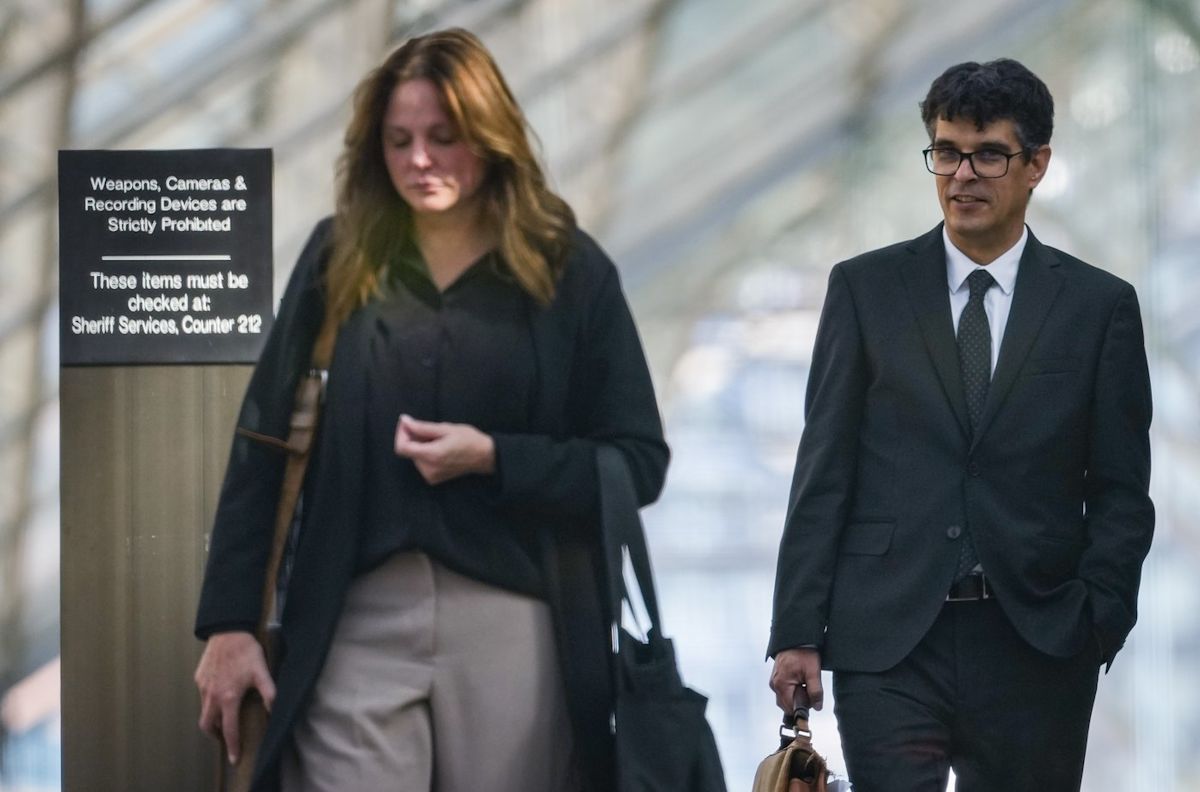
VANCOUVER — In a B.C. Supreme Court session, a lawyer representing the woman who accused former University of British Columbia professor Steven Galloway of sexual assault argued that her client could not have anticipated the subsequent upheaval in the Canadian publishing industry following the allegations.
Read More
Galloway is suing the woman, whose identity is protected under a publication ban, along with other defendants, claiming they defamed him by disseminating the unverified allegations that first emerged in November 2015. Galloway has denied the accusations, and an investigation by a former judge appointed by the university concluded that the claims were unsubstantiated. The university subsequently terminated Galloway's employment, which he asserts has severely impacted his career.
Arden Beddoes, representing Galloway's accuser, known as A.B., stated during her opening remarks that the extensive fallout from these allegations is complex and not solely attributable to her client. Beddoes acknowledged the serious nature of the allegations, emphasizing that the ramifications extend beyond A.B. alone. She indicated that the court must determine the extent to which the consequences can be legally linked to A.B.'s actions.
Beddoes elaborated that A.B. could not have foreseen how the university would handle the investigation or the public responses that followed, especially concerning the prominent controversy within the Canadian literary community. Earlier this month, the court was informed that A.B. is no longer asserting that Galloway assaulted her; instead, she states that she reported the incident. A.B. will not testify in the trial due to mental health issues.
Galloway's legal team concluded their case following several weeks of testimony detailing the negative effects the accusations had on his professional and personal life. His defamation lawsuit, filed in 2018, seeks general and special damages for statements made by A.B. and others across social media and other platforms. The court learned that A.B. is a former creative writing student of Galloway's, with whom he had an extramarital affair lasting about two years over a decade ago.
During the proceedings, testimony was given by a publishing industry expert who provided insight into Galloway's potential earnings had the sexual assault allegations not emerged. Kevin Hanson testified that Galloway's earlier work, particularly "The Cellist of Sarajevo," had received exceptional acclaim, making him stand out in the literary field. He indicated that the allegations negatively influenced the performance of Galloway's subsequent novel, "The Confabulist," which was shelved by Penguin Random House Canada after the allegations surfaced.
Hanson noted that many authors often do not achieve widespread success until their third or fourth books, challenging suggestions that Galloway's literary career was unsuccessful after just a few titles. Though Galloway's books earned variable royalties, including over $1 million for "The Cellist of Sarajevo," the latest works did not meet those expectations, raising questions about the impact of the allegations.
After concluding his questioning of Hanson, Beddoes remarked on the disappointing performance of "The Confabulist" and suggested that subsequent novels may also reflect similar underperformance. The trial is set to continue on Tuesday in Vancouver.