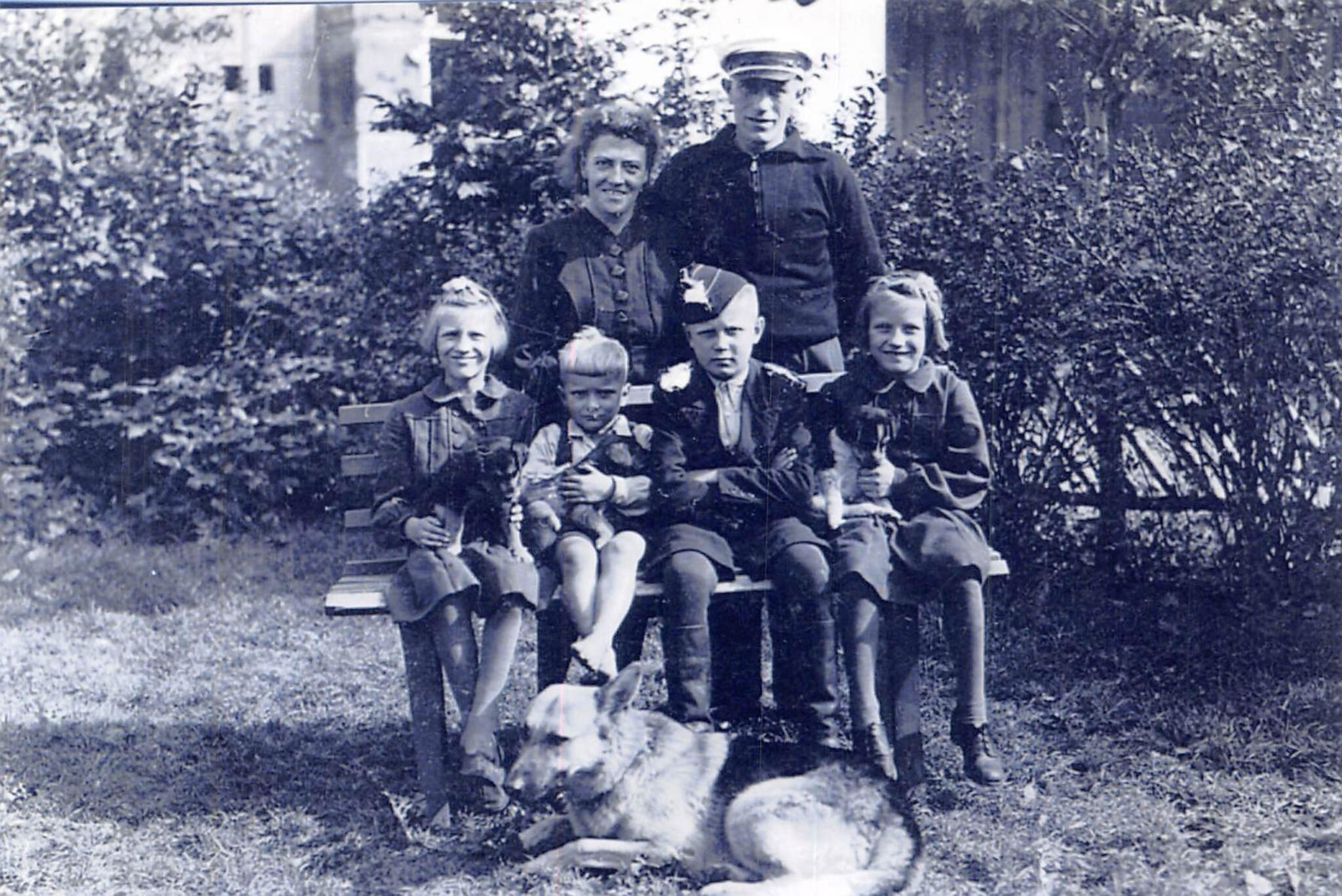
Jason Prokowiew's memoir, "War Boys," published on July 1, recounts the intertwined histories of his father’s childhood in war-torn Belarus and his own experiences growing up in Sudbury, Massachusetts. Prokowiew's father, a young boy during the Nazi occupation, faced devastating loss after returning home to find his family missing, ultimately relying on a Nazi general for survival. Meanwhile, Prokowiew reflects on his own struggles with an abusive father, creating a poignant narrative that spans decades and geographies.
Read More
Prokowiew first began to excavate his father's past while taking a Russian politics course at Oberlin College in 1998. A film screening about the Nazi invasion of Belarus prompted a deep curiosity about his father's wartime experiences that led to over 50 hours of recorded interviews. This process guided him as he contemplated the connection between their lives.
The author credits Mike Scalise for helping him establish the dual narrative structure that integrates both boys' experiences. Initially attempting to frame their stories equally, feedback led him to use the recorded interviews as a narrative anchor, allowing for a more fluid exploration of their shared traumas.
In researching for the memoir, Prokowiew traveled to Belarus in 2006, visiting significant locations from his father’s past. He sought to understand the extreme conditions his father endured as a child during the occupation. This journey, combined with information gathered in archives, provided valuable insight into his family's history, including the tragic fate of his grandmother, who was murdered by the Nazis.
Throughout the book, Prokowiew discusses the significance of his father’s name changes—from Volodya to Wolfgang under the Nazis and finally to Walter in America—as crucial adaptations for survival. He emphasizes that his father's legacy is a complex blend of resilience and trauma.
Prokowiew also reflects on his personal journey in writing the memoir. While he acknowledges the difficulties resulting from his father's abusive behavior, he approaches the narrative with empathy for his father’s past as a survivor. Rather than seeking forgiveness, his goal was to understand the experiences that shaped his father into a difficult parent.
Jason Prokowiew will discuss these themes in conversation with Alysia Abbott on July 16 at Belmont Books.