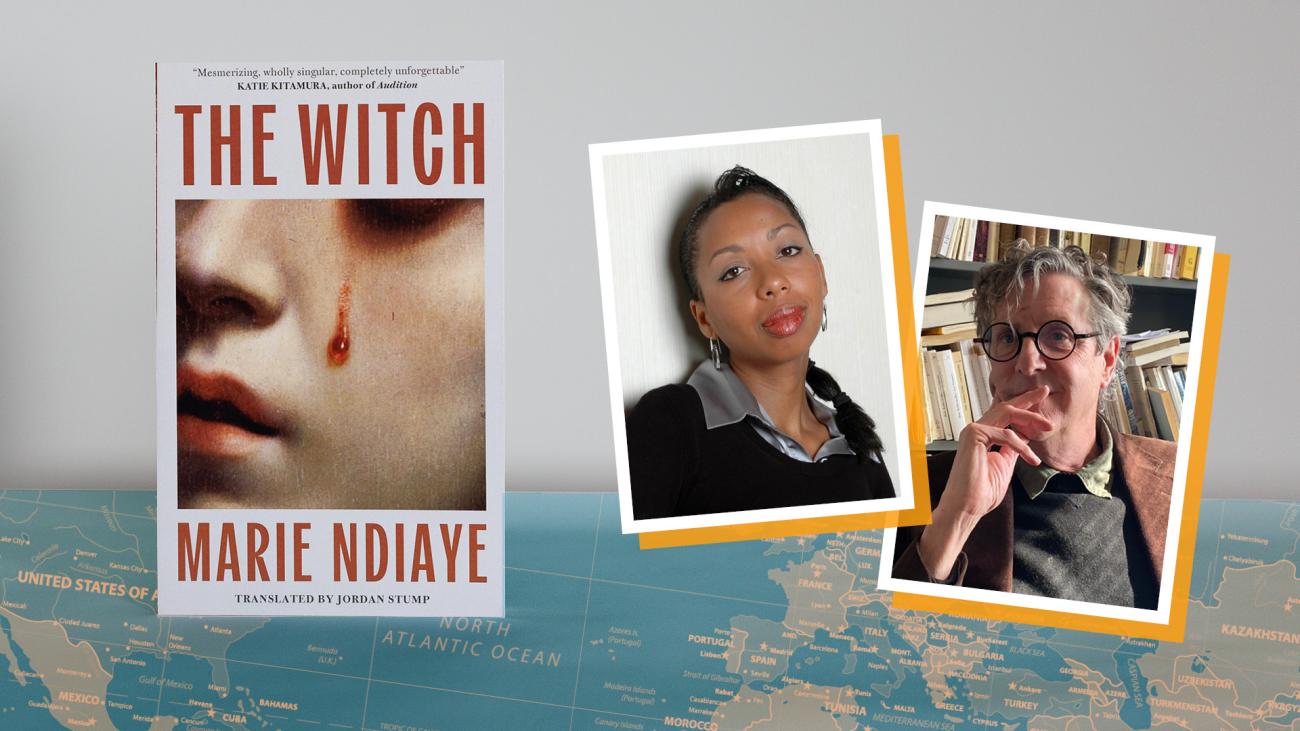
Marie NDiaye, nominated for the 2026 International Booker Prize, drew inspiration for her book, *The Witch*, from her perceptions of contemporary life and the concept of witches. In her view, the idea of witches had faded into the background, merely remnants of childhood fairy tales. She crafted her main character as a modern witch, grappling with her powers and her relationship with her skeptical teenage daughters. "It’s the story of a poor witch who struggles with that power she never asked for," NDiaye explained.
Read More
The writing process for *The Witch* spanned approximately two years, with one year devoted to contemplation and another to the actual writing. While living in Normandy with her young children, NDiaye found inspiration in her family life, which is reflected in the narrative.
Reflecting on the theme of this year’s International Booker Prize campaign, ‘Fiction beyond borders,’ NDiaye expressed deep gratitude towards translators like Jordan Stump. She noted that without their efforts, her audience would be limited to French speakers. The recognition given to both authors and translators by the Prize enhances the visibility of translated works and opens up access to diverse cultures.
NDiaye cited Joyce Carol Oates' *Blonde* as a book that profoundly influenced her, capturing her attention with its narrative mastery. She also mentioned reading Annie Ernaux's *Do What They Say or Else* at age 11, which sparked her desire to write.
Regarding books that shape perspectives, NDiaye highlighted *In Search of Lost Time* by Marcel Proust, emphasizing how it deepens readers’ understanding of time and memory. She affirmed that it stands out as one of the greatest works of 20th-century French literature.
Jordan Stump shared his motivations for translating *The Witch*. He was moved by the character Lucie and the blend of the banal with the magical in the narrative. Stump emphasized the challenges of capturing NDiaye’s distinctive voice in translation, requiring numerous revisions to find a suitable tone.
Stump noted that the International Booker Prize has significantly enhanced the perception of translated fiction, allowing works outside of the English-speaking world to gain recognition. He reflected on the insular nature of American literary culture and the importance of translation in countering that trend.
Among his personal favorites, Stump recalled being captivated by James Thurber’s *The Thirteen Clocks* as a child. He described it as a book rich in imaginative language and striking imagery.
Regarding his path to translation, Stump credited Marie Redonnet's *triptych* as a pivotal influence, igniting his passion for the craft. He expressed admiration for translators who undertake unique projects and recommended Raymond Queneau's *Le chiendent* (translated as *Witch Grass*) to English-speaking audiences for its inventive narrative.
Stump concluded with a nod to David Diop’s *At Night All Blood Is Black*, recommending it as a must-read from past International Booker-nominated literature.