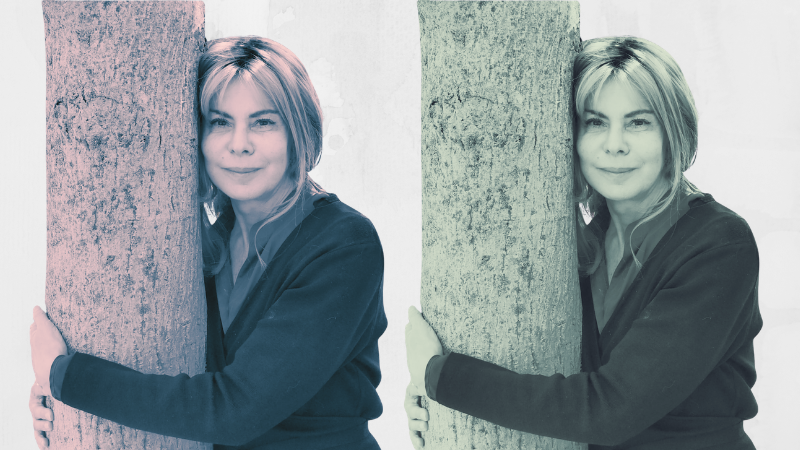
Antonella Anedda emphasizes concrete details in her poetry, stating, “In my poetry… I think I fell in love with reality.” Born in Rome to a family with deep Sardinian roots, Anedda presents a powerful connection to reality in her bilingual collection, Emerging from the Winter Sea, set to be published by Farrar, Straus and Giroux in August 2026. This volume compiles selected works from eight of her books, spanning from Winter Residences (1992) to Geographies (prose) (2021).
Read More
Anedda’s work offers a refreshing approach to poetry, focusing on everyday details that reveal complex truths. By moving away from traditional lyrical expression, she illustrates various facets of life, touching on politics, the environment, and identity. Her ability to reveal multiple viewpoints allows readers to engage with language that transcends polarizing narratives.
In her poem “September 11, 2001,” Anedda alludes to the attack only in the title, using imagery of the natural world and everyday moments to reflect on its aftermath. She writes, “September—says the calendar half consumed with drawings of insects… I kneel to the mud, the gnats the snail, to the effort with which it climbs my fingers.” Through this juxtaposition, Anedda elevates the ordinary, creating a space for contemplation amidst chaos.
Anedda captures the essence of daily life through her rich language, stating, “The things I name in poetry are not noble: they stay under the palate, waiting, conscious only of the warmth.” She acknowledges the limitations of historical narratives, aiming to include voices often overlooked, such as those of nature, soldiers, and victims of violence. Her poetry reflects a deep concern for collective identity and the ongoing impact of war and memory.
In her work, Anedda often challenges preconceived notions of guilt and innocence, asking poignant questions about the effects of war. Lines such as, “You really think not to be punished is enough not to be guilty, but you are guilty. The air is full of screams. They stick to the walls,” confront readers with harsh realities.
Wallis Wilde-Menozzi, Anedda’s translator, reflects on the challenge of conveying the essence of her work into English, striving to remain true to Anedda’s original language while making her poetry accessible to a broader audience. The translation process took months and required balancing fidelity to the original text with the need for contemporary resonance.
Anedda’s work embodies centuries of poetic tradition, calling for renewal and connection in today’s world. Emerging from the Winter Sea underscores the beauty of language as a means to witness and invent, connecting readers to shared human experiences.
Emerging from the Winter Sea by Antonella Anedda, translated by Wallis Wilde-Menozzi, will be available from Farrar, Straus and Giroux.