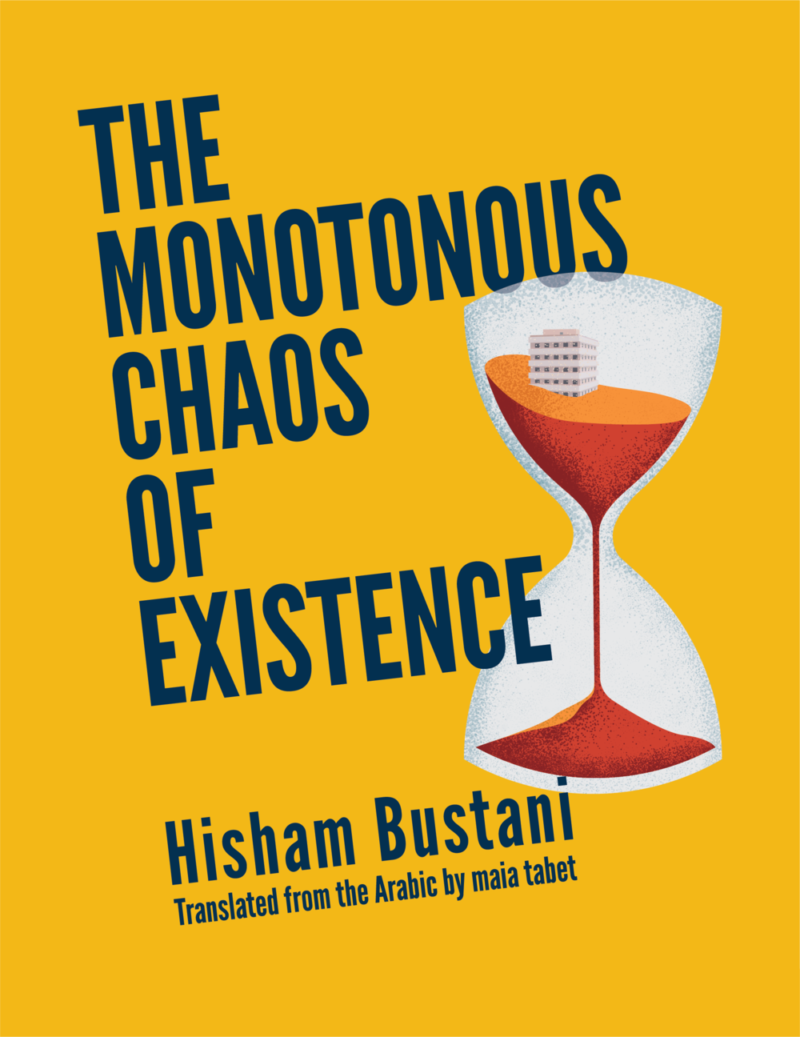
Hisham Bustani is an acclaimed writer and poet from Jordan, known for his five collections of poetry and fiction, including "Of Love and Death" (2008) and "The Perception of Meaning" (2012), which received the University of Arkansas Arabic Translation Award. In 2017, Bustani was awarded a residency for writers by the Rockefeller Foundation. Besides his literary contributions, he is an active voice for social issues in Jordan. His latest book, "The Monotonous Chaos of Existence," translated from Arabic by Maia Tabet, was recently published by Mason Jar Press.
Read More
In an interview in March 2022, Curtis Ryan, a professor at Appalachian State University and member of MERIP's editorial committee, praised Bustani's innovative approach, particularly his integration of vintage photographs and graphic novel elements in his latest work. Bustani explained that he views literary writing as a collaborative art, aiming to invite readers into the creative process. He highlighted how comics reinterpret written narratives visually, enhancing reader engagement with the text. He articulated that all artistic expressions are rooted in the physical world, echoing Salvador Dali’s surrealism and abstract art like that of Mark Rothko, which evoke complex emotions and connections derived from experiences in reality.
Ryan noted Bustani's innovative style in both poetry and short fiction, asking whether he favors one over the other. Bustani described both forms as complementary tools for storytelling, often blending them within the same piece to challenge conventional genre boundaries. His work includes pieces such as "Orchestra" and "Voices Within," which straddle the lines of poetry and fiction. He emphasized that the focus should be on the artistic quality rather than genre categorization, criticizing the pressures of mainstream publishing that prioritize mass appeal over artistic exploration.
The conversation shifted to Bustani's story "Faysali and Wehdat," which explores the deep-seated issues of identity politics in Jordan through the lens of rival football teams. He reflected on how these identities reflect colonial constructs and the narratives pushed by oppressive regimes, illustrating the implications of these societal divisions. Despite its provocative content, which almost led to censorship in Jordan, the story shines a light on the misuse of sports as a political tool. He detailed the complex dynamics with Jordanian authorities, describing how his book faced scrutiny, yet ultimately was allowed to be published. However, it faced restrictions in access even in independent cultural institutions.
Bustani credited his translators, Thoraya El-Rayyes and Maia Tabet, for their adeptness in capturing the nuances of his work for English-speaking audiences. He underlined the collaborative nature of translation as a creative process, often learning from the editorial back-and-forth which can influence the original Arabic text itself.
When discussing the relationship between his activism and writing, Bustani articulated that his experiences as an activist enrich his literary voice. He noted that writers are shaped by their environments and experiences, which informs their artistic output. He highlighted his involvement in the campaign against Jordan's gas deal with Israel, describing it as a significant moment in Jordan’s political landscape that utilized innovative protest methods and emphasized cross-ideological alliances.
Despite the challenges faced by activists in Jordan, such as restrictive laws and the surveillance of dissenting voices, Bustani expressed a commitment to continuing the fight for justice and human rights. He acknowledged the grim political climate but remained hopeful, asserting that people’s movements ultimately spark change. Bustani concluded by stating that a world without protest is a dream of authority, urging those committed to equality and justice to persist in their efforts to reshape their reality.