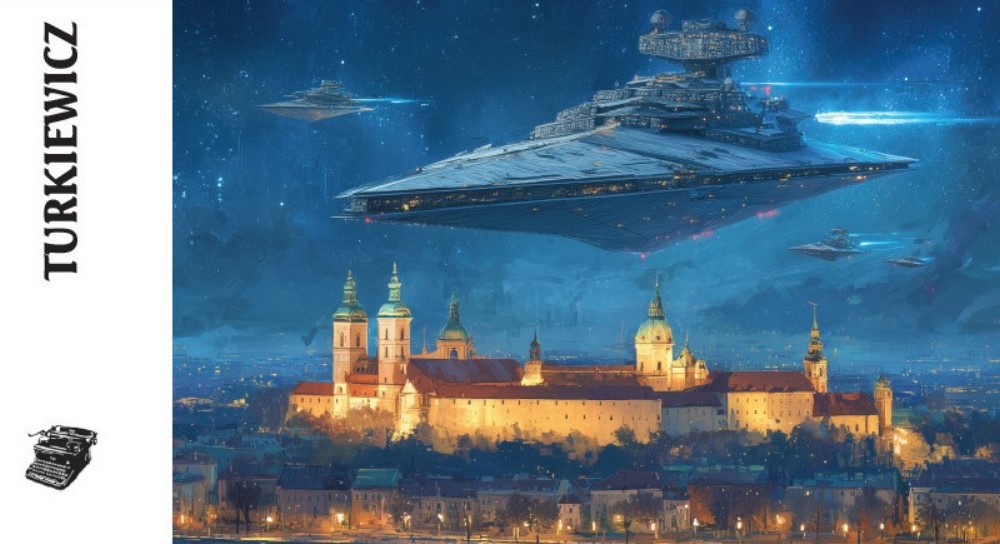
Jakub Turkiewicz’s book, *Wojna gwiazd* (War of the Stars), presents a detailed study of the Star Wars fandom in Poland, intertwining historical insight with personal narrative. Released on April 10, 2026, by Stalker Books, this expanded second edition spans 430 pages and offers a unique perspective on how a global pop culture phenomenon thrived in an authoritarian regime.
Read More
The author combines his historian’s expertise with a deep understanding of the Star Wars community, creating a narrative that contextualizes the fandom within post-war Polish history and popular culture. The book not only examines the cultural landscape of the Polish People’s Republic but also features rich iconographic material that enhances the reading experience.
For many Western fans, the late 1970s and 1980s Star Wars experience is characterized by commercial merchandise and bustling theaters. In contrast, Turkiewicz reveals how Polish fans faced a markedly different reality, where access to official Star Wars products was limited. His work explores the resourcefulness of Polish fans during this time, as they turned scarcity into creativity. This included creating unofficial toys, translating materials, and forming fan clubs despite the oppressive political climate.
The author recalls significant moments from his childhood, such as his astonishment at encountering official Kenner figures during a trip to West Germany in 1984, which highlighted the economic disparities between East and West. Turkiewicz also provides a poignant glimpse into the emotional and social dynamics of fandom in a society where even basic cultural expressions were heavily regulated.
The book employs rigorous methodologies, combining archival research with original interviews to analyze the sociocultural implications of Star Wars in Communist Poland. It positions Star Wars as more than just a cinematic experience; it became a symbol of community and a means of self-expression in a repressive environment. Turkiewicz’s work stands as a significant contribution to the broader understanding of how global pop culture can influence local identities, and it is anticipated that an English translation will further expand its reach.