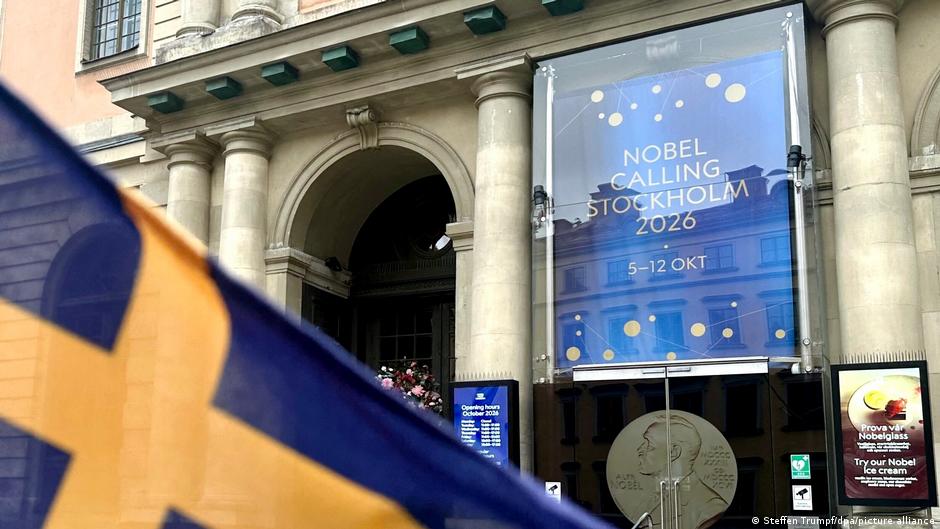
The literary community is focused on Stockholm on Thursday, October 8, at approximately 1:00 p.m. CEST, when Ingrid Carlberg, the new permanent secretary of the Swedish Academy, will announce the winner of the 2026 Nobel Prize in Literature. This announcement concludes a selection process that officially began a year prior.
Read More
The Nobel Prize in Literature is awarded by the Swedish Academy, which is comprised of 18 members, including writers, professors, and intellectuals. In September of the previous year, the Academy's Nobel Committee dispatches nomination forms to hundreds of qualified individuals and organizations. Eligible nominators include literature and linguistics professors, previous Nobel laureates in literature, and heads of national writers' associations.
Gisele Sapiro, a research director at France's National Centre for Scientific Research, indicates that the nomination list can reach 200 authors annually. The committee has the discretion to add names, including those nominated in previous years.
In the spring, the Nobel Committee narrows the list to five nominees, which the Academy's members then review and discuss over the summer. The decision is made public in early October.
While the Academy maintains confidentiality about its selection criteria, it typically favors significant, universal literature that impacts the literary landscape. Alfred Nobel's will stipulates that the prize should honor the individual who produces "the most outstanding work in an idealistic direction," allowing for broad interpretation.
Sapiro notes that prior significant literary awards, such as the International Man Booker Prize or the Cervantes Prize, can enhance a nominee's chances. The selection is also influenced by political contexts; authors opposing authoritarian regimes have frequently been recognized.
The Academy has awarded the prize across various genres, including novels, poetry, and even song lyrics, as evidenced by Bob Dylan's 2016 win. However, only 33 of the 122 laureates have come from outside Europe, and gender disparity remains evident, with women comprising 14.9% of the total laureates, a ratio that only started to balance in the last eight years.
The list of nominees remains undisclosed for 50 years, making the process particularly secretive. For example, Danish writer Johannes V. Jensen was awarded in 1944 after a 40-year wait since his first nomination.