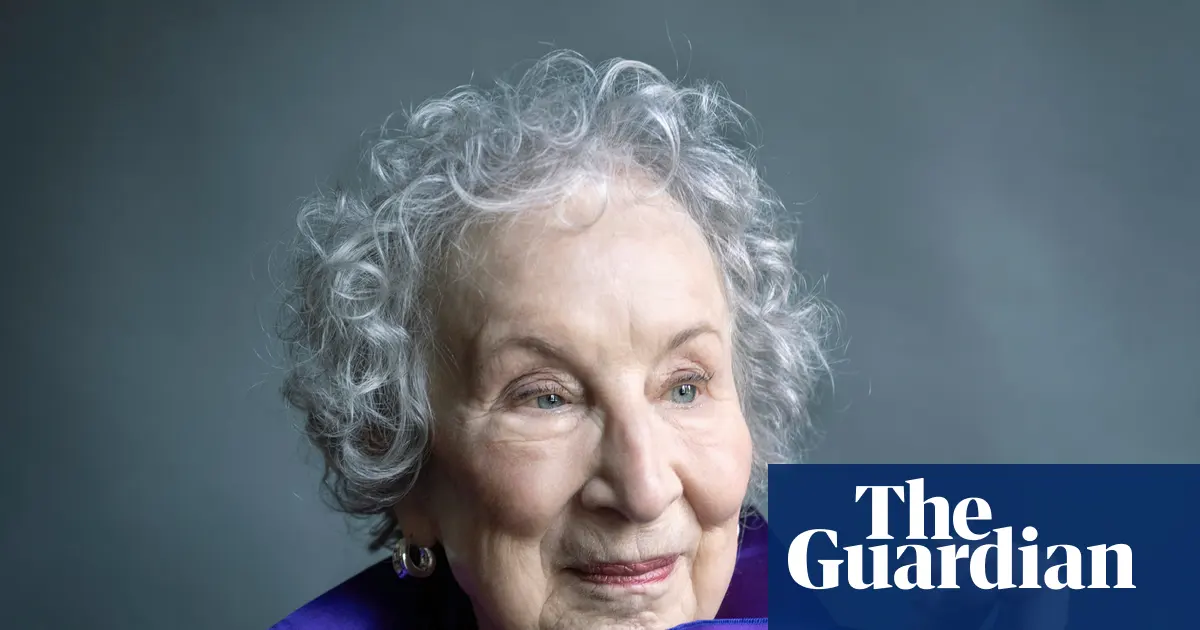
Margaret Atwood, the acclaimed author of The Handmaid’s Tale, is meticulously checking product labels during her grocery shopping in Toronto, prioritizing Canadian goods over imports from the United States. At 86, her environmentalist stance is currently coupled with a reaction to U.S. politics. "Elbows up!” she exclaims, referencing a gesture of Canadian resistance against President Trump’s suggestion to make Canada the 51st state of America. Atwood humorously speculates on the impracticality of such an invasion.
Read More
During our conversation in her garden, Atwood shares the anticipation of her publishers about her new memoir, Book of Lives, which spans 624 pages. This book marks her first entry into autobiography, framed instead as a “memoir of sorts” recounting her life experiences. She emphasizes that her memory is filled with both disasters and foolish moments.
The memoir reflects on significant historical events like World War II, the Cold War, 9/11, and the rise of Trumpism, threading her personal narrative through these times. Atwood's previous essays, compiled in Burning Questions, tackled issues important to her, including women's rights and environmentalism. In her new work, she delves into the origins of her novels and settles personal scores while sharing stories of her life, interspersed with humor and irony.
Atwood also discusses her personal losses, including the death of her long-time partner, Graeme Gibson, which adds depth to the memoir's narrative arc. The couple shared a life of adventures and creative projects, and Gibson’s passing in 2019 profoundly affected her, though she remains a private individual regarding her grief.
Reflecting on her literary accomplishments, Atwood acknowledges her robust presence in a publishing landscape previously dominated by male authors. She gained international recognition after the adaptation of The Handmaid’s Tale into a Hulu series, particularly coinciding with a politically charged environment, making her work seem more relevant than ever. The red robes of the Handmaids have become a symbol of protest in various social movements.
As the filming of the series adaptation of her sequel, The Testaments, wraps up in Toronto, Atwood distinguishes the current U.S. political climate from totalitarianism, while voicing concern over the potential loss of global influence by America. She addresses various cultural issues, including the ongoing conversations surrounding women's rights and the challenges of the #MeToo movement, before pointing out that the most frequently banned books today are those addressing LGBTQ themes.
Atwood remains cautious about ideological extremes in her discussions and emphasizes her commitment to questioning societal narratives. She expresses both an awareness of and indifference toward the possibility of being 'canceled,' having faced criticism throughout her career.
As she contemplates the current global landscape, Atwood describes it as "the scariest of times," reflecting on historical shifts in power and the uncertainty of the future. Her perspectives are shaped by her unique life experiences, including her unwillingness to hold onto the past or present a static view of herself.
Looking to the future, Atwood does not plan to retire, noting her ongoing projects and creative endeavors. As she interacts with younger audiences, she displays a continued relevance and connection to new generations of readers. Atwood remains engaged with the world, using platforms like Substack to voice her thoughts and concerns while finding joy in the creative process.