The ongoing legal discussions surrounding the definition of "waters of the United States" (WOTUS) are often overshadowed by high-profile water resource debates like those concerning the Colorado River. Recently, the U.S. Supreme Court's Sackett decision has further complicated the issue, prompting the U.S. Environmental Protection Agency (EPA) to propose a new rule regarding water bodies covered under the Clean Water Act.
Read More
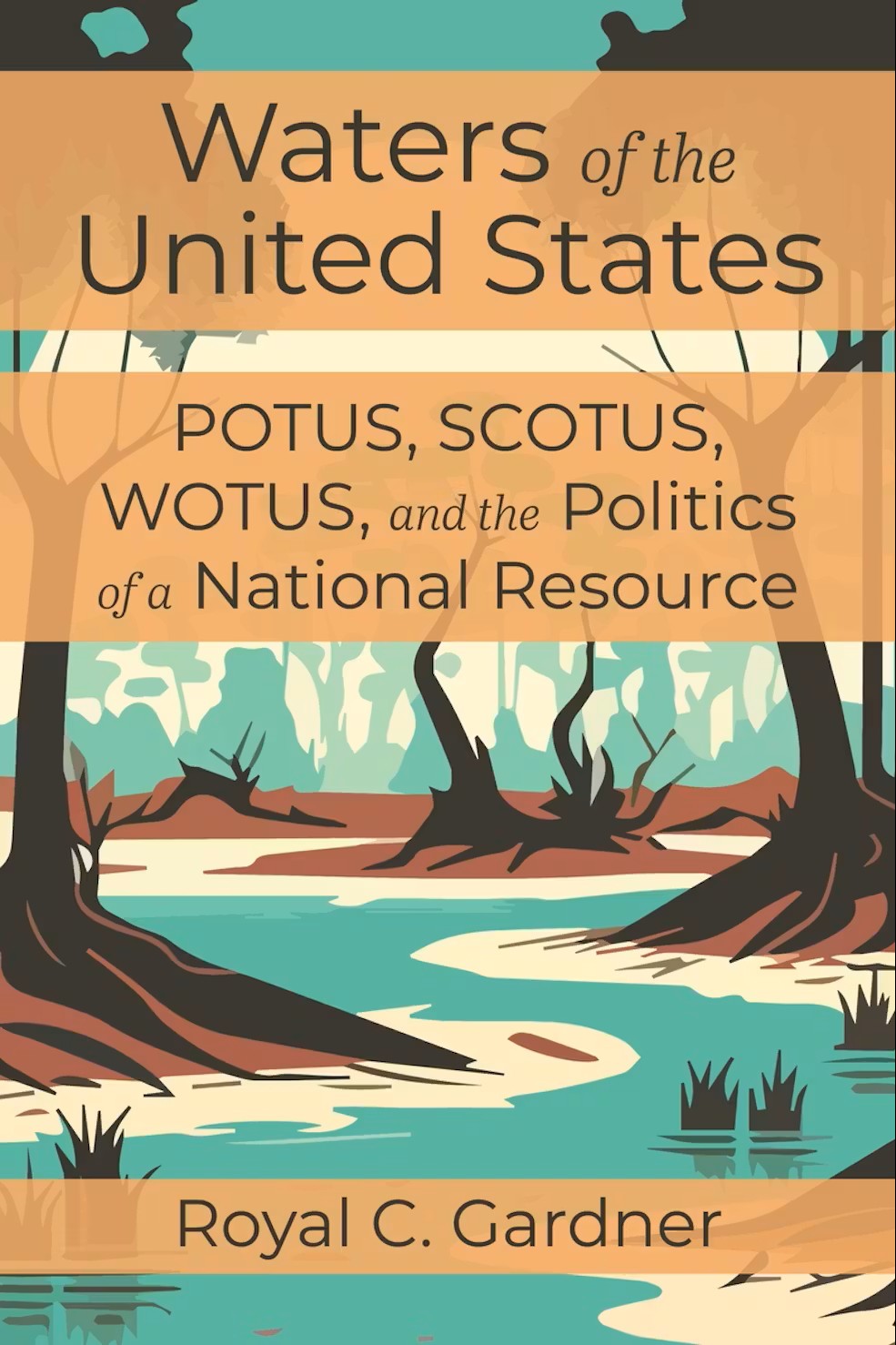
Royal Gardner's book, "Waters of the United States: POTUS, SCOTUS, WOTUS, and the Politics of a National Resource" (Island Press, 2024), offers a comprehensive historical overview and critical analysis of the evolving definition of WOTUS. In a recent interview, Gardner shared insights into his writing process, his target audience, and the inspirations behind his work.
Gardner aims to reach a diverse audience, particularly those familiar with environmental law and policy. He notes that while many understand the terms POTUS and SCOTUS, fewer recognize WOTUS, which is crucial for federal water regulation under the Clean Water Act. He hopes the book will also engage students and others interested in environmental issues, providing them with valuable resources for understanding and influencing water policy.
The author mentioned foundational works that influenced him, including his first book, "Lawyers, Swamps, and Money: U.S. Wetland Law, Policy, and Politics," as well as William M. Lewis, Jr.’s "Wetlands Explained." He recounts a memorable quote from a 2017 Washington Post article reflecting strong sentiments around the WOTUS regulations, illustrating the personal stakes involved in water governance and regulation.
Gardner argues that the Sackett v. EPA ruling in 2023 significantly weakened the Clean Water Act by narrowing the definition of WOTUS, escalating the political battle over which waters should be federally protected. His book delves into the historical and legal complexities surrounding this definition and discusses the power dynamics between various government entities involved in water quality management.
With new regulations emerging from the EPA, Gardner believes his book provides valuable context for understanding the evolving landscape of water protection in the U.S. He emphasizes that historical awareness is crucial for adequately addressing current and future regulatory challenges.
He expressed a desire to see his book alongside others that address similar themes, such as Tara Lohan’s "Undammed: Freeing Rivers and Bringing Communities to Life" and Chris Jones’s "The Swine Republic: Struggles with the Truth about Agriculture and Water Quality."
Gardner had a productive experience with Island Press, which previously published his first book. After submitting a proposal in late 2021, he began writing in August 2022, ultimately completing the manuscript by February 2024. His book is set to be released in December 2024, and he views it as a timely resource for those invested in water policy.
His advice for aspiring writers underscores the importance of personal engagement with the subject matter and cautions against relying too heavily on generative AI for writing. He believes that the act of writing fosters deeper understanding and creativity. Additionally, he encourages writers to immerse themselves in their topics, suggesting that physical visits to relevant locations can enrich their insights and narratives.