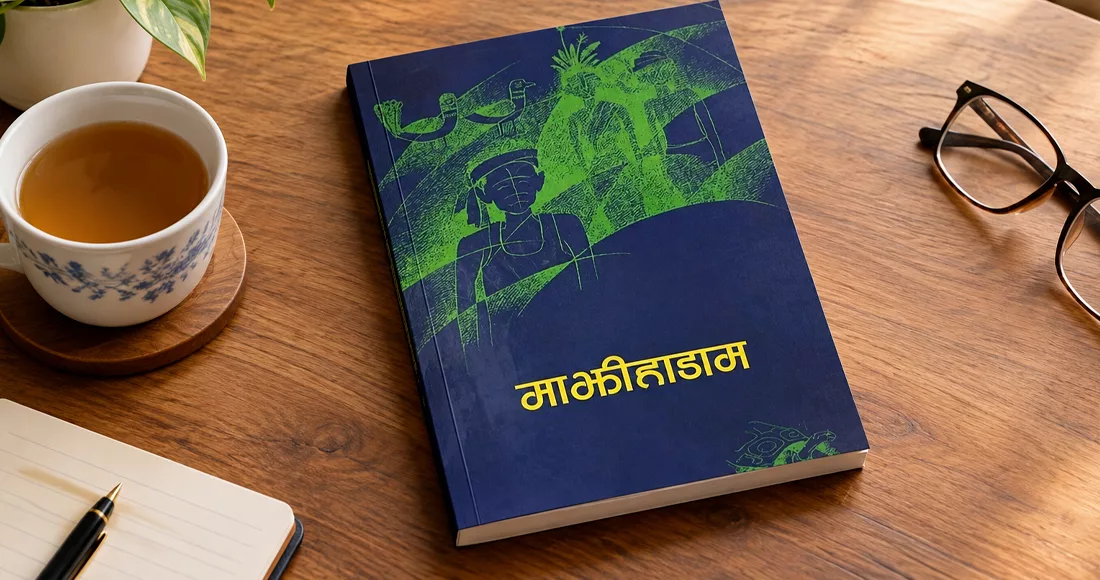
Ramesh Chandra Adhikari is a well-known figure in the literary scene of Koshi Province, frequently participating in various literary events. His recent poetry collection, 'Majhihaadam', published by Red Panda Books, consists of thirty-three poems that are beautifully presented and resonate with deep themes of childhood, social issues, and identity.
Read More
The collection opens with the poem 'Uh: Bela', which explores the pains and curiosities of human existence, particularly reflecting on the nostalgia of childhood through vivid imagery of carefree activities. Adhikari's depiction of childhood captures emotions many can relate to, from innocent fears to the simplicity of past joys.
Other poems such as 'Nani Haru', 'Dara', and 'Bam Machha' delve into similar themes, emphasizing childhood's enduring impact on adult perspectives. Adhikari uses metaphors, including one comparing humans to a lizard's tail, to evoke existential questions about identity and existence, leaving readers with a lingering sense of uncertainty that enhances the beauty of his verses.
The collection also addresses pressing societal issues like poverty, illiteracy, unemployment, and addiction, particularly within the Madhesh community. Adhikari's reflections on the ideals and disillusionment seen in the aftermath of the People's War are poignantly articulated in poems such as 'Bhidanta Na Bhayeko Raat' and 'Prashnaharu ko Ankuse'. His poems assert a strong feminist voice, advocating for women's rights and dignity, especially in 'Jitvahan'.
Adhikari critically examines the political landscape of Nepal, highlighting the frustrations of the people post-political liberation in poems like 'BP Chowk ko Salik', where he critiques leaders for failing to uphold the spirit of socialism. He draws a stark comparison through the imagery of historical monuments, symbolizing the disappointment of unfulfilled promises.
The collection also brings attention to the unique cultural narratives of the Santhal community, highlighting their struggles and identity through poems like 'Balidan', 'Aadim Sabhyata', and 'Uttar Khojirahi Chha Chhano'. The title 'Majhihaadam' reflects the historical and cultural roots of this community, symbolizing a system of leadership and customary practices that are fading away in the modern era.
Although the collection has its faults, such as typographical errors and occasional thematic inconsistencies, Adhikari’s work emerges as a significant voice. It captures a sense of social responsibility, addressing identity, women's issues, child psychology, and persistent political corruption, thereby establishing him as a thoughtful and engaged poet.