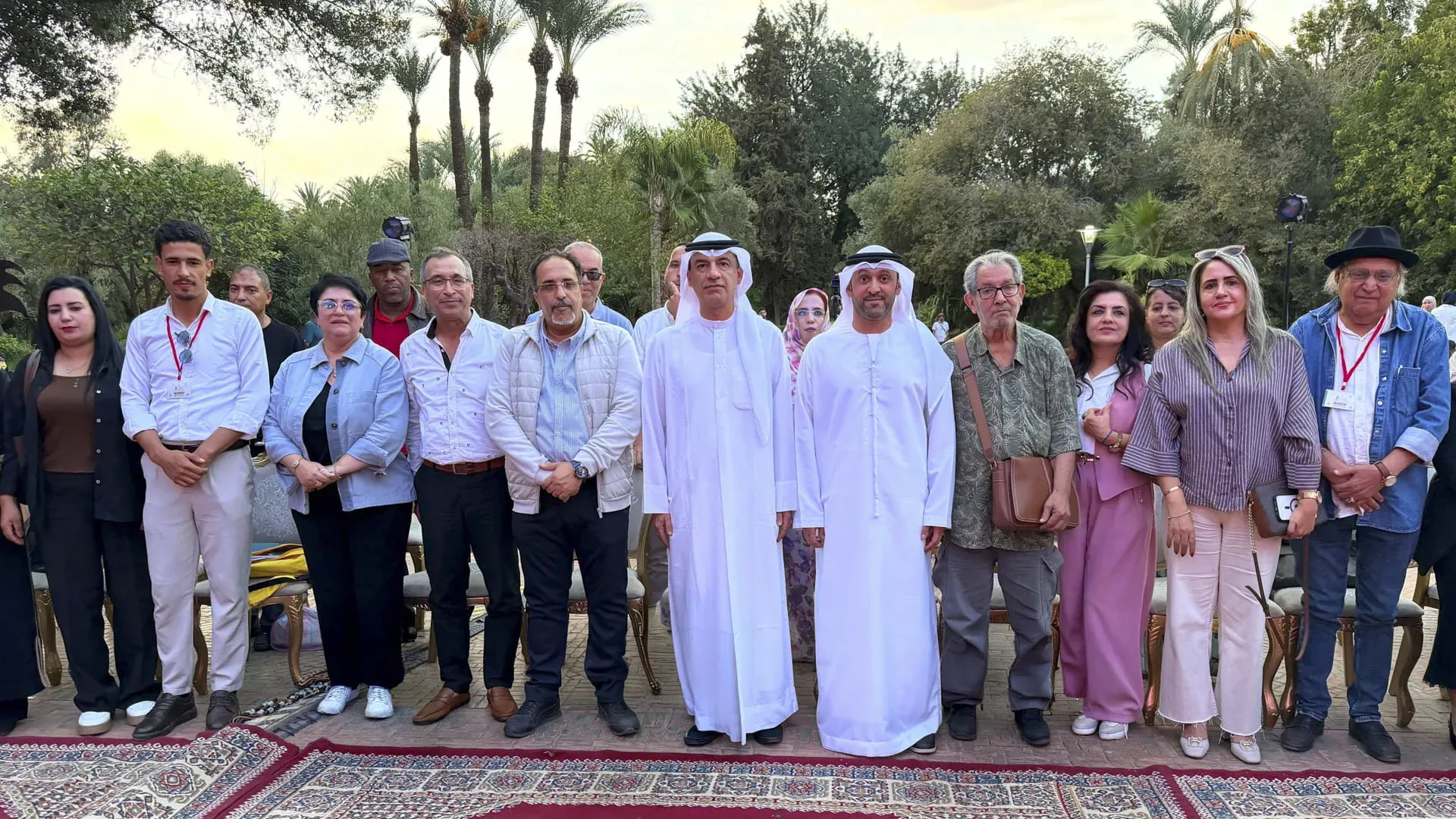
The Marrakech Moroccan Poetry Festival wrapped up its eighth edition with a closing ceremony attended by notable figures including Abdullah bin Mohammed Al Owais, Chairman of Sharjah’s Department of Culture, and Dr. Belaid Boukadier, President of Cadi Ayyad University. Also present were Mohammed Ibrahim Al Qaseer, Director of Cultural Affairs at the department, Rachid Al Mustapha from the Ministry of Youth, Culture and Sport, and Abdelhaq Mefrani, Director of the House of Poetry in Marrakech, among other academics, students, and poetry enthusiasts.
Read More
Spanning three days, the festival showcased a blend of poetry, music, and various art forms, reflecting the growing interest in poetry within Morocco’s cultural landscape. During the closing ceremony, Dr. Boukadier highlighted the significance of creativity in academic life, emphasizing that the same motivation for scientific inquiry also drives artistic expression. He noted the university's commitment to fostering creativity through cultural clubs and literary gatherings, as well as its digital library that facilitates knowledge exchange.
Dr. Boukadier expressed the university's eagerness to strengthen collaborations with the ministry and the House of Poetry in Marrakech, proposing initiatives like poetry-writing workshops and programs to support emerging writers. He recognized Sharjah’s expertise in promoting Arabic poetry.
The last day featured a poetry session called “Poets Heading into the Future,” which included contributions from Abdelrahim Asban, Maryam Atwaif, Taha Fares, and Zahira Al Saadi, moderated by Khadija Al Saadi, with a musical performance by Idriss Jara.
Discussions with festival honorees, including Idriss El Miliani and Khadija Yekken, offered insights into their artistic journeys, allowing audiences to engage directly with their experiences and challenges. Closing events were held in Moulay Abdel Salam Garden, showcasing poets Mohammed Al Salhi and Halima El Moujahid among others, alongside a performance titled “Alphabets and Choreography” by Hania Cherrami and Ibrahim Labloul.
The second day of the festival began with a forum on “The Identity of the Moroccan Poem,” where researchers discussed the evolution of Moroccan poetry and its diverse expressions. They addressed the impacts of cultural diversity and artificial intelligence on creative processes. Participants advocated for ongoing critical dialogue to reflect the richness of contemporary Moroccan poetry.
A subsequent poetry session included performances by Barae Leila and Mohammed Boukrim among others, leading into an evening with poets across the Arab world, including Saudi and Egyptian voices, moderated by Hanan Madhari.
Festival participants commended Sharjah's role in supporting Arab culture, indicating that it serves as a hub for intellectual and creative talent. They acknowledged the House of Poetry in Marrakech for fostering new artistic voices and extending cultural activities into less urban areas. Poet Ibrahim Lbihe noted the institution's efforts in promoting cultural engagement in remote regions, while Thouraya Al Kour recognized its role in connecting generations of Moroccan poets.
Honoree Idriss El Miliani stated that such institutions significantly enhance poetry's visibility across Morocco, while Abdessamad Ait M'Barek, a participant in poetry workshops, credited the House of Poetry for helping him develop his voice. Theatre practitioner Hamdan Mohammed Al Habib highlighted the need to promote reading and writing amid technological advances, and poet Abdelrahim Asban commended the initiatives aiding young writers over the past decade. Festival participants collectively expressed gratitude to Sharjah for its enduring support of poetry and cultural exchanges within the Arab world.