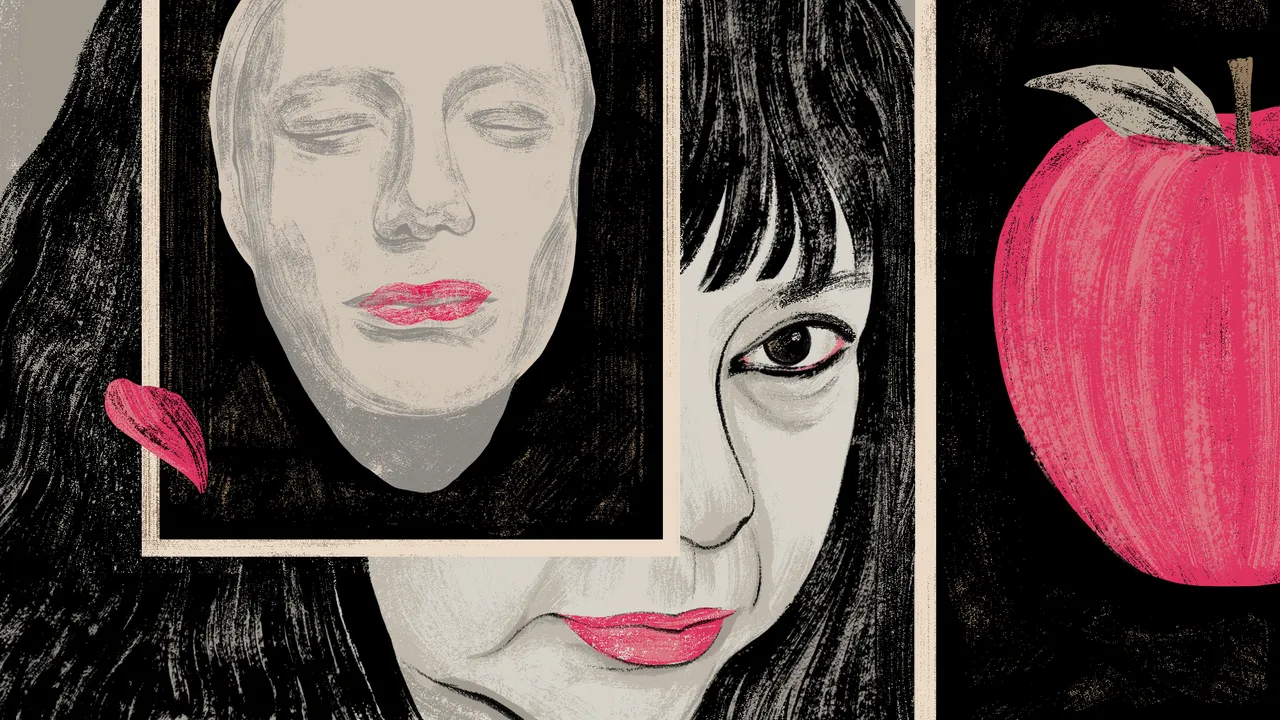
Poet Diane Seuss recently discussed her experiences with companionship and loss, particularly in relation to her pets. During a phone conversation, she shared her emotional journey after losing her dog, Bear, during the pandemic and her current bond with her new dog, Stella, whom she describes as “cool, interesting, complicated.” Seuss expressed a desire for a supportive pet, acknowledging with a laugh that this expectation hasn’t been met.
Read More
At sixty-eight, Seuss is recognized as a prominent poet, celebrated for her technical skill and emotional depth in her work. Her poems often blend humor with serious themes, exploring topics such as grief—the loss of her father at age seven—and the complications of nostalgia. In her poem “Folk Song,” she conveys a sense of critique regarding idealized notions of her hometown.
Born in 1956 and raised in Niles, Michigan, Seuss came from a working-class background and had a diverse educational path, including studies in art at Kalamazoo College and a master's in social work from Western Michigan University. She raised her son as a single mother while teaching social work and began teaching poetry in 1988, although her first collection was only published a decade later.
Seuss’s various accolades reflect her contributions to contemporary poetry. Her collection “Four Legged Girl” was a Pulitzer Prize finalist, while subsequent works like “Still Life with Two Dead Peacocks and a Girl” and “frank: sonnets” have also received critical acclaim, the latter winning a Pulitzer Prize in 2021. Her newest work, “Modern Poetry,” addresses the role of poetry and its relevance to life, exploring connections with the past and summoning deceased figures, including a dead parent and famous poets.
When discussing “Modern Poetry,” Seuss revealed her feelings of alienation during the pandemic, prompting her to question poetry's significance in her life. She expressed a desire to explore new forms, including free verse, as a means to challenge her artistic process. Her introspection led her to contemplate the current and future relevance of poetry for her existence.
Seuss explained that her poems reflect her journey of grappling with grief and connection, emphasizing that losing loved ones influences her creative output. She noted that her need for poetry can serve as a vehicle for processing her emotions and maintaining connections with those who have passed.
Her reflections extend to her relationships and what it means to write about both love and grief. In discussing her encounters with the idea of closure, she mentioned that poetry allows her to explore the complexities of these themes openly, often resisting neat resolutions.
Throughout the conversation, Seuss articulated a profound understanding of the interplay between everyday occurrences and deeper existential questions. This perspective shapes her writing, which frequently captures moments of clarity amid the chaos of life. She concluded that her approach to grief and connection is an essential part of her identity as a poet, one that keeps her motivated to write and reflect on her experiences.