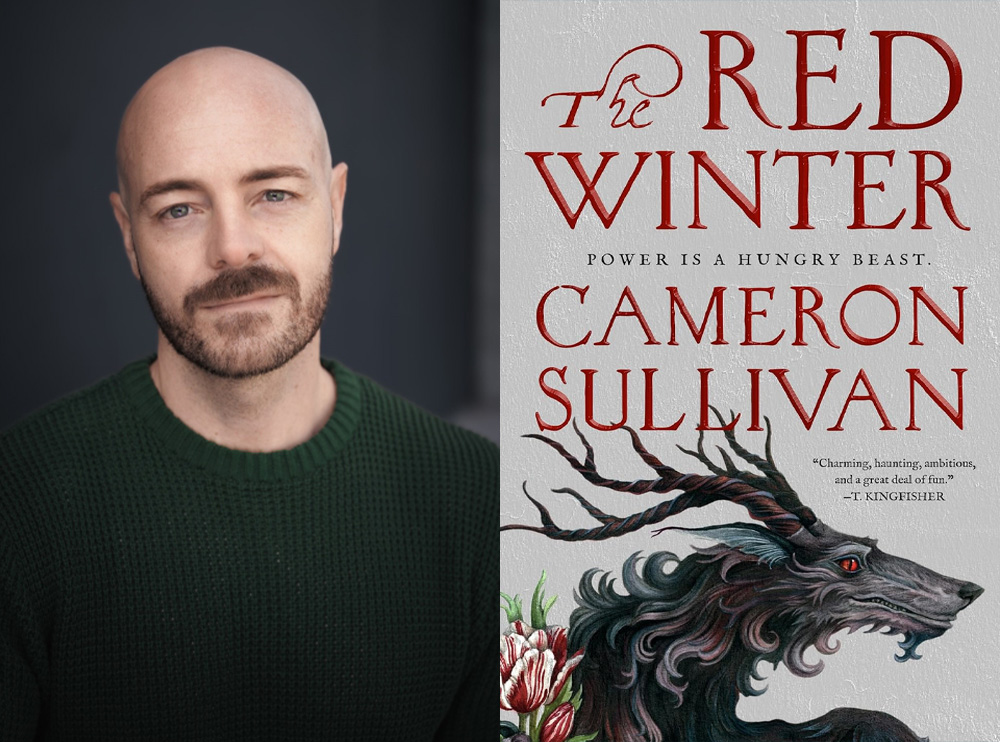
Author Cameron Sullivan recently discussed his debut novel, The Red Winter, a dark retelling of the hunt for the Beast of Gévaudan. The book intricately weaves elements of Europe’s history, from Imperial Rome to the early days of the French Revolution, exploring themes of horror, fantasy, and folklore.
Read More
Sullivan, who grew up in Perth, Western Australia, and now resides in Melbourne, expressed his passion for the genres of science fiction and fantasy. He encourages readers to share recommendations for underrated media. Reflecting on his writing journey, he noted that he developed an interest in storytelling at a young age, writing stories as soon as he learned to write.
His debut novel is set to be released on February 24th, and he describes it in five words as bloody, rich, humorous, adventurous, and romantic. Readers can anticipate a dark narrative that features a genuine monster hunt on the brink of the French Revolution, intertwined with a poignant queer love story.
The inspiration for The Red Winter stemmed from the historical account of the Beast of Gévaudan, which terrorized the region in the 1760s, leading to a nationwide hunt after hundreds of people were attacked. Sullivan enjoyed writing the darker characters, especially Sarmodel, a demon sharing a body with the protagonist, Sebastian.
He faced challenges in both confidence and the book’s structure, recalling moments of self-doubt as he worked on the story over a seven-year period. He was guided by his agent, Christabel McKinley, and his editor, who helped refine the manuscript.
Sullivan's journey to publication was marked by both long periods of silence and sudden breakthroughs. After working with a professional editor and seeking representation, he finally signed with McKinley, leading to a swift agreement with Tor US.
Looking ahead, he has another book in the works, exploring different aspects of Sebastian and Sarmodel’s history, while he also anticipates reading new releases such as King Sorrow by Joe Hill and The Everlasting by Alix E. Harrow.