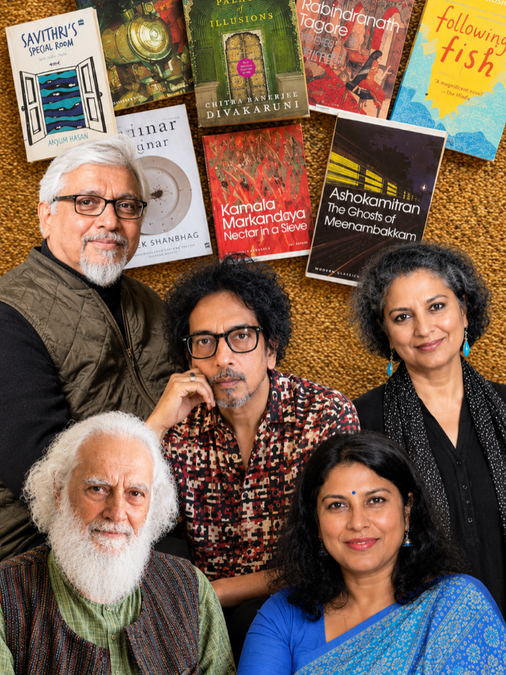
This year, Anne Carson received the Nobel Prize in Literature for her work that transforms ancient Greek myths through various forms of writing. In a similar spirit, five Indian writers are experimenting with narrative styles in their own distinctive ways.
Read More
Amitav Ghosh's novel Sea of Poppies features a diverse cast of characters sailing across the Indian Ocean in 1838. Ghosh enriches their experiences by incorporating dialects, regional expressions, and sailors' slang, skillfully blending English with Indian dialects.
Sarnath Banerjee, in The Barn Owl's Wondrous Capers, intertwines the historical and mythical by using old Calcutta as his backdrop. The narrative requires readers to piece together various elements, as he tells the story through comics, historical references, and visual clues.
Geetanjali Shree's Tomb of Sand follows an 80-year-old woman who embarks on a new life after her husband's death. The narrative deviates from a traditional plot structure, using playful wordplay, shifting perspectives, and unexpected detours. Originally written in Hindi as Ret Samadhi, it was translated into English by Daisy Rockwell and made history in 2022 as the first Hindi novel to win the International Booker Prize, presented in London.
Arvind Krishna Mehrotra's The Absent Traveller translates ancient Prakrit verses that capture themes of secret meetings and heartache, maintaining their brevity and wit. Drawing from the Gatha Saptashati, an anthology linked to the Satavahana king Hala, Mehrotra's translations retain the poignant simplicity of the original poetry.
Chitra Banerjee Divakaruni offers a fresh perspective in The Palace of Illusions by retelling the Mahabharata through Draupadi's eyes. This approach delves into her desires and struggles, presenting an often-overlooked viewpoint in the epic's traditional narratives.
Although their styles differ, Ghosh, Banerjee, Shree, Mehrotra, and Divakaruni share a common goal of redefining storytelling through language, form, and perspective. Just as Anne Carson reimagined myth, these writers reshape narratives in innovative ways. If each of these authors can bend one storytelling rule, one might wonder which rule would be exciting to see broken next in Indian literature.