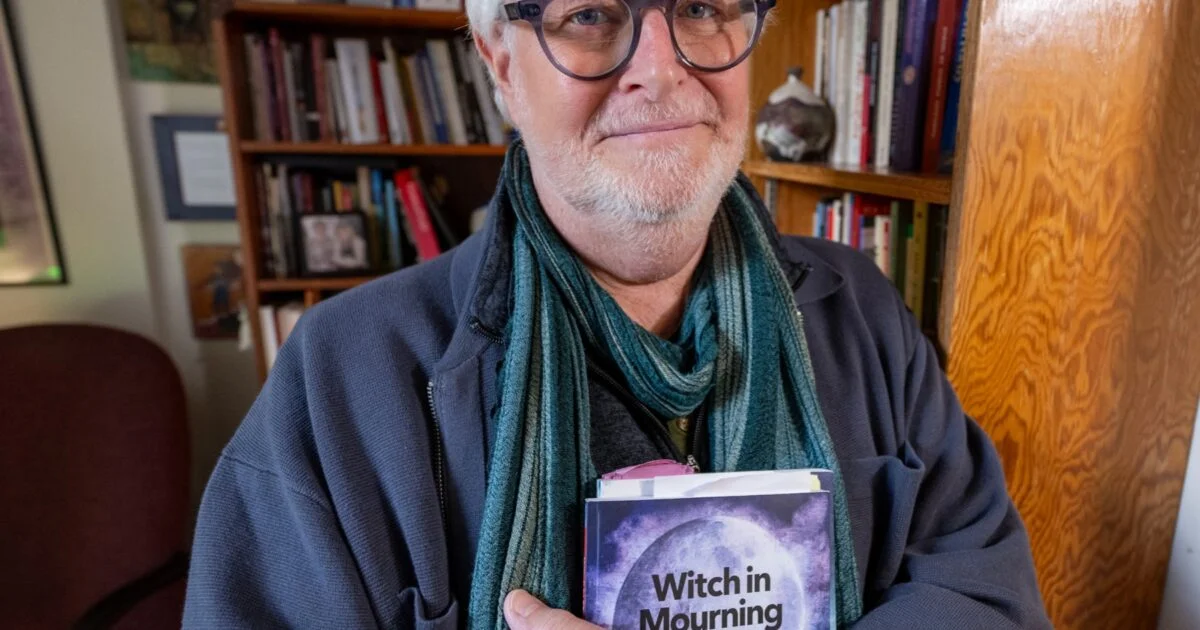
Clyde Moneyhun, a professor in the Department of Theatre, Film and Creative Writing at Boise State University, has translated four poetry collections into English, including “Witch in Mourning” by Maria-Mercè Marçal. Moneyhun possesses a diverse academic background with a BA in comparative literature, an MA in American literature, an MFA in fiction writing, and a Ph.D. in rhetoric, composition, and teaching English.
Read More
Throughout his career, Moneyhun has traveled extensively and lived in Japan for two years. He describes his professional journey as a series of explorations, ultimately leading to his passion for literary translation. This process involves recreating the essence of a poem from one language to another while preserving its impact, which he admits is a difficult task.
"You translate poetry? That’s impossible," Moneyhun noted, acknowledging the challenges of maintaining rhyme and meter. He translates primarily from Catalan, as well as Spanish, Italian, and French. To date, he has published four poetry and one children's book translations.
Now partially retired, he splits his time between Mahón, Spain, and Boise while continuing to teach online nonfiction writing classes.
In a recent interview, Moneyhun addressed ten questions about his career:
1. **What question have you spent your life trying to answer?** Moneyhun reflected on the pursuit of happiness, noting his unexpected joy in his current role at Boise State University, which he initially took out of necessity after feeling burnt out at Stanford.
2. **When did you become fascinated by literary translation?** He discussed how his undergraduate studies in comparative literature at Columbia University led him to engage with foreign languages, prompting his first translation experiences during college.
3. **Do you remember your first published translation?** Moneyhun recalled translating a piece by Italian novelist Natalia Ginzburg during his senior year, marking a significant moment in his literary journey.
4. **What is the most common misconception about literary translation?** He emphasized that translation is not simply about word substitution but involves navigating the unique structures and cultural nuances of different languages.
5. **What do you do when you’re stuck on a problem?** Moneyhun advised taking a break and revisiting the problem later, suggesting this approach applies to various challenges, including teaching.
6. **How has your teaching approach changed over the years?** He noted the importance of incorporating multiple drafts and revisions into the writing process, moving away from the traditional single-submission model he experienced as a student.
7. **What recent book resonated with you?** He praised Colin Thubron's "Journey Into Cyprus," highlighting its engaging narrative and rich exploration of the region's complexities.
8. **What is the most interesting place you’ve visited?** Moneyhun expressed admiration for Kyoto, Japan, citing its beauty and significance as a center for Buddhist culture.
9. **What hope do you have for the next generation in your field?** He wished for better financial support for translators, noting that most literary translators often juggle other jobs to make ends meet.
10. **What principle do you try to live by?** Moneyhun encouraged kindness and support among people, acknowledging the inherent difficulties of life.
For those interested in being featured in the "10 Questions" series, submissions can be directed to the provided email contacts.