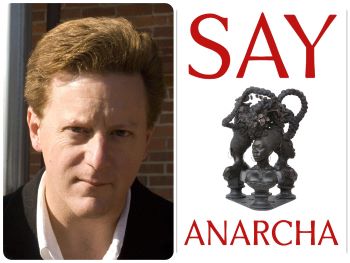
Author and journalist J.C. Hallman’s latest book, titled *Say Anarcha: A Young Woman, a Devious Surgeon, and the Harrowing Birth of Modern Women’s Health*, explores the inhumane treatment of enslaved women by J. Marion Sims, often referred to as the “father of gynecology.” Hallman's interest was piqued while researching for another article when he discovered a woman's work on vesicovaginal fistula (VVF) in Africa. VVF, resulting from obstructed labor, leaves women with debilitating injuries, affecting their lives and dignity, particularly among impoverished communities.
Read More
Historically, VVF was prevalent among enslaved women in the United States. In the mid-19th century, Sims claimed to cure the condition and was initially celebrated. However, growing awareness of his unethical practices—specifically, performing experiments on enslaved women without anesthesia—led to significant backlash, including the removal of a statue of Sims in Central Park in 2018.
Hallman's research included his travels to Africa, where he encountered a plaque in a VVF hospital honoring Sims. This connection inspired him to delve into the intertwined stories of Sims and the enslaved women he exploited. Hallman characterizes his book as “speculative nonfiction,” revealing little-known aspects of Sims' life, including allegations of espionage on behalf of the Confederacy during the Civil War.
In the interview, Hallman emphasized that while there has been a movement to celebrate the enslaved women as the “mothers of gynecology,” he refrained from using this phrase. He noted that the narratives of both Anarcha, a key figure featured in his book, and other women who suffered under Sims' practices are interlinked. He asserts that past claims about Sims’ medical contributions are often exaggerated, stating that many of his purported advances in treatment were either borrowed from other medical practitioners or had been discredited during his lifetime.
Hallman addressed claims about the lack of anesthesia used on enslaved patients, explaining that Sims never detailed its use and cited a dubious instance reported by a biographer involving a different patient’s treatment. This scrutiny sets the stage for Hallman’s exploration of Anarcha’s story through a blend of historical facts and dramatic narrative.
To support his argument, Hallman created an online illustrated bibliography titled “The Anarcha Archive” to compile thousands of sources and images, allowing readers to investigate the documentation behind his work. He believes that historical narratives, especially those that challenge long-held views, require thorough annotation and verification to dispel myths and clarify misunderstandings.
Additionally, he mentioned how certain misconceptions, like the supposed idea that Black women do not feel pain, have misrepresented historical accounts. Hallman aims to correct these distorted narratives surrounding Sims while encouraging further exploration of Anarcha’s legacy and the stories of other women affected by Sims’ practices.
Looking ahead, Hallman is working on several projects, including a new short novel and podcasts surrounding significant historical figures like Thurgood Marshall. He discovered previously lost oral histories about Marshall and is preparing to release videos addressing Sims’ experiments on additional enslaved women. Hallman hopes to further promote awareness and research into Anarcha's story and related historical injustices.