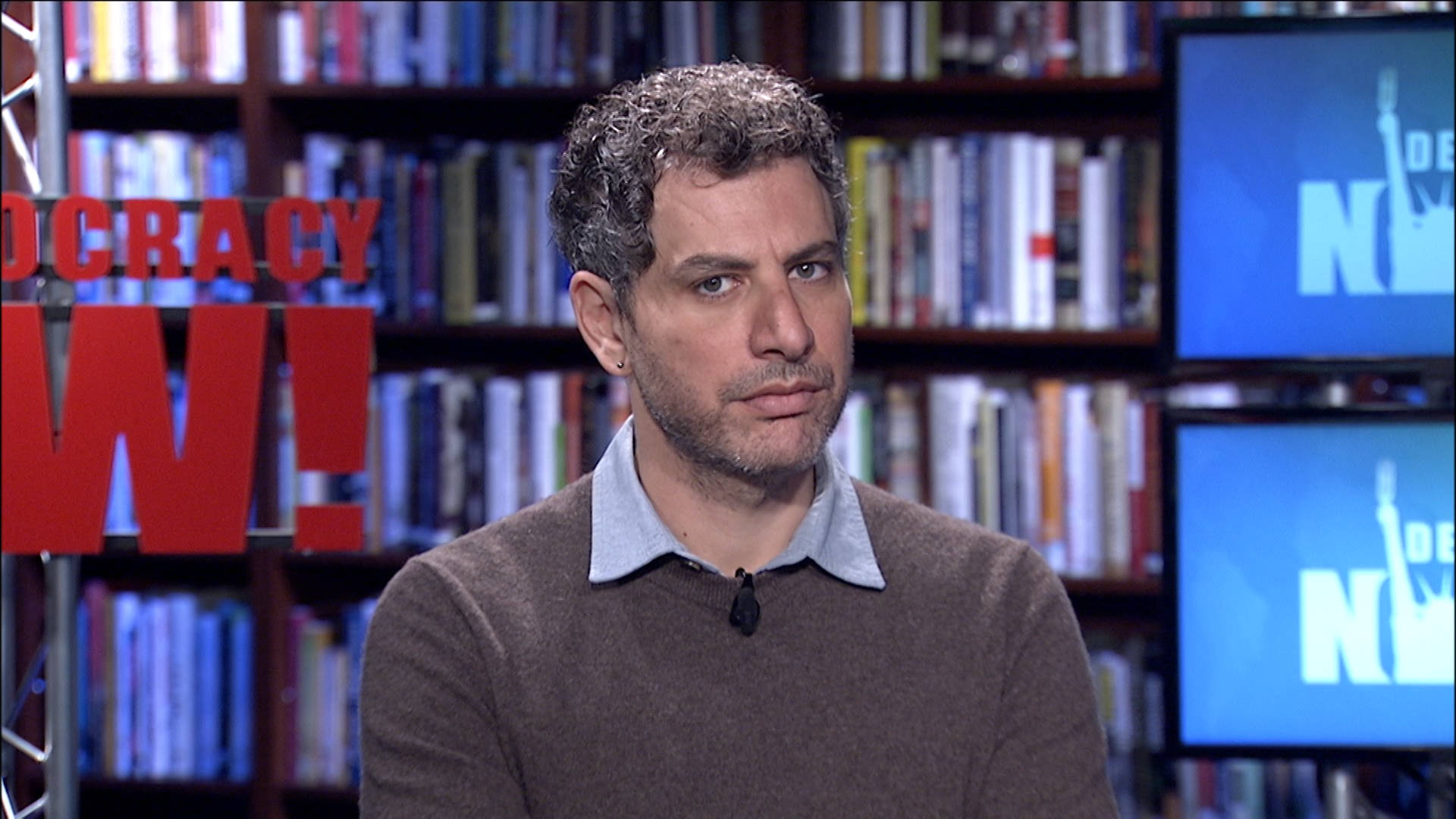
Tareq Baconi, a Palestinian writer and analyst, has released his memoir titled *Fire in Every Direction*. Baconi, the grandson of Jerusalem and Haifa refugees, grew up between Amman and Beirut, and is currently the president of Al-Shabaka: The Palestinian Policy Network. He previously authored *Hamas Contained: The Rise and Pacification of Palestinian Resistance* and has produced an award-winning short film, *One Like Him*, which is a queer love story set in Jordan.
Read More
In an interview, Baconi reflected on writing his memoir, describing the process as a form of personal exploration. He initially viewed himself as a very private individual and hadn't considered writing about his life publicly before. He expressed a belief that many narratives, particularly those concerning queer lives in the Arab world, are often overlooked. Baconi emphasized the importance of sharing his lived experiences to contribute to the discourse, stating that he wanted to create space for voices like his that are often silenced or rendered invisible.
Baconi highlighted the challenges faced by queer individuals in Jordan, where homosexuality is socially stigmatized. He aims to push back against the invisibility of queer narratives in his writing, presenting a complex and authentic portrayal of life. "It’s just rendering a human narrative and putting it out there," he said.
The memoir begins with Baconi recounting a significant moment related to a box given to him by friends, which held letters exchanged with Ramzi, a boy he had strong feelings for during his teenage years. This archive represents not just memories but also connects him to experiences and emotions he struggled to articulate at the time. Their relationship ended abruptly when Baconi revealed his feelings in a letter, which was discovered by Ramzi’s mother, leading to his exclusion from both Ramzi's life and their community for several years.
Baconi described Ramzi as having become an “intimate companion to his thoughts,” despite the decades that had passed since their correspondence ceased. He noted how Ramzi, as an idealized figure in his mind, came to represent societal expectations of masculinity that Baconi felt he could not meet.
Reflecting on his childhood, Baconi mentioned an early experience with a doll that sparked questioning looks from his family, illuminating the complexities of gender identity in a conservative society. While his mother eventually supported his identity as an openly queer person, he recounted her initial reaction as a desire to downplay the significance of his feelings, suggesting they were just a passing phase.
The conversation touched on Baconi’s relationship with his father, who initially found it difficult to accept his son's sexuality but eventually came to embrace Baconi’s identity before passing away. Baconi expressed gratitude for the transformation in their relationship, culminating in his father accepting Baconi’s partner as part of the family.
Alongside his immediate family, Baconi discussed the influence of his grandmother, who was a refugee and fostered a sense of resilience and forgiveness. Her experiences significantly shaped Baconi’s understanding of identity and displacement, contributing to his emotional journey.
The memoir culminates in Baconi's reflections on returning to Palestine. He conveys a deep connection to the land, aided by his grandmother’s diary entries, which served as a lens through which he could envision life in Palestine before 1948. Baconi articulated a vision for the future that involves dismantling oppressive structures and creating a space where individuals are not required to hide parts of themselves.
Baconi draws inspiration from other authors in the genre, such as Moroccan writer Abdellah Taïa, and expresses a desire to write inclusively about diverse identities and experiences. He aims to encourage readers to envision a world where everyone can exist without conditional acceptance. Baconi concluded his reflections on the importance of sharing personal stories, especially in the context of marginalized communities.