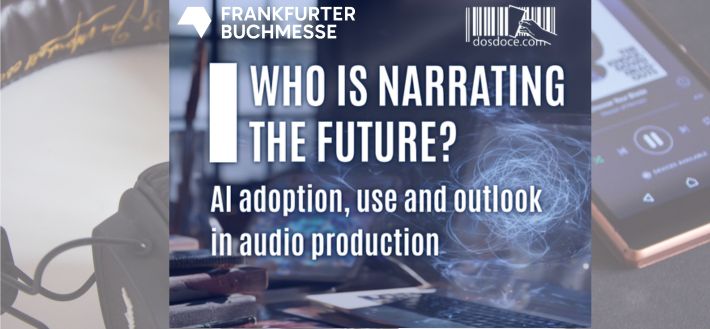
Frankfurter Buchmesse has released a white paper titled "Who is Narrating the Future? AI Adoption, Use and Outlook in Audio Production," in collaboration with Dosdoce.com. This global study explores how artificial intelligence is transforming the production of audiobooks, audio dramas, and podcasts, building upon previous research by both organizations.
Read More
Martina Barth, Key Account Manager for Audio at Frankfurter Buchmesse, emphasized the importance of the report in an era filled with buzzwords, highlighting its solid research meant to clarify the evolving audio market.
The findings indicate a significant shift in the industry’s attitude towards AI. Many respondents, who previously expressed caution or refused to use AI, are now actively experimenting with it in various phases of audiobook production. The study revealed that 17% of those surveyed have integrated AI across more than six production phases, indicating a transition from trial to operational use. However, AI adoption in the audio publishing sector still lags behind other creative industries such as music, TV, and gaming.
Javier Celaya, founder of Dosdoce.com, noted that over two-thirds of the surveyed professionals are now evaluating AI tools and developing workflows around them. Despite 85% using AI in some capacity, the extent of integration varies, with only a small fraction incorporating it fully across their processes.
The report includes insights from 85 industry experts, comprising professionals from audio production studios (50%), publishers (36%), and streaming platforms or distributors (14%) across regions including Europe, Latin America, North America, Africa, and the Middle East. The surveyed experts highlighted the primary uses of AI in optimizing workflows, scaling production for backlist titles, diversifying language options, and reducing costs in developing markets. Participants indicated that AI is being utilized alongside human involvement, rather than as a replacement.
Ama Dadson, Founder & CEO of AkooBooks Audio and Frankfurt Buchmesse Audio Ambassador, remarked on the positive emergence of African AI voice companies, expressing hope for increased commercial readiness and quality of African voices in long-form narration.
While technology providers may promise substantial cost savings with AI, the actual savings reported by respondents were lower than anticipated, ranging between 20% and 50% after two to three years of adoption. The report attributes this disparity to limited use of AI in specific stages rather than across the entire production workflow. Key factors influencing vendor selection included voice quality, rights transparency, and data privacy, with 86% indicating these traits as critical in their decisions.
Among the 15% of respondents who prefer a human-only production approach, reasons for abstaining from AI included a commitment to human narration, lack of interest, technology barriers, and client mandates against AI usage. Barriers to wider AI adoption also stemmed from literary agents, publishers, and authors, largely due to concerns regarding the quality of AI-generated narration and audience reception.
Despite hesitations, 86% of respondents anticipate moderate to significant growth in the industry over the next three years, driven by AI. This growth is expected to enhance audiobook offerings in various genres and languages that were previously unfeasible.
Celaya remarked on the sensitivity surrounding AI in publishing and the cautious willingness of industry professionals to share insights only under anonymity. He underscored the critical question of how AI and human narration will coexist in a manner that promotes transparency and preserves trust in the industry.