Artificial Intelligence (AI) is intricately woven into our daily lives, influencing everything from social media algorithms to medical diagnostics. This phenomenon creates a spectrum of experiences, ranging from beneficial outcomes to concerning consequences.
Read More
AI appears to be an inescapable part of modern society; however, it is essential to critically assess its specific implications for individuals and the community. For example, a student relying on AI to complete calculus assignments may struggle with actual exams, and using AI for companionship with the elderly could hinder genuine human connections.
The ongoing discussion about AI fundamentally revolves around the question, "What does it mean to be human?" This inquiry is gaining urgency in today's digital landscape.
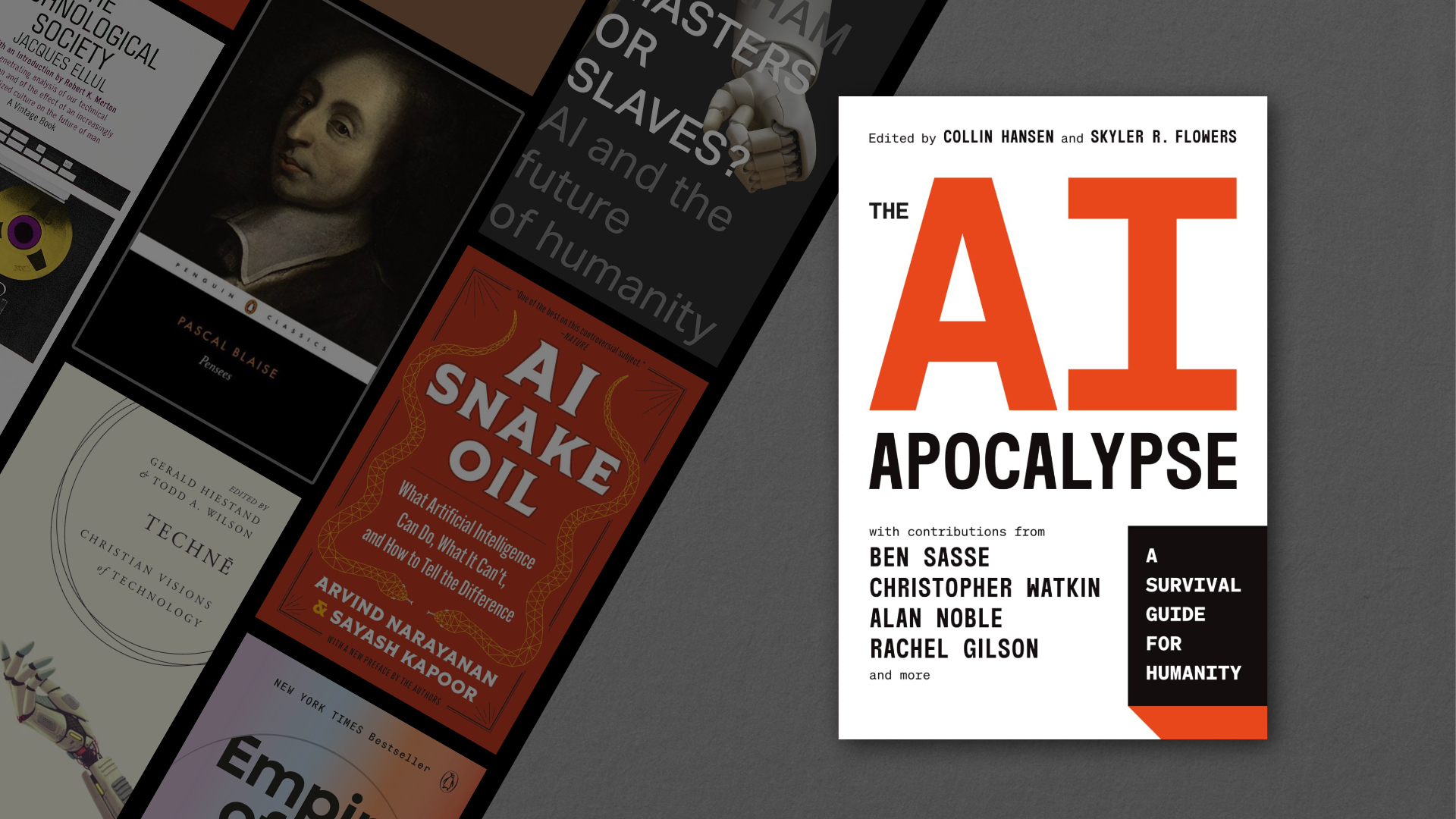
The Gospel Coalition's book, The AI Apocalypse: A Survival Guide for Humanity, features contributions from AI professionals and theologians who contemplate the future in the age of AI. They also recommend various books to help readers navigate the technological and ethical landscape of AI.
The AI Apocalypse: A Survival Guide for Humanity by Collin Hansen and Skyler R. Flowers compiles insights from experts across technology, theology, and ethics, providing guidance for engaging with AI thoughtfully and contextually.
Joshua Baru recommends AI Snake Oil: What Artificial Intelligence Can Do, What It Can’t, and How to Tell the Difference by Arvind Narayanan and Sayash Kapoor. This guide distinguishes between authentic AI capabilities and exaggerated claims, empowering readers to approach new technologies with healthy skepticism.
Skyler Flowers highlights The Promise of Artificial Intelligence: Reckoning and Judgment by Brian Cantwell Smith, which tackles the ethical distinctions between computational decision-making and human judgment, illustrating the stakes in conflating the two.
Rachel Gilson notes C. S. Lewis's That Hideous Strength, a fictional work that ominously predicts the rise of a totalitarian regime devoid of humanity.
Michael Graham points to Technē: Christian Visions of Technology, edited by Gerald Hiestand and Todd Wilson, which presents varying perspectives on technology from a Christian viewpoint.
Collin Hansen discusses Blaise Pascal's Pensées, emphasizing its early reflections on the complexity of human nature, pertinent in the context of AI.
Karen Hao's Empire of AI: Dreams and Nightmares in Sam Altman's OpenAI analyzes how dystopian narratives shaped contemporary AI practices.
Brett McCracken recommends Vita Contemplativa: In Praise of Inactivity by Byung-Chul Han, underlining the risk of losing contemplation time in a fast-paced AI environment.
Keith Plummer mentions Jacques Ellul's The Technological Society, which examines the pervasive drive for efficiency, relevant for understanding AI's evolving role.
Sherry Turkle's Artificial Intelligence: Who We Become When We Talk to Machines warns about the implications of developing emotional connections with AI rather than with humans.
Autumn Ridenour introduces Shannon Vallor's The AI Mirror: How to Reclaim Our Humanity in an Age of Machine Thinking, where Vallor critiques the shortcomings reflected in AI's design and societal impact.
Christopher Watkin reviews Masters or Slaves? AI and the Future of Humanity by Jeremy Peckham, which intertwines AI with Christian principles to discuss dignity and responsibility.
Finally, Stephen Driscoll’s Made in Our Image: God, Artificial Intelligence and You offers an accessible Christian perspective on AI, emphasizing that human dignity is rooted in being created in God's image.