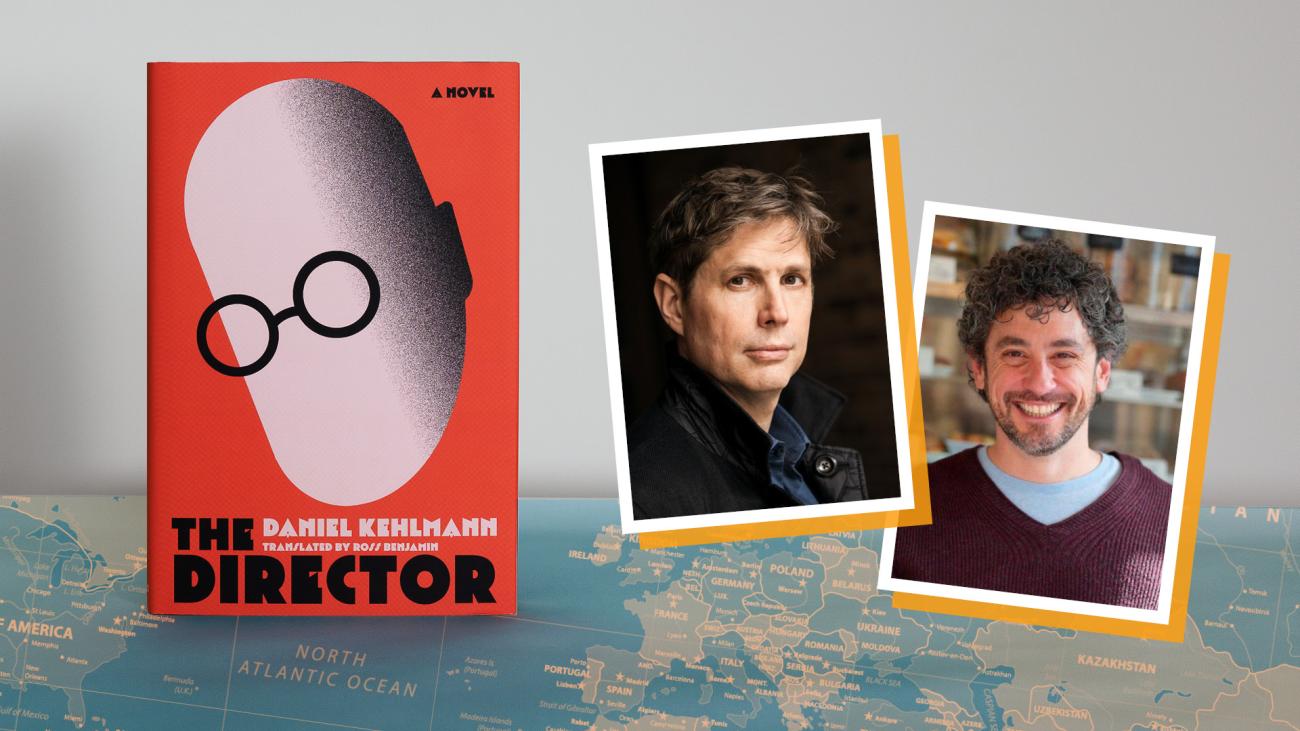
Daniel Kehlmann and Ross Benjamin, the author and translator of the novel *The Director*, shared insights about their work in connection with the 2026 International Booker Prize. Kehlmann's inspiration for *The Director* stemmed from film and its moral complexities, particularly how compromise can masquerade as professionalism. He draws on the life of filmmaker Georg Wilhelm Pabst, using his perspective as someone who returns from a free country to explore the nuances of dictatorship, focusing on everyday complicities rather than overt villainy.
Read More
In writing the novel, Kehlmann emphasized his iterative process of drafting and rewriting, frequently using handwritten notes to capture the essence of his ideas before transitioning to typing. He engaged in extensive research about 1940s film editing, relying on conversations with those familiar with the era's technology.
The theme of this year's International Booker Prize, 'Fiction beyond borders,' highlights the role of translated fiction in expanding readers' perspectives. Kehlmann noted that translated works allow readers to experience different cultures and recognize shared human concerns, which is increasingly important in a time when nationalism is on the rise. He stated that translated fiction broadens readers' experiences and diminishes the importance of national borders.
Kehlmann also reflected on the impact of the International Booker Prize over its first decade, noting that it has elevated the perception of translation as an art form rather than merely a service. This shift has encouraged readers to approach translated fiction with the same interest and confidence as they do English-language works.
Both Kehlmann and Benjamin shared their literary inspirations. Kehlmann credited Michael Ende’s *The Neverending Story* with making him fall in love with reading, highlighting its introspective take on storytelling. He also pointed to J.D. Salinger’s *Nine Stories* as pivotal in motivating him to become a writer, as it demonstrated the potential depth and craft of storytelling.
Benjamin expressed that he was drawn to *The Director* because it explores how complicity can manifest in subtle ways. He approached the translation with a focus on maintaining the novel’s original tone and pacing, intent on preserving the underlying tension among characters.
For Benjamin, Isaac Asimov’s *Foundation* trilogy sparked his love for reading, while John Felstiner's work on Paul Celan highlighted the significance of translation in literary engagement. He stated that Lydia Davis is a translator whose work he admires for its exactitude and authenticity.
When asked for recommendations, both mentioned significant works. Kehlmann advocated for Leo Perutz's *By Night under the Stone Bridge* for its narrative complexity, while Benjamin recommended Thomas Mann’s *Lotte in Weimar* for its engaging exploration of cultural authority. They also suggested noteworthy International Booker-nominated books, with Kehlmann mentioning *The Memory Police* by Yōko Ogawa and Benjamin highlighting *When We Cease to Understand the World* by Benjamín Labatut.