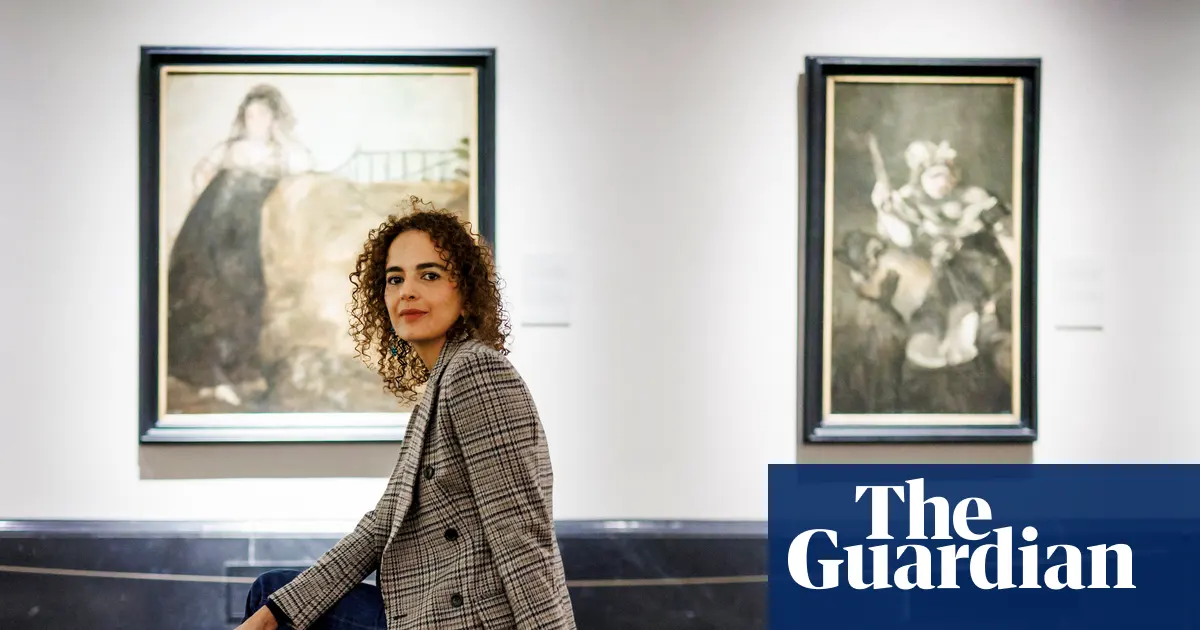
On a bright, chilly spring morning in Madrid, I met the French-Moroccan author Leïla Slimani at the Museo del Prado, which was closed to the public for another hour. The early silence enveloped the museum, allowing Slimani to draw inspiration from its artworks. She guided us to a basement gallery featuring Francisco Goya’s haunting Black Paintings, including Saturn Devouring His Son and Witches’ Sabbath. Slimani expressed the unique experience of being alone with Goya's works, stating that he painted not just the past or present, but also a reflection of our future and societal issues.
Read More
Currently in Madrid for the Writing the Prado residency, Slimani finds a profound connection between literature and painting, often surrounding herself with art while writing. She remarks that art captures the exact atmosphere she aims to convey in her writing. The feeling of disappointment in society, which she sees mirrored in Goya’s work, resonates with her.
Born in Rabat in 1981 to a doctor and a government minister, Slimani moved to Paris at 17 for her studies and began her career in journalism. After facing numerous rejections for her first manuscript, she gained recognition with her debut novel, Adèle, which explored the double life of a Parisian woman. However, it was her second novel, Lullaby, that catapulted her to fame, becoming the first Moroccan woman to win the Prix Goncourt in 2016. Slimani later became a representative for promoting the French language under President Emmanuel Macron.
Reflecting on her success, she expressed excitement and a desire to embrace the recognition despite doubts about her worthiness. Slimani's writing is driven by her experiences, including a family trauma when her father was imprisoned at a young age. She views literature as a means to give a voice to those who are often silenced. Her recent work, The Country of Others trilogy, addresses her family history, culminating in I’ll Take the Fire, published in English this year.
The title of her latest book serves as a metaphor for moving forward without being trapped by the past. Slimani acknowledges the complexity of immigration and personal reinvention, claiming nostalgia can hinder one's happiness. She stresses the importance of looking ahead while recognizing how difficult this can be.
Slimani's exploration of identity and the constraints placed on women in Moroccan society features prominently in her nonfiction book, Sex and Lies. She has been outspoken on issues such as women’s autonomy and personal freedom, believing bravery today entails being true to oneself even if it alienates others.
In discussing identity politics in Europe, Slimani notes a concerning trend of racism that arises from fear of cultural contamination. She acknowledges feeling manipulated by various groups and advocates for embracing the nuances of identity, arguing against simplistic narratives that seek to categorize individuals.
For Slimani, literature remains an essential tool against dogmatism and fanaticism. She prefers the intimacy of writing in private, comparing it to love—something to be done quietly and for its own sake. During her residency at the Prado, she has been striving to balance the pressure of outputs with the simple joy of creativity.