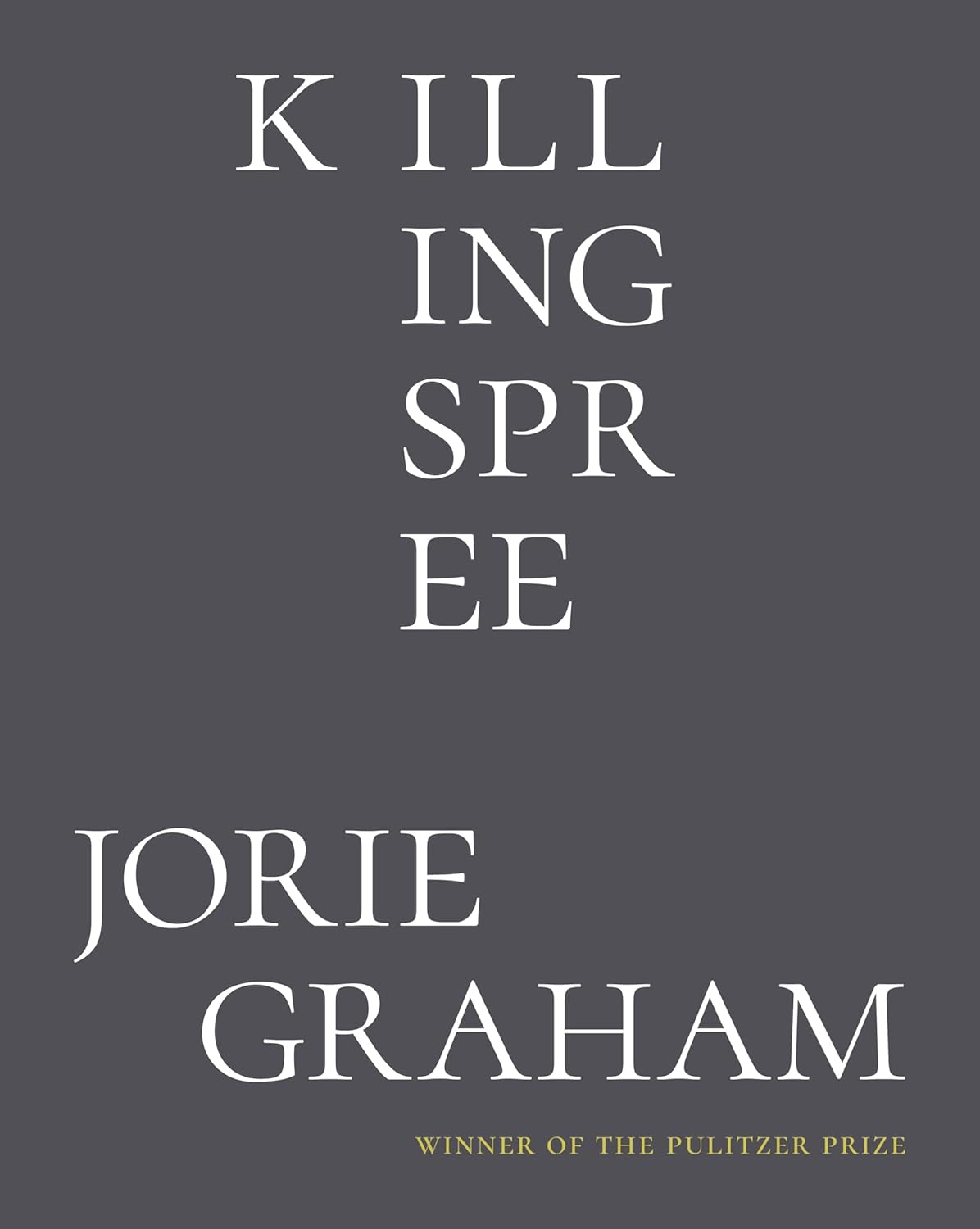
Jorie Graham's latest poetry collection, "Killing Spree," published by Farrar, Straus and Giroux, confronts the grim realities of contemporary life—what she refers to as a 'Killing Spree'—a reflection of our ongoing crises stemming from human choices. The poet navigates the storm of progress that threatens to engulf us, likening it to a hurricane and a flooded detention center, and reminding us of the necessity of documentation, even from within our metaphorical cages.
Read More
Graham, a Harvard professor and a recipient of numerous literary awards, continues to push the boundaries of poetry. Despite her prominence, recent readers may be unfamiliar with her work. For those new to her writing, it is recommended to read "Killing Spree" in one sitting to fully appreciate its narrative and emotional coherence. The collection emphasizes speed, both in its form and content, challenging readers to engage with the urgency of its themes.
The collection describes a future that moves faster than the world can adapt to, insisting that the vehicle of existence is often an illusion, with the urgency of change pressing inwardly.
Graham takes a distinct stance against poetry that simply aims to provide comfort or beauty in the face of adversity. She critiques the tendency of some contemporary poets to offer a false sense of solace, opting instead for a more profound exploration of ecological and societal fragility. While acknowledging moments of beauty in nature, she remains acutely aware of the precariousness of the world.
For readers interested in a poetry that engages with urgent truths and complex realities, "Killing Spree" provides a necessary perspective. Graham balances the roles of oracle and reporter, drawing attention to the intertwined relationship between journalism and poetry. Through her work, she seeks to uncover the difficult truths of our existence while embracing the uncertainty that comes with them.
The collection opens with a poem titled "The World," ambitiously addressing the vastness of human experience and perception. Graham skillfully transitions from universal themes to personal insights, interrogating the nature of change and the fluidity of perception.
Ultimately, Graham's work is a call to face difficult realities and cultivate awareness in a time of crisis. As she grapples with the complexities of existence, her voice demands attention, making "Killing Spree" an essential collection for both long-time admirers and new readers alike.