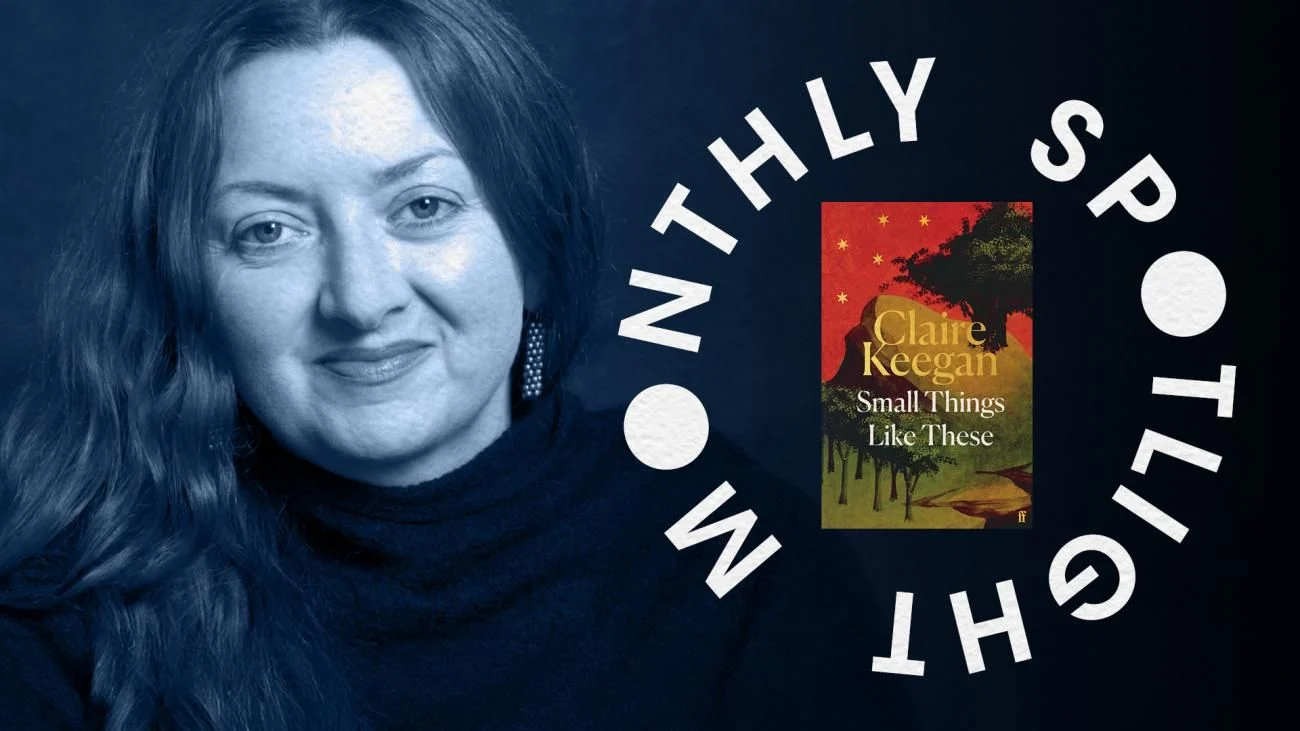
Claire Keegan's novel, set in 1985, captures a timeless quality. She highlights the significance of this setting, explaining that it avoids the period after the Ferns Report, when the Catholic Church's influence began to wane. Keegan wanted to reflect on the society shaped by her generation, allowing her to explore existing misogynies and the complexities of fear and cowardice.
Read More
'Small Things Like These' has been recognized for its brevity, being one of the shortest books longlisted for the Booker Prize. Keegan notes that she doesn't set out to write short works unless restricted by specific word limits. She focuses on precision in her writing, inspired by Chekhov's concept of grace—making minimal movements between points. This approach, along with her preference for elegance, reflects her intent to express just enough.
Her central character, Furlong, is reserved and reluctant to narrate, which shaped the book's structure. The book emerged after an 11-year gap since her previous work, 'Foster.' Keegan admits she rarely tracks how long it takes to write, mentioning that the story had been developing in her mind for several years before she began crafting it. Her writing process involves reluctance, with multiple drafts—around 50 in total—before settling on a final version.
Keegan prefers writing in longhand before transitioning to a computer, asserting that long breaks away from work do not benefit her. She avoids detailed plotting or extensive research, believing that imagination must guide the writing process. This, she asserts, is crucial to both writing and life.