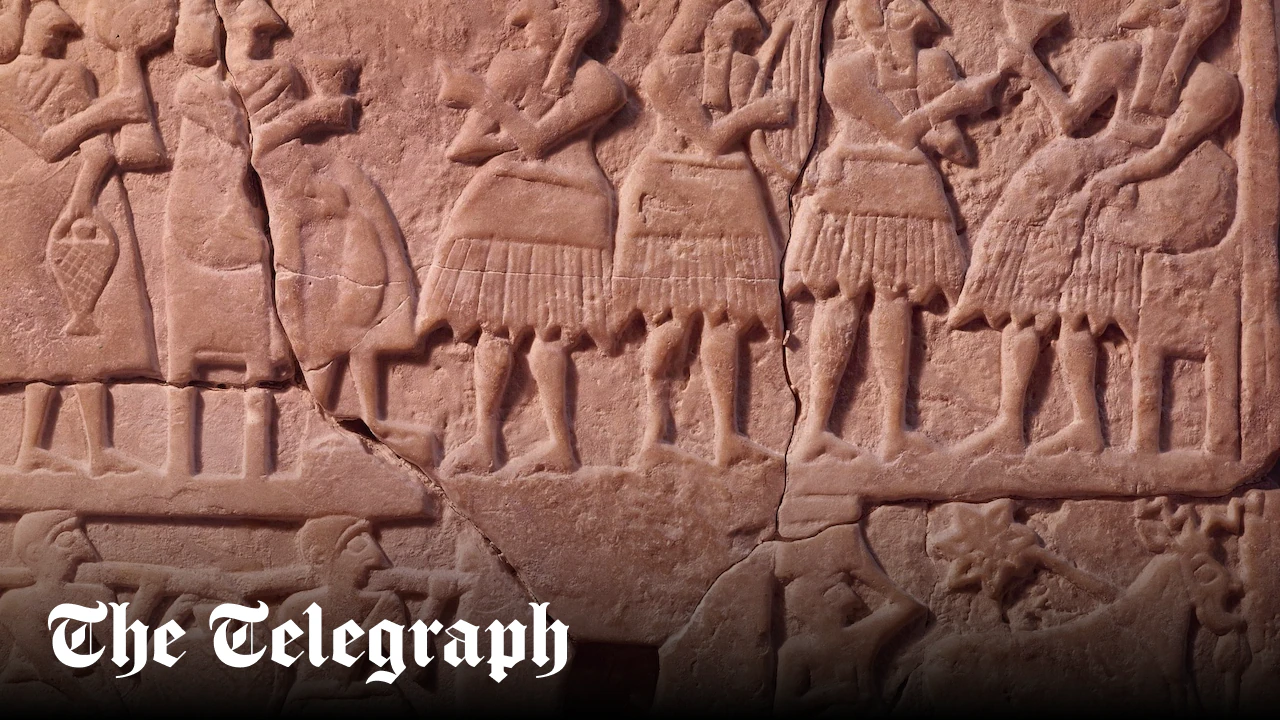
Simon Armitage’s latest translation of *Gilgamesh*, the ancient epic from approximately 2100 BC, brings a timeless story to contemporary readers. Originally meant to flatter King Shulgi of Ur in modern-day Iraq, the narrative weaves tales of the legendary hero Gilgamesh, who was considered the king’s “brother.”
Read More
The text has been reconstructed from various incomplete clay tablets, particularly those found in the ruins of Ashurbanipal's library, with the favored version dating to around the 12th century BC. Though it is about the length of *Beowulf*, *Gilgamesh* is said to be of greater historical significance, influencing works from the Old Testament to Homer’s *Odyssey*.
The story depicts Gilgamesh’s oppressive reign over his people, prompting the gods to create Enkidu, a wild man intended to confront the king. The two engage in a friendship, undertake heroic quests, and slay the forest guardian Humbaba, bringing the ire of powerful deities. Following personal tragedies, including Enkidu's death, Gilgamesh searches for the secret to immortality, only to confront his own mortality and return home wiser.
Armitage's translation has its strengths but feels less vibrant compared to his prior work on *Sir Gawain and the Green Knight*. Here, his choice of language leans towards a more impersonal style. Collaborating with linguist Jacob L Dahl has provided him with literal translations, but some critics suggest this detracts from the poetic nature of the original.
The epic’s repetition and formulaic phrases are crucial to its rhythm, yet Armitage deviates from this in parts, resulting in a less impactful rendition. For example, he rephrases the opening lines, leading to a loss of the original’s hypnotic quality. Scholars highlight the importance of maintaining these patterns to preserve the work's essence.
While Armitage's translation capabilities are commendable, it may not surpass the emotive qualities found in previous translations by others like Jenny Lewis, whose reworking of the text highlighted narrative resonance and fluidity. Despite its limitations, *Gilgamesh* remains a foundational work of literature, and Armitage’s contribution adds to its ongoing legacy.