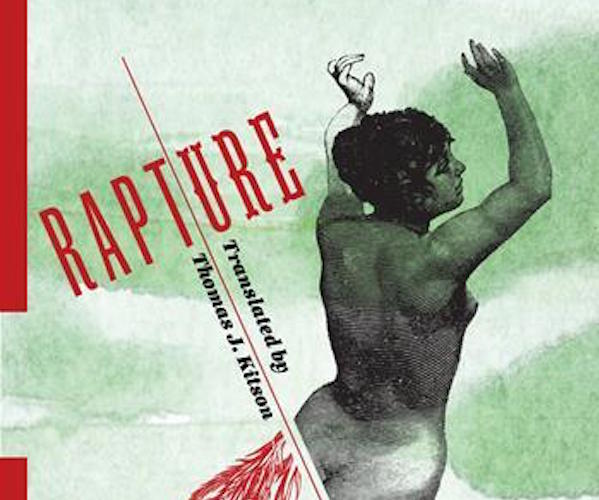
Translator Thomas J. Kitson recently spoke about Iliazd's novel Rapture during an event at the Somerville Armory in Massachusetts, which featured a diverse lineup including Harvard professor Steph Burt and musician Gilmore Tamny. Rapture, the first English translation of Iliazd’s work, follows the story of Laurence, a draft dodger and bandit who navigates a surreal landscape reflecting Iliazd's childhood in the Caucasus. Kitson emphasized the novel's unique and bizarre nature, stating it deserved further study and aimed to introduce Iliazd to new readers.
Read More
Kitson first encountered Rapture two decades ago while studying Russian Futurist poetry at Ohio State. Although he struggled to grasp the novel initially, a return to the text 15 years later revealed his deep appreciation for Iliazd's prose. He noted that while Rapture reflects influences from international modernism, Iliazd himself was largely isolated, rendering the work somewhat unique within the modernist canon.
When asked how Rapture fits into modernism, Kitson pointed out that Iliazd combined Symbolist techniques with avant-garde attitudes, reworking Dostoyevsky’s themes while also incorporating psychoanalytical concepts. He noted that the narrative presents a paradoxical passivity, where characters undergo events without active agency, presenting a cruel worldview where opportunities fade away.
Kitson discussed the novel's title, initially considering it as The Ravishing, but ultimately opting for Rapture to encapsulate its multifaceted themes. He reflected on how timing affected the novel’s publication—had it been written slightly earlier, it might have been accepted in the Soviet Union. Political shifts under Stalin’s regime included tightening control over publishing, leading to increased censorship of avant-garde works, which impacted Rapture’s reception.
While Iliazd struggled to find a publisher in Paris, Kitson noted that his elusive personality contributed to this challenge. In a philosophical sense, Iliazd viewed art as something that should be discovered mysteriously, further complicating his publishing journey. Kitson expressed hope that his translation would generate renewed interest in Iliazd, potentially inspiring some English-speaking readers to explore the original Russian texts.
Lastly, Kitson highlighted the underlying themes of resurrection and cyclical existence within Rapture, suggesting that the ending—filled with death—opens up possibilities for new beginnings. He encouraged readers to approach the book alongside other surrealist works, emphasizing its rich layers and the diverse interpretative paths it offers.