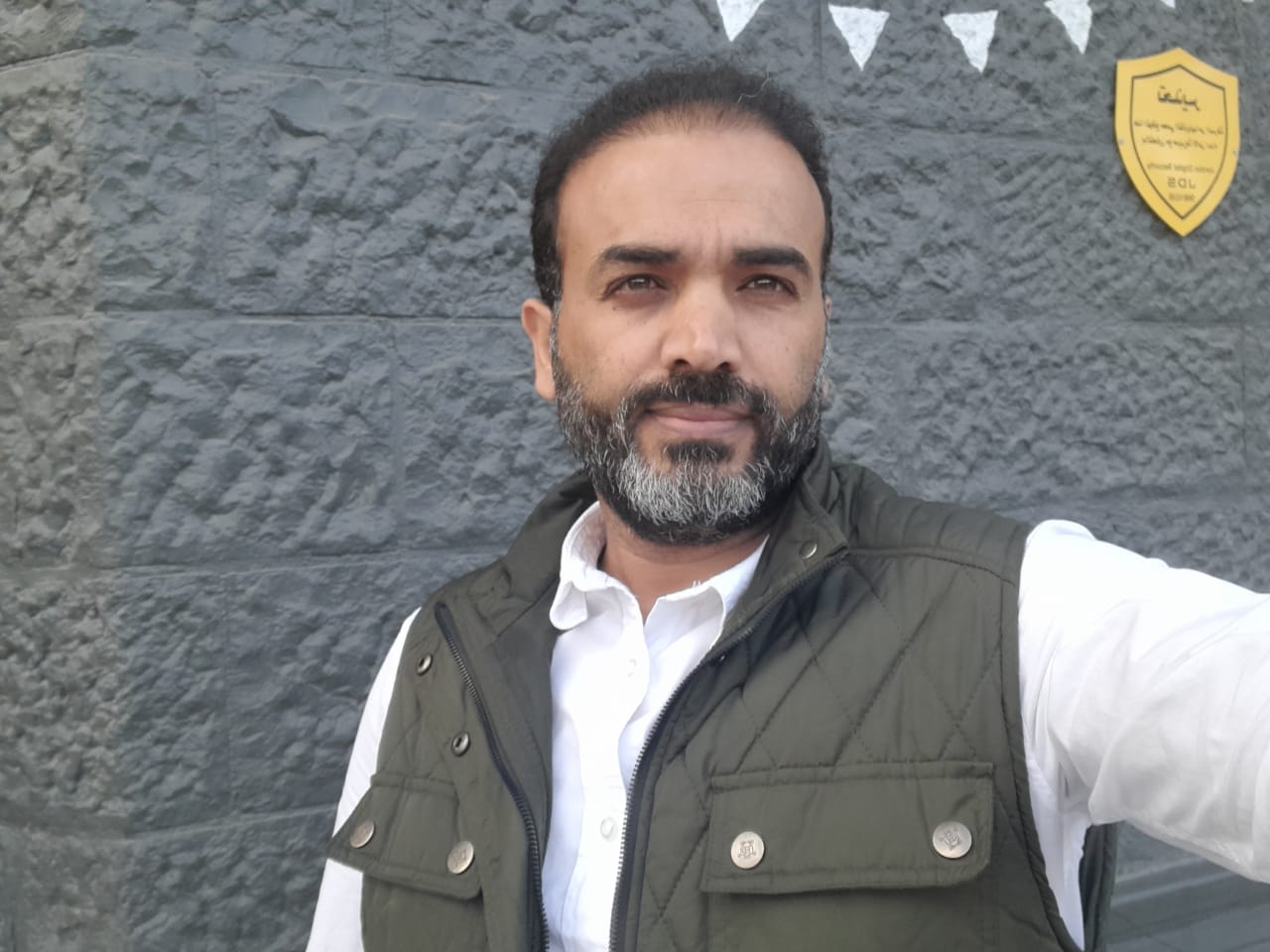
Dr. Tayseer Abu Odeh, a Jordan-Palestinian poet, fiction writer, and Associate Professor of Comparative Literature at Al-Ahliyya Amman University, emphasizes the critical role of literature in representing Palestinian liberation and the struggle of exile. In an interview with The Harvard Crimson, he addressed the complexities of his creative projects centered on Gaza and Palestine, emphasizing the necessity of portraying such painful experiences.
Read More
Tayseer stated, "When it comes to the meaning and implications of poetry, I wouldn't say it's something luxurious, it's always important." He highlighted the connection between the aesthetic and the political, asserting that it cannot be overlooked in relation to personal and collective issues.
His work is shaped by his bilingualism in English and Arabic, which allows him to access a variety of cultural perspectives. He aims to foster "cultural and political dialogue" in response to the ongoing marginalization of non-Western cultures. As a Jordan-Palestinian who has never returned to Palestine—having been born in Jordan after his parents were expelled during the Nakba in 1948—Tayseer navigates the complexities of his identity. He articulated this by saying, "I always feel that my own stance, my own condition, has been formulated as an outcome, as a byproduct of this Nakba."
Tayseer recognizes the challenges in representing a historically marginalized people within a global diaspora, discussing the need to balance universal suffering with localized experiences. Since he cannot visit Palestine, his understanding of the country is based on narratives from his parents and grandparents. "Palestine is not an idea. It’s a historical fact," he explained, underscoring the need to reimagine Palestine through poetry and culture.
He believes poetry is essential for articulating the experience of the oppressed, describing it as providing an "aesthetic utopian agency." However, he is cautious not to overestimate its practical implications. "I know it's utopian because you cannot liberate a country by poetry. You cannot change the status quo by a piece of poem," he noted, acknowledging the poem's role in conveying the suffering of loss and violence inflicted by colonizers.
Despite the intimidating nature of confronting oppression, he views it as an intellectual and ethical responsibility. "It’s my intellectual and ethical duty to speak truth to power in the first place," he said, advocating for the creation of counter narratives against oppression and surveillance.
While he refers to himself as a "writer in the making," Tayseer stresses the importance of writing with conscience for all authors and thinkers. "Speaking truth to power is not easy. It's not an easy job," he remarked, urging writers to awaken their conscience to articulate the various forms of oppression occurring in Palestine and beyond.