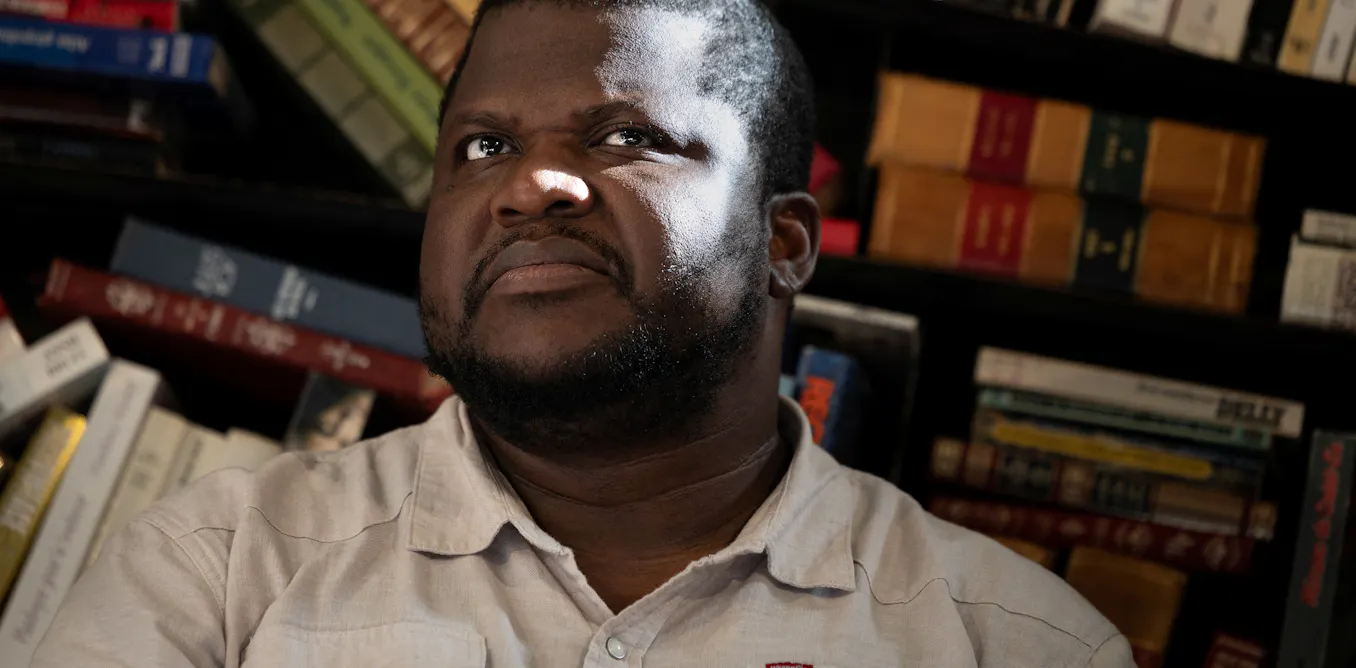
The French literary scene is currently facing turmoil after the withdrawal of Thélyson Orélien's novel from the Prix Goncourt shortlist. The action was prompted by an anonymous account on X alleging that Orélien's work was "almost entirely" produced by artificial intelligence.
Read More
Orélien's novel, *It Was Either That or Die* (C'était ça ou mourir), which details a Haitian's challenging journey to Canada through Brazil, Mexico, and the United States, has topped French bestseller lists and sold around 35,000 copies. It recently won the Fnac novel prize and has received widespread acclaim.
Born in 1985, Orélien emigrated to Canada in 2010 following a devastating earthquake in Haiti. He asserts he did not use AI in his writing. The allegations were raised using Pangram, described as the "gold standard" in AI detection. The Goncourt Academy stated that consistent findings from credible researchers and journalists indicated the book was likely primarily generated by AI.
Orélien's publisher maintains that he began writing the novel in 2017 and completed a draft by 2019, well before generative AI was commercially viable. Orélien has claimed to have experienced multiple racist attacks in the wake of these allegations and is compiling evidence with his publishers in France and Quebec to substantiate his claims.
Samuel Fitoussi, a columnist for Le Figaro and part of the group behind the X account, contends he is advocating for the integrity of authorship rather than pursuing a political agenda. He argues for awareness about AI-generated writing.
Following the AI allegations, Quebec newspaper La Presse reported instances of plagiarism in works authored by Orélien from 2012 to 2013, noting that at least five of his opinion pieces contained text copied from other sources. Additionally, discrepancies were found in Orélien's 2012 short story, which shared identical sentences with a work by Louis Pauwels.
The controversy raises questions about the reliability of AI detection tools and challenges expectations of authorship, with some French writers suggesting that AI is now embedded in literary creation.
Orélien maintains his cultural voice, stating, "The images, the repetitions, the rhythms are living speech, they are mine. My traditions are Haitian and Caribbean." AI expert Benoît Raphaël tested Pangram's effectiveness with other Haitian novels, confirming they were correctly identified as human-produced, highlighting potential exceptions for non-standard French.
While Pangram boasts a detection accuracy of over 95%, it is not infallible. It has previously been used to investigate other literary works, including Jamir Nazir's award-winning short story, clarifying that his writing involved speech-to-text tools followed by extensive editing.
On French television, author Virginie Despentes defended Orélien, arguing that he should not have to justify his writing process, and rejecting the idea that authors should be accountable for AI influence. Despentes appreciated the stylistic qualities of Orélien's novel, while others, like co-creator Raphaël Doan, expressed skepticism regarding his use of AI based on the book's style.
The evolving landscape of authorship, as viewed by editor Alexandre Gefen, relates to the historical integration of new writing technologies. Orélien's commercial success suggests he has forged a compelling authorial voice, raising the question of how AI might be effectively and ethically incorporated into literary practices in the future.
With the rise of AI in literature, readers may soon face a choice between engaging with works that utilize AI and those that strongly adhere to traditional human authorship, fostering a new discourse on the nature of creativity.