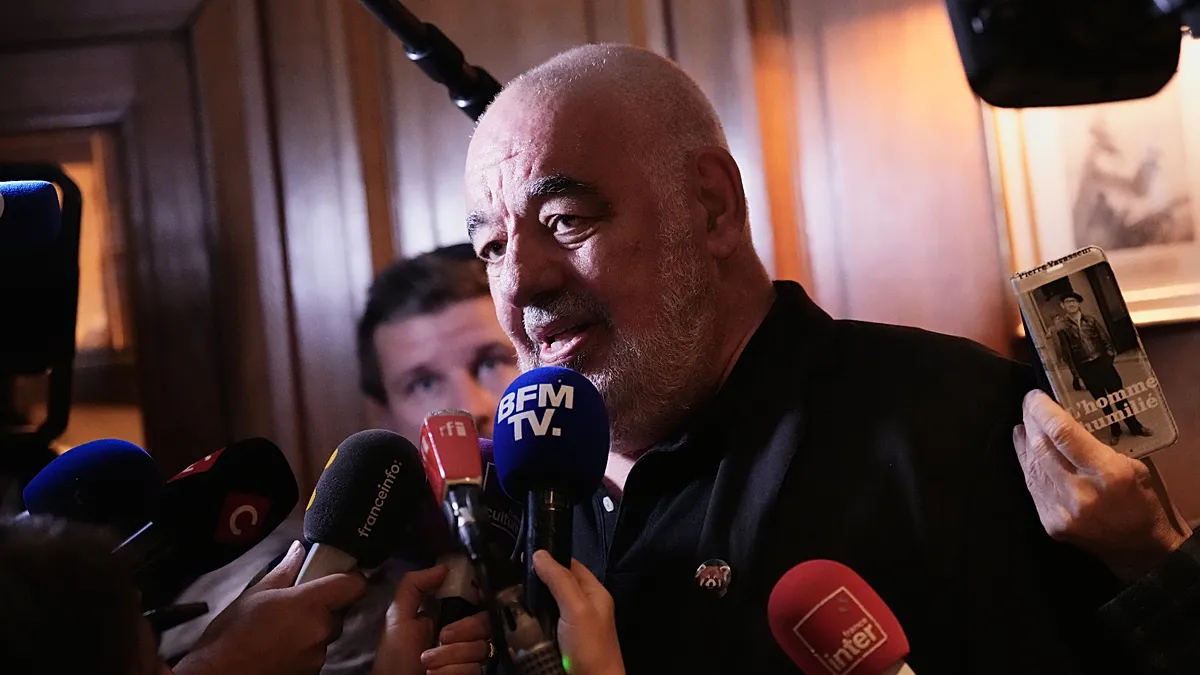
Philippe Jaenada, who recently won the Goncourt Prize, France’s most prestigious literary award, has acknowledged using artificial intelligence in his novel, ''C'était ça ou mourir.'' On France Inter radio, Jaenada revealed he had consulted AI tools, specifically ChatGPT, during the writing process.
Read More
Jaenada admitted to using AI three times, initially incorporating a sentence generated by ChatGPT to engage with readers in a playful manner. He disclosed this during a conversation with the Goncourt jurors. He also noted that he included AI to critique some absurd answers generated by the program concerning technical details, though he did not elaborate further on this aspect.
At 62, the novelist, known for his work on unsolved criminal cases, expressed a belief in the utility of AI, stating, "We cannot push AI away... We have to acknowledge it and tame it to ensure it is beneficial."
Reactions to Jaenada’s comments on social media have been mixed. While some users foresee AI becoming an integral tool in writing, akin to a spellchecker, others express disappointment. One fan voiced a desire to read works created purely by the efforts of authors, free from AI assistance, while another questioned the originality of writers in the current literary scene.
Jaenada succeeds Laurent Mauvignier, who won the Goncourt Prize in 2025 for his novel ''L'Inconnue du quai de Javel,'' which explored an unsolved murder from the late 1940s in Paris. Jaenada's latest work continues his exploration of intimate crime narratives, following previous novels like ''Sulak'' (2013), ''La Petite Femelle'' (2015), and ''La Serpe'' (2017).
In contrast, Thélyson Orélien, who was seen as a frontrunner for the prize, faced significant scrutiny over allegations of AI usage. His novel was removed from the Goncourt shortlist, and his publisher, Éditions du Boréal, has terminated their collaboration, announcing that his book will not be reprinted.