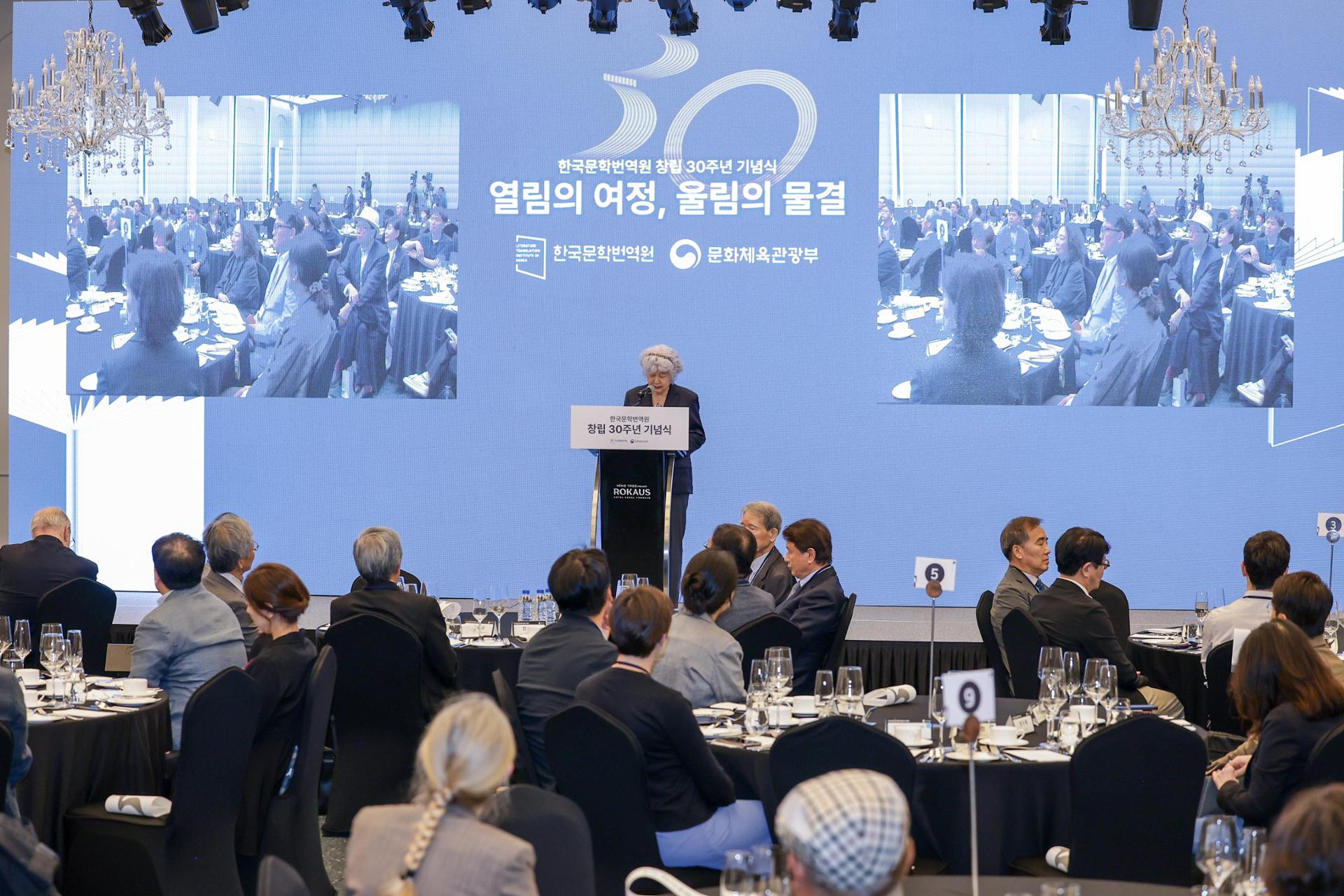
Chon Soo-young, president of the Literature Translation Institute of Korea (LTI Korea), emphasized the growing importance of human translators during a recent interview. Speaking at the institute’s 30th anniversary event in Seoul on May 21, she argued that despite the rise of generative artificial intelligence (AI), the future of literary translation will increasingly rely on human expertise.
Read More
Chon stated, "In literature, AI alone cannot meet the level expected by international publishers, without human intervention. Even if more advanced AI models emerge, human post-editors would still be needed to review the work.” She referenced an example from novelist Kim Un-su, whose earlier translation was disregarded by an editor until a version translated by prominent translator Sora Kim brought renewed interest.
This discussion comes as LTI Korea seeks to establish a graduate school for translating Korean literature and cultural content. Chon noted a surge in global demand for Korean literature, but highlighted that the availability of skilled translators has not kept pace.
"We need specialists who can navigate texts that use language in distinctive ways—such as poetry—and handle components like dialects and archaic language,” she said. She cautioned that relying on AI to resolve the translator shortage could result in missed opportunities.
The proposed institution aims to address the weaknesses in Korea’s current translation ecosystem. Since 2008, LTI Korea has operated a non-degree translation academy, producing award-winning graduates. However, Chon pointed out that the academy's limitations hinder its ability to attract top faculty and students.
A formal degree program would allow for systematic curriculum development and enhance faculty recruitment. The initiative is under review by the Ministry of Education, with LTI Korea hopeful for approval by late this year and potentially opening next year.
Planned programs will include courses in seven languages—English, Japanese, Chinese, German, Spanish, and Russian—chosen based on demand for Korean literature. Initial enrollment will be capped at 60 students, divided equally between Koreans and international students, to facilitate intensive, hands-on training.
The curriculum will offer practical classes and opportunities for students to collaborate with professors and authors, distinguishing it from traditional graduate translation programs. The inclusion of international students aims to create a global network of Korean literature specialists.
Chon underscored the artistic nature of literary translation, asserting that it requires cultural sensitivity and interpretive judgment. She concluded that strengthening the presence of Korean literature in the international arena depends on cultivating skilled translators adept at tailoring translations for local audiences.