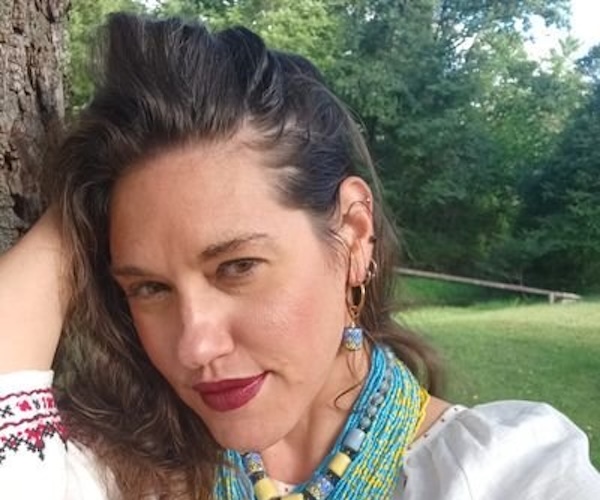
Nicole Yurcaba’s 2026 chapbook, *Hutsulka*, published by River Paw Press, examines themes of linguistic and cultural dislocation amidst the backdrop of war. The title references the feminine form of Hutsul, an ethnic group from the Carpathians of western Ukraine and northern Romania, and reflects an aspect of Yurcaba’s identity. The chapbook also draws on the histories of the Lemko people, a minority group in the Carpathians, and serves as a finalist for the 2025 Silent River Poetry Prize.
Read More
The collection opens with a stark observation: “You don’t know / what it is like spending your life lost in translation.” Yurcaba captures the complexities of feeling like an outsider in both Ukraine and the United States, as expressed in lines about her name’s unpronounceability in her nearly extinct language. Her poetry conveys a unique sense of grief tied to the ongoing violence in Ukraine, where her parents lived, and where her extended family remains. The recurring phrase “war in my homeland” reflects her deep longing to change this reality while acknowledging her helplessness.
Throughout *Hutsulka*, Yurcaba interrogates the role of poetry in confronting violence. As noted by Ukrainian-American poet and translator Olena Jennings, art often grapples with how to intervene from afar. Yurcaba's work reflects this dilemma, focusing on the disconnect between Ukrainians and the wider world rather than mediating between cultures. The speaker's life in America is punctuated by her connection to the news of Ukraine, creating a juxtaposition between the banality of everyday activities—like eating at Taco Bell—and the weight of the ongoing catastrophe.
The isolation felt in diasporic wartime existence is prominent in her poetry. The speaker interacts with men who promise intimacy but fail to engage with her reality of trauma. This disconnect is underscored by her feeling of invisibility; her experiences cannot be adequately translated into the language of those around her. Additionally, Yurcaba critiques cultural authority dynamics, particularly how some American men attempt to define her experience, challenging them with references to Ukrainian literary figures like Oksana Zabuzhko.
As relationships fracture amid the pressures of war, the speaker reflects on their limitations, yearning for connection through shared intellectual pursuits. Yet *Hutsulka* offers richness through its explorations of culture, memory, and landscape, spanning dialogues with figures like Kafka and highlighting the experiences of the Lemko and Hutsul people.
Overall, the collection provides a compelling and urgent perspective for readers within the Ukrainian diaspora and beyond, resonating with anyone grappling with the complexities of current global challenges.
Olga Livshin is a poet whose work appears in *AGNI*, *Poetry*, and *The Southern Review*, as well as the author of *A Life Replaced* and co-translator of *Today is a Different War* by Lyudmyla Khersonska.