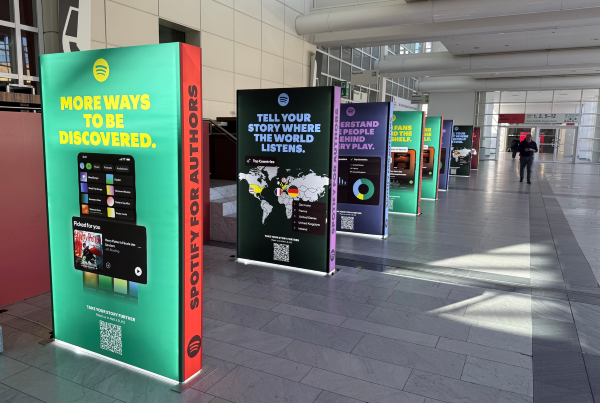
Spotify has announced plans to roll out audiobooks to more than 180 markets by the end of 2026, greatly expanding access for its over 750 million users worldwide. This phased rollout will begin on October 7, 2023, initially offering more than 350,000 titles in various languages across Europe, the Americas, the Caribbean, the Middle East, Africa, and Asia, with an eventual offering in over 120 languages.
Read More
In countries such as Brazil, Italy, and Poland, publishers have long anticipated Spotify's entry into the audiobook market, viewing it as pivotal for broader adoption of the format. Spotify's previous gradual rollout in select markets now shifts to a more aggressive approach, leveraging its presence in over 180 countries.
“We’ve seen really strong growth,” said Owen Smith, Spotify’s Global Head of Audiobooks. He reported a 39% year-on-year increase in monthly listeners and a 32% rise in listening hours.
To support this expansion, Spotify has collaborated with nearly 300 publishers worldwide, including notable partnerships with Italian publisher Mondadori and Brazilian publisher Veneta. The service will introduce local-language catalogs in diverse languages including Spanish, Portuguese, Italian, and Polish, alongside facilitating local authors to publish titles in their respective languages.
The initial launch includes over 45,000 Spanish-language titles in Mexico and Colombia on October 7, followed by over 6,000 Portuguese titles in Brazil on October 15. Spotify's offering in Brazil follows Audible's recent launch, which provided about 4,000 Portuguese titles.
Spotify's audiobook access models will mirror its existing offerings, providing audiobooks as part of eligible Premium subscriptions, through its Audiobooks+ option for additional listening hours, and via individual title purchases available to all users. The purchasing process typically occurs on the web, with the audiobooks accessible through the Spotify app afterwards.
In a bid to increase reach, Spotify emphasizes the non-exclusive nature of its agreements with publishers and authors, allowing them to distribute their works through multiple channels. This strategy opens up significant distribution opportunities, especially in markets previously lacking local audiobook platforms. Smith noted the unique positioning of Spotify to attract new audiences to audiobooks, given its extensive user base and integrated platform combining music, podcasts, and now audiobooks.
The expansion, particularly impactful in markets with little to no existing audiobook services, is expected to reshape the landscape of audiobook distribution globally. In more competitive markets like Brazil, Spotify's entry could lead to increased competition, while in places like Italy and Poland, it may invigorate a segment still developing in terms of sales.