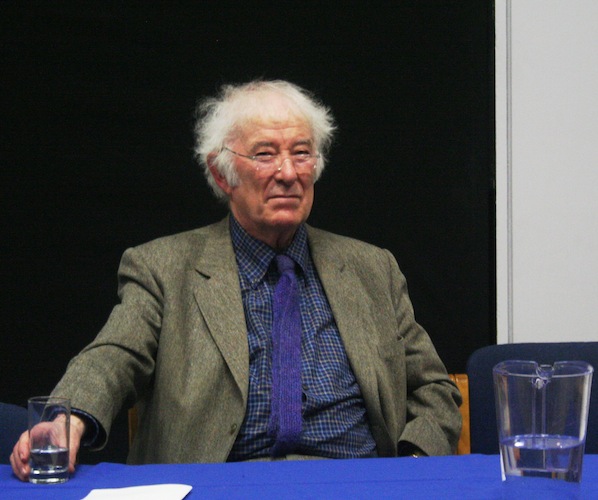
The Poems of Seamus Heaney, edited by Rosie Lavan, Bernard O’Donoghue, and Matthew Hollis, gathers the complete works of the Nobel laureate, showcasing his powerful explorations of rural life, personal loss, history, and the complexities of Northern Ireland. This 1,296-page volume, published by Farrar, Straus and Giroux, is priced at $60.
Read More
As tensions rise between the Orange Order and the Irish Catholic community in County Armagh, Northern Ireland, Heaney's works resonate strongly. The ongoing dispute over an Orange Order parade commemorating the 1690 victory of William of Orange highlights historical divisions. Sinn Féin President Mary Lou McDonald has criticized these marches for fostering sectarian animosity. Notably, the Parades Commission was established to mediate such events after previous violence, but its recent allowance for a limited march was met with nonviolent opposition from local residents, jeopardizing years of relative peace.
Seamus Heaney, who lived from 1939 to 2013, grew up in County Derry and achieved international acclaim, including the Nobel Prize in Literature in 1995. Heaney’s poetry has been celebrated for providing a moral compass during tumultuous times, as noted by author Colm Tóibín.
The compiled volume traces Heaney’s remarkable career, with his poetry organized chronologically. It encompasses early unpublished works alongside his twelve major collections, including Death of a Naturalist and Human Chain. The editors have included insightful commentary and notes, aiding readers in navigating his extensive and varied body of work.
Heaney’s influential verses, such as “Digging” and “Mid-Term Break,” capture the essence of his literary magic. Critics appreciate his ability to fuse personal and political dimensions in a way that continues to resonate today. While certain early works have drawn comparisons to other poets of the time, the anthology also highlights previously unpublished pieces, including tributes to fellow writers and personal reflections.
Notably, Heaney’s “An Open Letter” articulates his identity amidst British and Irish tensions, a theme that echoes in today’s sociopolitical landscape. His poignant lines from The Cure at Troy on the interplay of hope and history remain particularly relevant, illustrating Heaney’s enduring impact as a voice for justice and introspection in a fractured world.