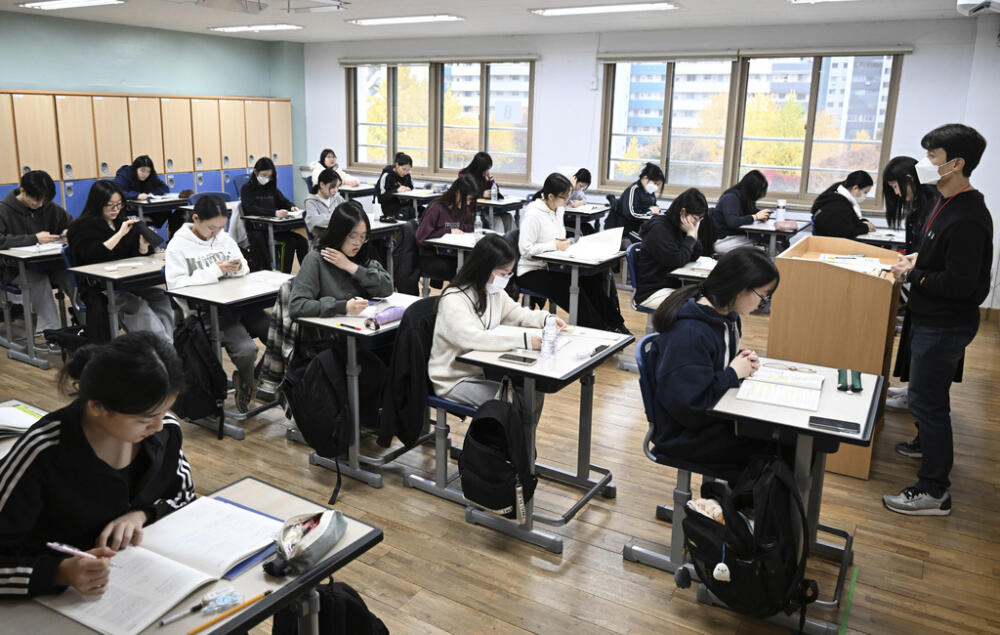
In her latest novel, "American Hagwon," author Min Jin Lee examines the prominent role of hagwons—learning centers in South Korea—in the lives of the Korean diaspora. This follow-up to her acclaimed work "Pachinko" tackles the central question of whether the pursuit of education is truly worth the sacrifices it requires.
Read More
Min Jin Lee, recognized for her literary contributions, including the National Book Award finalist "Pachinko," joins Meghna Chakrabarti to discuss her new novel. Since her debut in 2007 with "Free Food for Millionaires," Lee has focused on the intergenerational stories of Koreans in diverse environments.
"American Hagwon" is set against the backdrop of the 1997 Asian financial crisis and critically examines the values surrounding education within the Korean community. Lee describes hagwons as central to South Korean culture, stating that approximately 80% of South Korean children attend these centers for various subjects, extending even to adults seeking to learn new skills.
When asked about the importance of education, Lee highlights the mixed emotions many Koreans have toward hagwons. She notes that while many express resentment for their own experiences, they still prioritize sending their children to these centers, creating a complex relationship with education and its perceived value.
The novel’s central family, the Kohs, navigates the challenges posed by economic strife and the pressures of education as they relocate from South Korea through Australia and finally to California.
Lee's narrative draws on her personal story as an immigrant from South Korea, reflecting on her family’s struggles and experiences in America. As she mentions, her parents emphasized education, but her mother harbored a more rebellious stance against hagwons, valuing a child's interest over a rigid educational structure.
Throughout the conversation, Lee addresses the broader implications of educational values within immigrant communities, particularly in light of contemporary economic uncertainties. She points out that many parents feel compelled to secure their children's educational success at any personal or financial cost, often reflecting a generational anxiety about maintaining social status.
In discussing her craft, Lee explains that her first sentences often serve as thesis statements for her novels, providing a lens for readers to approach the themes explored within. The pressure around education and its societal implications is a dominant thread in "American Hagwon," engaging with the questions of identity, value, and sacrifice that resonate across cultures.
Lee asserts that while education has contributed significantly to Korea's development, it has also led to higher rates of mental health issues, including depression and suicide among the youth, indicating a need for critical reflection on these values in modern society.