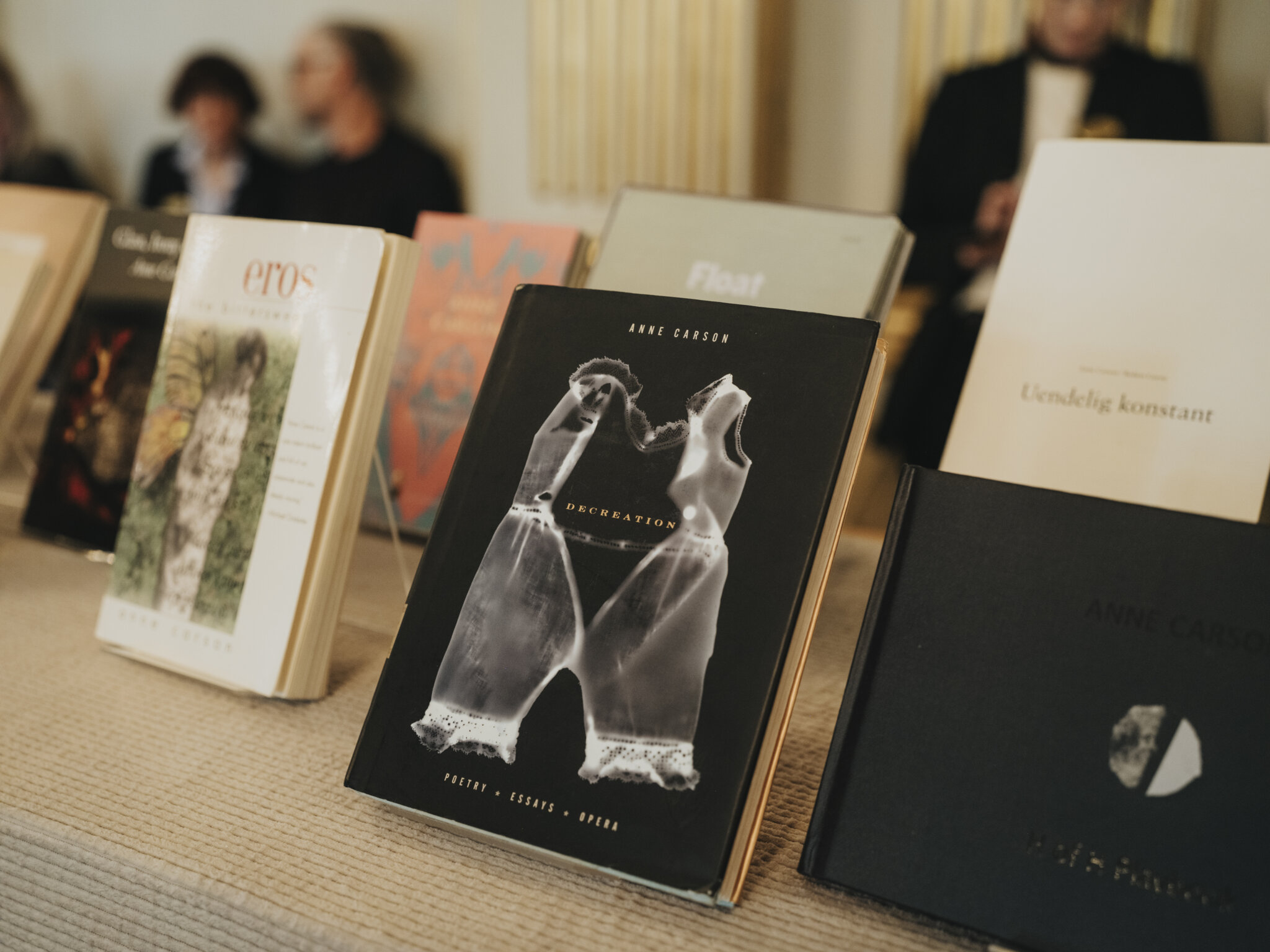
Anders Olsson, chair of the Nobel Committee at the Swedish Academy, recommends three notable works by Anne Carson, the 2026 Nobel Prize in Literature laureate.
Read More
The first is ‘The Glass Essay’ (1995), included in the collection Glass, Irony, and God. Olsson describes this long poem as a deeply moving exploration of grief and unrequited love, featuring a female narrator who, having been left by her husband, visits her mother in the desolate moorlands. During her journey, she carries the works of Emily Brontë, intertwining Brontë's world with her own. The poem unfolds through the lens of three solitary women gathered at a kitchen table, blurring the lines between lyrical, narrative, and critical writing.
Olsson's second recommendation, Autobiography of Red: A Novel in Verse (1998), showcases Carson's ability to revitalize classical literature. This imaginative and humorous narrative reimagines fragments from the sixth century BC Greek poet Stesíchoros, focusing on the winged monster Geryon, who is portrayed as a young character in love with a vain Heracles. The story follows their adventurous journey across the continent to a volcano, reflecting Geryon’s emotional growth.
Lastly, Olsson highlights Nox (2010) as perhaps Carson’s most innovative work. Created in memory of her brother Michael, who died abroad, this piece transcends conventional writing. Nox is a tactile artifact, featuring an accordion-fold of photographs, drawings, letters, and a delicate translation of Catullus's elegy for his own brother. While Carson aimed for a work where her identity is absent, it remains profoundly personal.
The Nobel Prize in Literature 2026 was awarded to Anne Carson for her inventive body of work that engagingly dialogues with the classical tradition to create contemporary literary forms. Throughout her career, she has adeptly blended poetry, translation, and teaching, focusing on the intersection of language and meaning. Carson emphasizes etymology as a foundational element of her creative process.