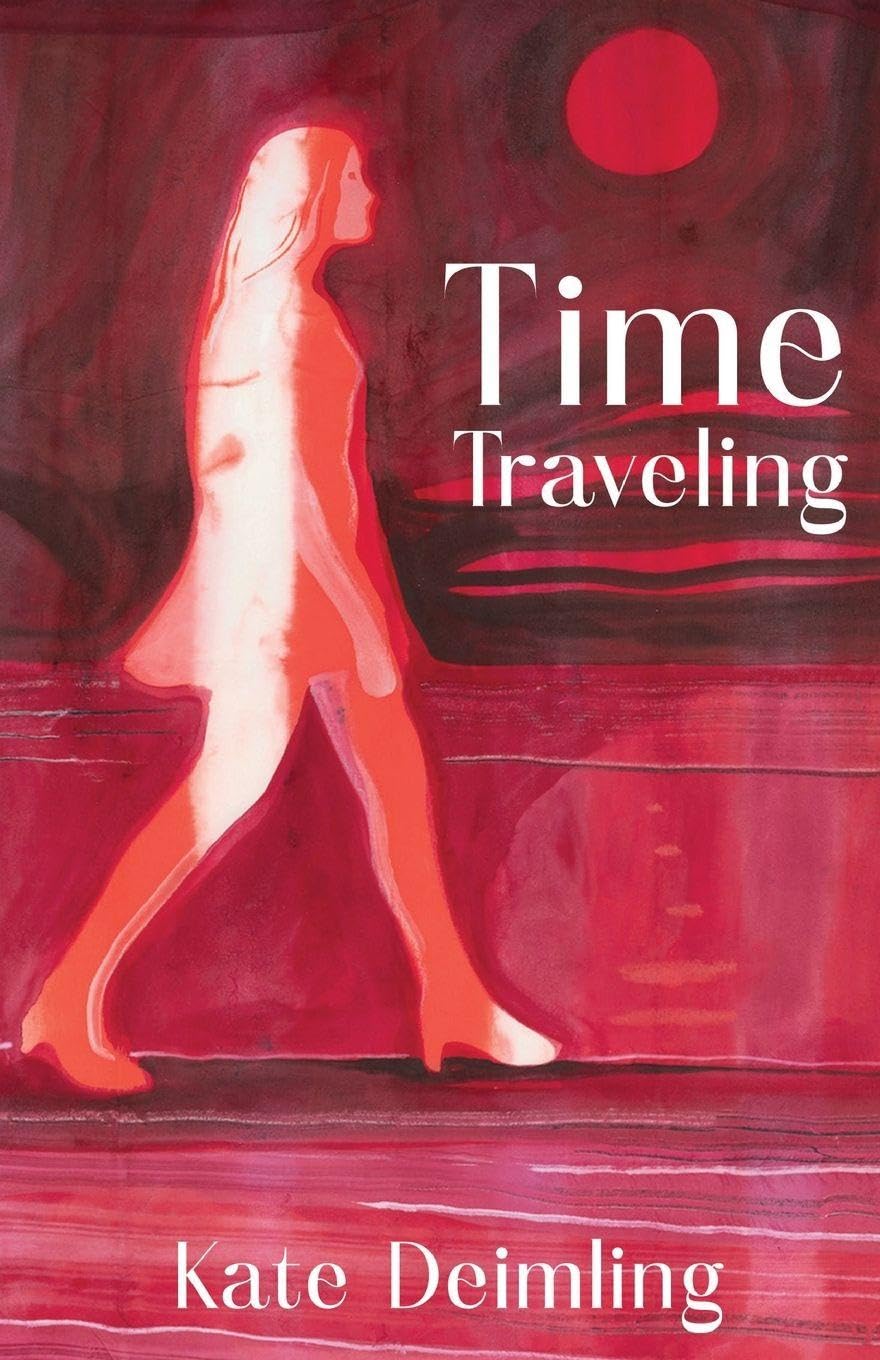
Paul Willis reviews Kate Deimling’s debut poetry collection, 'Time Traveling,' a work that explores the interplay of past, present, and future through vivid imagery and reflections on family and nature.
Read More
The collection opens with poems centered on motherhood and childhood, prompting the author to reflect on her formative years. In ‘The Other Pool,’ she describes a local swimming facility, evoking the scene with details of women in the water: “old neighborhood ladies plodded / through the water, mouths surfacing / to open like sedate frogs.” The following lines illustrate a gentle beauty as they leave the pool, revealing the richness of ordinary moments.
In 'All the Linden Trees in Bloom,' Deimling revisits the exhilaration of childhood on the last day of school, capturing the scent of summer as a transformative experience. The passage conveys a sense of shared freedom, echoing personal memories amidst her portrayal.
The second section shifts focus from familial themes to the natural world. 'Magnolia Warbler in Central Park' presents a minute yet vibrant image of the bird, likening its presence to “a tiny tang of light.” In 'Hiking to the Waterfall,' the poet describes the sensory experience of venturing beyond the city, where physical and natural landscapes converge.
Deimling’s third section incorporates literary and historical references, blending figures like Andrew Marvell and Diocletian with contemporary reflections. In a creative exchange with Marvell, she expresses a witty rebuttal to his famous work. Diocletian's villanelle humorously prioritizes his cabbages over his political duties, showcasing Deimling's playful engagement with history.
While the allusions continue in the fourth section, some may feel overextended, such as in 'Satisfaction,' where Deimling nods to the Rolling Stones. At times, her verses shine more distinctly without such references.
The collection culminates with strong poems in its final section. 'To the Figure Skater Who Fell' employs a cascading structure that mirrors the fall, while 'Why I’m Making Scones' evokes a melancholy association with a friend’s tragic fate. These lines connect deeply with themes of loss and memory.
Concluding with 'Thin Times' and 'Waiting for the Subway,' Deimling encapsulates the concept of merging moments: the transient nature of existence depicted as “the boundary / between worlds grows loose.” The imagery culminates in a poignant moment of anticipation at a subway station, symbolizing hope and forward motion.
Willis expresses optimism for Deimling’s future as a poet, comparing her to the timeless works of Robert Herrick, noting her unique voice in navigating time and experience through her art.