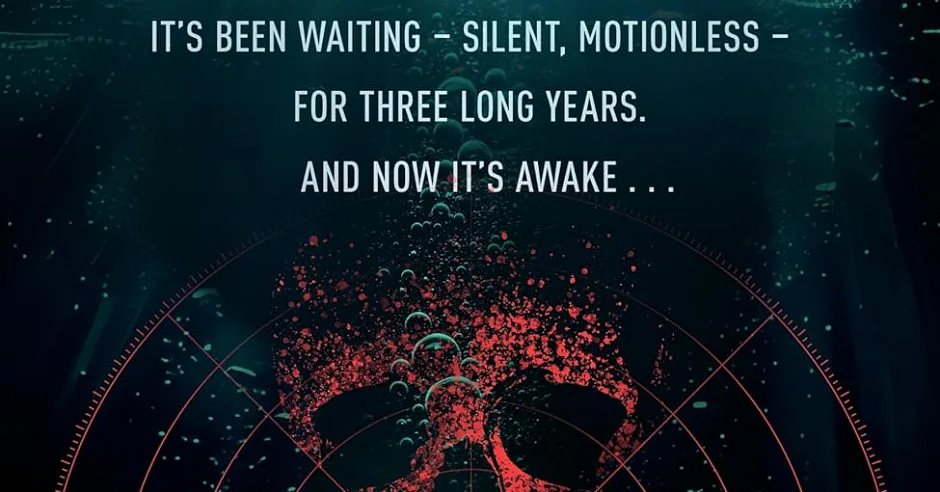
Benedict Anning, a Surrey-born author and charity worker now residing near Edinburgh with his cat Penny, recently spoke about his debut novel, 'Atomic Coffin.' After completing studies in creative writing, Philosophy, Classics, and Ancient History, Anning worked as a bookseller before transitioning to the charity sector, where he is currently employed at a local animal shelter. In an interview, he delved into his novel, a Cold War horror story that combines submarine thrills with supernatural elements.
Read More
Set in 1984, 'Atomic Coffin' follows SIS asset Heidi Sperling, who has been undercover in East Berlin for a decade. She uncovers a significant Soviet intelligence leak regarding a submarine, ТК-15, which has reportedly been undetected in the NATO GIUK Gap for three years. The vessel's last message warns, "ACTIVE. ALL VESSELS STEER CLEAR," prompting an emergency extraction by the Royal Navy submarine HMS Viking. Upon arrival, the crew discovers ТК-15 abandoned, yet soon realizes it has a malevolent influence.
Anning describes his novel as suitable for fans of intricate science fiction thrillers laced with claustrophobic horror. He explains the fusion of genres as a natural progression of his interests in historical military settings and the psychological aspect of horror.
The book's authentic feel stems from Anning's extensive research, drawing on materials like Richard Humphreys' memoir 'Under Pressure: Living Life and Avoiding Death on a Nuclear Submarine.' He emphasized the importance of making the submarine experience feel true to life, and he undertook research trips to solidify this authenticity.
The decision to feature a female lead in a male-dominated environment, such as a submarine crew, was intentional. Anning aimed to explore the dynamics of misogyny and the misrepresentation of women in high-stakes situations, making Sperling's character both strong and vulnerable, which enriches the narrative.
In discussing the evolution of horror in his narrative, Anning noted the importance of maintaining tension and a sense of urgency, weaving in elements of doubt and foreboding during the writing process. He cited filmmakers and authors who influenced his work, including 'Alien' and Ki Longfellow’s 'Houdini Heart.'
As a debut author, Anning remarked on the unpredictable nature of traditional publishing. While he has enjoyed the process, including the anticipation surrounding his book's publication, he acknowledged the emotional challenges that come with it.
Looking towards the future, Anning is preparing for his next novel, which shifts the setting to the final weeks of 1999, featuring a mysterious drug and conspiracy within the music industry. Titled 'Deadbeats,' he hopes it will capture audiences just as much as 'Atomic Coffin' does.